Binance Adds GLMR, ICX, MOVR, RARE, and SOPH to Monitoring Tag List
Key Takeaways
- •Binance added Moonbeam, ICON, Moonriver, SuperRare, and Sophon to its Monitoring Tag list.
- •The Monitoring Tag is a warning label used for assets that Binance considers higher risk, not an immediate delisting notice.
- •Binance did not specify why each of the five tokens was placed under review.
- •The five tagged assets include projects tied to Polkadot, Kusama, interoperability, and an NFT art marketplace.
- •Binance has recently delisted six tokens, showing that periodic reviews can lead to removals.
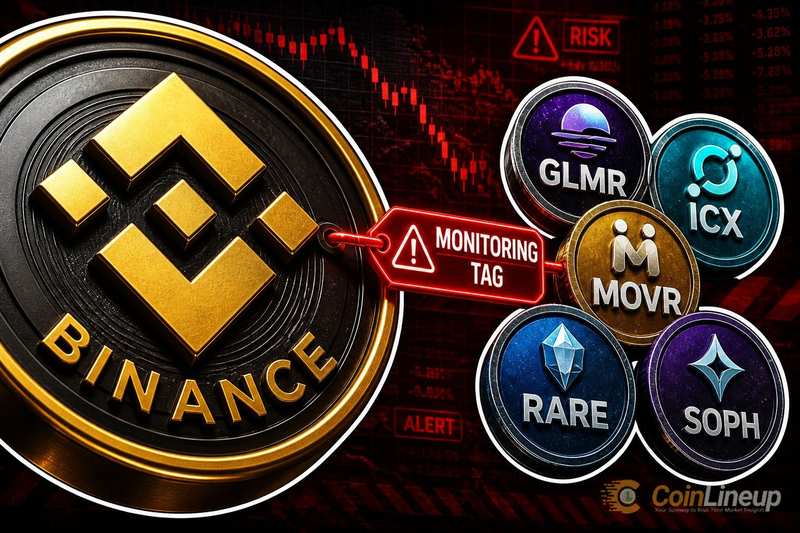
Binance has added Moonbeam (GLMR), ICON (ICX), Moonriver (MOVR), SuperRare (RARE), and Sophon (SOPH) to its Monitoring Tag. This status change serves as a warning label applied to listed digital assets that the exchange considers to carry higher risk, raising questions about the long-term availability of these five tokens on the platform.
According to Binance's official support announcement, the Monitoring Tag acts as a caution flag rather than an immediate removal notice. The exchange applies this designation to tokens that exhibit elevated volatility, weaker liquidity, or other characteristics that place them under closer review. Being placed under the tag signals heightened scrutiny, but it does not, on its own, confirm that any of these specific cryptocurrencies will be delisted.
The five affected tokens represent a diverse range of blockchain projects. Moonbeam (GLMR) is a smart-contract platform operating on the Polkadot network, while Moonriver (MOVR) serves as its companion network on Kusama. ICON (ICX) is a decentralized blockchain network focused on interoperability. SuperRare (RARE) operates as a governance token for a prominent non-fungible token (NFT) art marketplace, and Sophon (SOPH) rounds out the list of newly flagged assets.
Monitoring labels are typically interpreted by the market as an indication that an asset faces intensified exchange review. This matters because exchange labels can affect how users and traders assess access, liquidity, and platform support before any formal decision is made. While the tag flags increased uncertainty, a monitoring status and an official delisting notice remain distinct steps. A delisting is a separate action that would be confirmed through its own dedicated announcement.
The action serves as a reminder that review outcomes can escalate. Binance recently moved to delist six tokens on August 17, demonstrating that periodic evaluations can lead to asset removals. Reporting by Traders Union noted that Binance periodically adjusts which assets carry the Monitoring Tag as part of its routine listing reviews. However, the exchange did not detail the specific reasons for applying the tag to each of the five newly flagged tokens.
Warning-style labels can naturally increase short-term volatility and foster caution among market participants. Sentiment shifts frequently follow a tag change ahead of any concrete listing decision, which is why official exchange notices tend to be the main reference point for users tracking status changes. For traders and holders, the clearest signal going forward is Binance’s own follow-up communication. Subsequent official notices will indicate whether the monitoring status will remain in place, be lifted, or progress toward formal removal for any of the affected assets.
Following status changes of this nature, token holders typically track liquidity conditions and official platform communications closely. Binance’s listing and compliance posture has drawn regulatory scrutiny in various jurisdictions. Most recently, the exchange regained website access in the Philippines after engaging with a regulatory sandbox framework.
This article is strictly informational and does not constitute financial or investment advice. Cryptocurrency and digital asset markets carry inherent risk, and individuals should always conduct their own independent research before making investment decisions.

