Bill Ackman Warns Further Fed Rate Hikes Could Trigger Global Recession as Inflation Reaches 3.8%
Key Takeaways
- •Bill Ackman stated that the Federal Reserve risks putting the United States and the world into recession if it continues raising interest rates.
- •The Federal Open Market Committee faces a rate decision on December 9, with officials signaling support for a 25-basis-point increase rather than a 50-basis-point move.
- •Treasury Secretary Scott Bessent warned that the central bank may be committing a policy mistake by pushing rates too high as it fights inflation.
- •PCE inflation has climbed to 3.8%, nearly double the Fed's 2% target, while the benchmark rate stands at 3.75% to 4%, leaving the real policy rate close to zero.
- •The Nasdaq Composite's 2026 gain has fallen to 1.5% after the index was up 18.7% in early October, reflecting a sharp slowdown in market momentum.
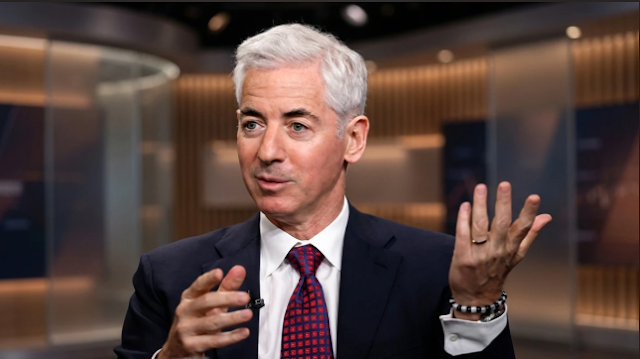
Billionaire investor Bill Ackman, the founder and chief executive of asset manager Pershing Square Capital Management, has warned that further interest rate increases by the U.S. Federal Reserve could push the American economy and the wider global economy into recession, intensifying a debate over the central bank's next move as inflation remains well above its 2% target.
The warning centers on a Federal Reserve rate decision scheduled for December 9. Ackman argued that continued monetary tightening could create serious economic risks, stating that the Fed "will put the U.S. and world in recession if it continues to raise rates."
Ackman voiced his concerns in a post on X, arguing that the central bank risks damaging economic growth if it continues raising borrowing costs. "The Fed will put the U.S. and world in recession if it continues to raise rates," he warned.
The remarks come as financial markets weigh expectations for another rate increase. According to the Financial Times (FT), Fed officials continue to signal support for a 25-basis-point increase — equivalent to 0.25 percentage points — although a larger 50-basis-point move is no longer considered necessary.
Policymakers face a complicated backdrop of persistent inflation, weakening stock market momentum and increasingly vocal warnings from prominent investors about the risks of excessive monetary tightening.
Treasury Secretary Bessent Flags Over-Tightening Risk
U.S. Treasury Secretary Scott Bessent has separately expressed concern about the potential consequences of excessive monetary tightening, warning that policymakers could make a mistake if they push interest rates too high in their effort to control inflation.
"Many people believe" the Federal Reserve "may be making a policy mistake if they over-tighten," Bessent said.
His remarks underscore the growing tension surrounding the central bank's policy choices. The Fed operates under a dual mandate of price stability and maximum employment, which is why the trade-off between cooling prices and preserving growth sits at the center of every rate decision. While bringing inflation under control remains a priority, further increases in borrowing costs could create additional pressure on economic activity.
Nasdaq Momentum Slows Sharply
Equity market performance offers another indication of the changing financial environment. The Nasdaq Composite is up just 1.5% in 2026, a significant slowdown compared with its trajectory earlier in the year.
The technology-focused index had been up 18.7% in early October before surrendering much of that advance, according to figures highlighted by Coin Bureau. The gap between the index's October standing and its current year-to-date gain illustrates how substantially market momentum has shifted.
The Nasdaq's performance is particularly relevant to the broader debate over monetary policy, as technology stocks are closely watched indicators of investor appetite for growth-oriented assets. Even so, the reported figures alone do not establish that Federal Reserve policy is responsible for the index's retreat from its earlier gains.
Inflation Remains Well Above Target
Inflation continues to complicate the outlook for monetary policy. The Personal Consumption Expenditures (PCE) inflation rate — the measure against which the Federal Reserve defines its 2% target — has risen to 3.8%, according to figures cited by Coin Bureau, placing price growth nearly double the Federal Reserve's stated 2% target.
The distance between the two readings highlights the challenge facing policymakers. The Fed is seeking to bring inflation closer to its target, but additional rate increases could further tighten financial conditions and weigh on economic activity.
The Federal Reserve's current interest rate range stands at 3.75% to 4%. That places the benchmark rate roughly in line with the reported 3.8% headline inflation rate, leaving relatively little difference between the two measures and an inflation-adjusted, or real, policy rate close to zero.
December 9 Decision Under Heightened Scrutiny
With Ackman warning of recession risks, Bessent questioning the consequences of over-tightening and inflation holding at 3.8%, the December 9 policy decision faces heightened scrutiny. The decision rests with the Federal Open Market Committee, the central bank's rate-setting body, and will show whether officials follow through on the 25-basis-point increase they have signaled. The central bank must contend with the competing pressures of persistent price increases and the potential economic costs of further interest rate hikes.
Originally reported by Victoria Hale, Technology & Blockchain Writer, for Hokanews.

