Best NFT Marketplaces in 2026: Matching Platform to Asset Type
Key Takeaways
- •Platform fit should be determined by asset type, blockchain, fee path, royalty enforcement, and wallet risk rather than popularity or brand recognition alone.
- •OpenSea, Blur, Magic Eden, Rarible, and Tensor each serve distinct segments including discovery, active Ethereum trading, multichain gaming, creator storefronts, and Solana-native collection trading respectively.
- •The NFT royalty enforcement landscape shifted after late 2022, with several major marketplaces moving from mandatory creator royalties to optional or reduced models, making it essential to confirm where royalties are actually honored.
- •Accurate cost comparisons must account for marketplace fees, creator royalties, gas, and the gap between displayed floor prices and executable bids rather than relying on headline percentages.
- •Game studios evaluating marketplaces must additionally consider inventory synchronization, utility metadata, player wallet support, and recovery processes for items that fail to appear after purchase.
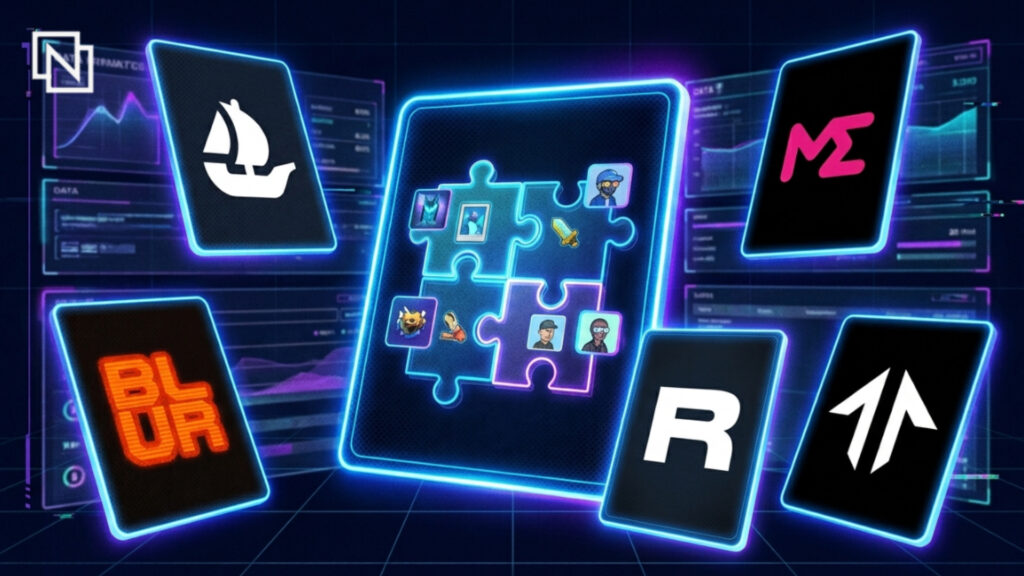
Selecting the right NFT marketplace in 2026 requires evaluating asset type, blockchain, fee structure, and intended use case rather than defaulting to the most familiar brand. OpenSea remains the strongest option for broad discovery, Blur caters to active Ethereum traders, Magic Eden serves multichain and gaming-oriented users, Rarible supports creator infrastructure workflows, and Tensor addresses Solana-native collection trading.
The key question is fit, not popularity. Buyers and creators should begin by identifying their asset type, fee path, royalty policy, and wallet risk exposure. Royalty policy deserves particular attention because the enforcement landscape shifted significantly after late 2022, when several major marketplaces moved from mandatory creator royalties to optional or reduced models, making it essential to confirm where a given collection's royalties are actually honored. Teams building around game assets must additionally consider inventory synchronization, player support, and post-purchase utility.
Top NFT Marketplaces in 2026
These five marketplaces address distinct needs across buyer, trader, creator, and gaming segments: broad discovery, active Ethereum execution, ecosystem-native game assets, creator-controlled storefronts, and Solana collection trading. Rankings below reflect platform fit and verifiable transaction conditions rather than brand familiarity or advertised fees.
OpenSea
OpenSea, founded in 2017 and long the highest-volume NFT marketplace by cumulative users, is the most defensible starting point for users who have not yet narrowed their search by chain or trading style. The platform's core value lies in enabling navigation from category discovery to collection and individual asset pages without first entering a professional order interface.
The trade-off is depth of specialization. A collection listed on OpenSea may have its strongest bids on a competing platform, and a game item might render correctly without the page clarifying whether it is usable, tradable in-game, or subject to transfer restrictions. Buyers should verify the contract address, collection verification status, trait rendering, offer depth, checkout total, and approval requests before assuming that familiarity equals suitability.
Pros
- Broad collection discovery allows new buyers to examine creators, traits, activity history, and individual item pages before committing.
- The general-purpose interface suits collectors who move between asset categories rather than specializing in a single trading workflow.
Cons
- Liquidity can fragment across competing venues, meaning a visible listing is not always the best executable price.
- General collection pages may lack context on game utility, transfer restrictions, or off-chain benefits.
Blur
Blur is built around execution speed rather than discovery. Collection bids, sweeping, price depth, and portfolio actions are positioned close to the decision surface, which benefits traders who already understand a collection and want to compare executable prices. Blur's trader acquisition was accelerated by its BLUR token incentive program, which rewarded bidding and listing activity and helped concentrate active Ethereum NFT liquidity on the platform during 2023. Blur therefore fits active Ethereum NFT trading rather than serving as a default recommendation for new buyers.
That speed alters the risk profile. A dense interface enables acting on multiple assets simultaneously, but a single incorrect collection selection, stale order, or misunderstood signature can compound the error. A thorough comparison should examine funded bid depth rather than headline floor price, calculate gas across the full transaction, and confirm how royalties and marketplace fees appear before signing.
Pros
- Collection bids, sweeping, and portfolio controls reduce the steps required for active trading.
- Executable bid data gives sellers a realistic view of immediate liquidity beyond floor price alone.
Cons
- The dense interface assumes familiarity with orders, spreads, gas, and wallet signatures.
- Its execution focus provides limited guidance for beginners who need collection history, creator context, or a slower purchase flow.
Magic Eden
Magic Eden launched in 2021 as a Solana-native marketplace and later expanded to Ethereum, Bitcoin Ordinals, Polygon, and other networks, making it most relevant when a collection is tied to a specific ecosystem, game, or community rather than being evaluated as generic digital art. Its marketplace can help players move from collection discovery to individual items, but users should verify the exact chain and product support at the time of publication. Historical multichain capability does not guarantee that every former market remains active.
The gaming dimension requires scrutiny beyond visual branding. An item page should expose the contract, token identifier, traits, and collection identity necessary to match the asset with a game inventory. If utility depends on a separate account, custodial bridge, season, or game server, the marketplace alone cannot guarantee the item will function after purchase.
Pros
- Ecosystem-focused discovery facilitates browsing collections where community and utility matter alongside price.
- Gaming relevance benefits players who already recognize a collection and want a marketplace experience native to their chain.
Cons
- Current chain and product support must be verified rather than inferred from older marketplace coverage.
- A collection page can display an item correctly without confirming that the asset remains usable in the associated game.
Rarible
Rarible earns its place because the buyer-facing marketplace represents only one dimension of its positioning. Creators or brands evaluating Rarible can also assess whether a controlled storefront would enhance collection presentation, moderation, analytics, and community ownership. This distinguishes it from venues selected primarily for rapid trading. Rarible was also an early adopter of on-chain royalty enforcement tools, positioning itself toward creators concerned about royalty erosion across the broader NFT ecosystem.
That additional control carries operational responsibility. A branded surface still requires inventory indexing, abuse handling, customer support, royalty rules, and a liquidity strategy. Its creator stack should be compared against other NFT minting tools before assuming that software availability proves marketplace adoption.
Pros
- Creator-facing marketplace and infrastructure options give brands greater control over collection presentation and storefront design.
- This flexibility serves teams needing a marketplace aligned with their own community rather than a trader-first terminal.
Cons
- Storefront flexibility does not automatically generate buyers, moderation capacity, or customer support.
- Teams remain responsible for liquidity strategy, abuse handling, royalty configuration, analytics, and ongoing marketplace operations.
Tensor
Tensor is a specialist venue for Solana-native collection trading. Its value comes from pairing a fast interface with an audience already comfortable with Solana wallets and collection-level execution. Tensor gained prominence as Solana's NFT ecosystem expanded, offering traders an alternative to broader platforms with deeper Solana-specific tooling. Users should confirm that a target collection has real trading activity on Tensor before relying on it.
Decisions should be based on executable orders, not the visual floor price alone. Buyers and sellers should compare the highest bid currently acceptable, the lowest valid listing a buyer can complete, maker and taker costs, royalties, and recent transaction volume around the target price. Thin depth means that even a fast terminal cannot manufacture liquidity.
Pros
- A Solana-native trading workflow gives experienced users rapid access to collection pricing, bids, and execution.
- The specialist focus is valuable when the target collection and its active traders are concentrated on Solana.
Cons
- Tensor is less useful for collections on other chains or when a beginner-oriented discovery path is needed.
- Thin activity in an individual collection can limit execution regardless of interface speed.
Total Trading Cost and Wallet Exposure
An accurate fee comparison follows the full cost path, not just the platform's headline percentage. A 1 ETH sale can be reduced by marketplace charges, creator royalties, gas, and the gap between the displayed floor and an executable bid. Seller proceeds should always be calculated from a live, executable order.
Wallet risk is equally important because marketplace actions frequently require signatures or approvals. Many NFT marketplaces request token approval contracts that grant spending permissions, and some approvals can be broader than a single transaction requires. Verifying contract approval details, collection identity, and signature text is essential before confirming high-value transactions, particularly when NFT rug-pull risk factors appear in the collection or team history.
Best Marketplace Fit by Reader Type
A first-time collector should begin where collection identity and checkout are most transparent, then compare the same asset on other platforms before signing. An active trader should start with the chain: Blur is the relevant execution comparison on Ethereum, while Tensor serves Solana-focused trading. A creator should evaluate royalty controls, collection presentation, moderation, and support rather than selecting purely on buyer volume.
Game studios face a different set of requirements. They need inventory synchronization, utility metadata, player wallet support, and a recovery process for items that fail to appear. Public venues can supplement distribution, and NFT tracking tools help monitor assets moving between a marketplace, player wallet, and live game inventory.
The final choice need not be exclusive. A collection can use a branded or game-native storefront for primary context while secondary liquidity flows through broader venues. The important step is defining which surface handles discovery, which handles execution, and where users receive authoritative support.
Conclusion
A marketplace comparison is valuable only when it guides a reader toward the right venue for a specific asset. Future updates should focus on platform fit, fee path, wallet risk, and whether each marketplace supports the collection or game workflow in question. The refresh cycle should revisit fees, chain support, collection verification, and gaming support together. A platform that excels in one category can still be the wrong choice for the asset a reader actually holds.
Frequently Asked Questions
Which NFT marketplace is best overall?
There is no universal winner. The right choice depends on chain, asset category, fees, royalties, wallet risk, and whether the user needs collector discovery or builder infrastructure.
Is Blur better than OpenSea?
Blur can be better for active trading, while OpenSea is generally easier for broad discovery and collection browsing. The comparison should be based on the user's objective, not volume figures alone.
Which marketplace is better for Web3 games?
Magic Eden, Rarible infrastructure, and dedicated game marketplace tools merit closer review than a generic art marketplace when items carry gameplay utility.
Disclaimer: This article is for research and editorial comparison purposes only. It does not constitute financial, investment, legal, or tax advice. NFT tools, marketplaces, fees, chain support, and live availability can change quickly, so verify current conditions on the official platform before making any decision involving funds, assets, or private keys.

