Best Crypto Trading Bots in 2026: Features, Fees, and Platform Comparison
Key Takeaways
- •Crypto trading bots connect to exchanges through APIs to monitor markets and execute orders automatically according to predefined rules, signals, or strategies.
- •3Commas deactivated its v1 platform on September 11, 2026, replacing it with a v2 system that features a revised interface and new bot setup procedures.
- •Pionex embeds trading bots directly into its exchange platform, and the company states these built-in bots require no separate subscription or activation fee, though trades still incur fees.
- •Automation does not guarantee profits, since fees, volatility, slippage, and badly configured strategies can lose money just as quickly as manual trading.
- •Users should disable API withdrawal permissions, enable two-factor authentication, and validate strategies through backtesting or paper trading before trading with real funds.
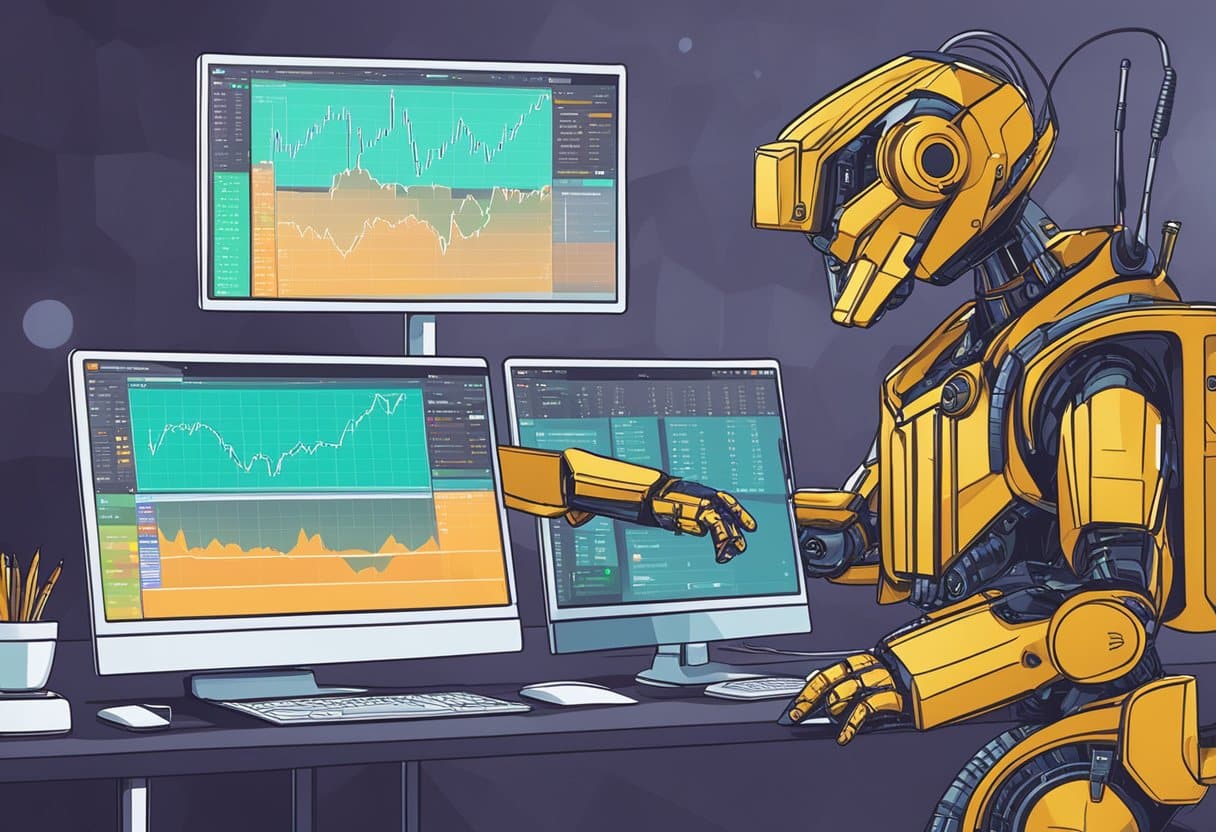
Crypto trading bots are software programs that buy and sell cryptocurrencies automatically according to predefined rules, market signals, or complete trading strategies. Connecting to cryptocurrency exchanges through application programming interfaces (APIs), these tools can track markets, submit orders, and manage positions without requiring the user to approve every transaction by hand.
Which bot is "best" depends on the individual trader: goals, experience, preferred exchange, budget, and risk tolerance all shape the decision. Some services emphasize beginner-friendly automation, while others offer strategy customization, technical indicators, backtesting, or multi-exchange management. Exchange-based providers such as Pionex embed bots directly into their platforms.
Automation does not assure profits. A badly configured strategy can lose money just as quickly as a manual trade, while fees, volatility, slippage, and sudden price movements influence results. Before committing to a platform, compare its supported exchanges, bot types, security controls, pricing, and testing tools.
Best Crypto Trading Bots and Platforms to Consider
The services below are reference points for comparison, not a ranking by profitability. No independently verified performance data in this guide supports a claim that any one of them consistently earns more than the others.
1. Cryptohopper
Cryptohopper is a cloud-based crypto trading platform offering automated and semi-automated tools across connected exchanges. Its features include a Strategy Designer, backtesting, paper trading, trading signals, and several bot types.
Best suited for: Traders seeking strategy customization, testing tools, and different levels of automation.
Before using it, check exchange and trading-pair support, subscription-plan features, paper-trading and backtesting capabilities, and whether the strategy’s trading frequency fits your budget. Cryptohopper sells multiple subscription tiers; review the current Cryptohopper pricing plans. Supported trading types should be checked carefully where futures or margin automation is involved.
2. 3Commas
3Commas supplies automated tools for cryptocurrency strategies and connected exchange accounts. Its platform has included DCA bots, grid bots, signal-based automation, and trade-management tools.
Readers comparing older reviews should note that 3Commas v1 was deactivated on September 11, 2026. The company replaced it with a v2 platform featuring a revised interface, different bot setup procedures, and reorganized features. Users should therefore consult current documentation rather than tutorials for the older version.
Before relying on older instructions, read the 3Commas v2 platform guide and the company’s feature migration guide. Check current bot types, supported exchanges, subscription limits, account limits, API requirements, and how existing strategies must be recreated.
3. Pionex
Pionex combines cryptocurrency exchange services with built-in trading bots. Users access automation natively rather than connecting a separate third-party bot to an exchange. Its lineup includes grid and DCA-style tools.
A grid bot places buy and sell orders at selected price levels, while a DCA bot follows a purchasing or averaging schedule defined by its rules.
Best suited for: Beginners and users who prefer built-in automation to managing a separate bot subscription and exchange connection.
Check market support, minimum investment and order requirements, trading fees, spreads, funding and withdrawal costs, and service availability in your country. Pionex states that its built-in bots do not require a separate subscription or activation fee, but trades still incur applicable fees. Details are available in the Pionex bot fee guide.
How Do Automated Crypto Trading Bots Work?
Bots use instructions to decide when to enter, manage, or exit trades. They can follow technical indicators, price thresholds, trading signals, or other user-selected conditions. Most exchange-connected bots use an API to retrieve market information and submit orders according to the permissions granted by the account owner.
A typical process includes market monitoring, signal evaluation, order execution, trade management, and performance monitoring. Automation does not mean a bot understands the market like a human analyst. It follows its programming, data inputs, and strategy conditions, which may be unsuitable for current market conditions.
Essential Features to Look For
Security and API Permissions
A bot may need permission to place orders, but it should not normally need permission to withdraw funds. Disable withdrawal and transfer permissions unless a specific, independently verified function requires them. Enable two-factor authentication, use IP restrictions where supported, protect API secrets and recovery codes, delete unused keys, and regularly monitor account activity and open orders.
A provider’s security statements do not replace checks of exchange permissions and account activity.
Backtesting and Paper Trading
Backtesting evaluates a strategy using historical data, while paper trading simulates trades without using real funds. Both can help users understand how a strategy behaves before live trading. Historical or simulated results do not guarantee future results because fees, slippage, liquidity, partial fills, exchange conditions, and simulation assumptions may differ from live execution.
Strategy and Exchange Compatibility
Useful settings may include entry and exit conditions, trading pairs, order sizes, maximum open positions, stop-losses, take-profit levels, grid intervals, DCA intervals, and technical indicators. A strategy should be understandable before it is allowed to trade real funds.
Confirm support for your exchange, account type, and trading pairs. Some platforms support spot trading but not futures or margin trading, and features may vary by exchange, country, or subscription plan. Common exchanges users may investigate include Coinbase, Binance, Kraken, and KuCoin, but availability must be confirmed directly with the provider.
Common Strategies
Grid trading places buy and sell orders at predefined intervals within a range. It is often associated with sideways markets, but a breakout can move the asset outside the range and leave unfavorable positions or inactive orders.
Dollar-cost averaging (DCA) divides planned purchases into smaller transactions made at scheduled intervals or under specified conditions. Repeatedly buying an asset that continues to decline can increase exposure and losses.
Arbitrage attempts to use price differences across markets or exchanges. Fees, withdrawal costs, network delays, liquidity, slippage, and execution timing can eliminate the potential margin.
Scalping makes frequent trades to capture small price movements. Fees, spreads, liquidity, and execution quality are particularly important because small gains may not cover costs.
Trend-following uses rules such as moving averages or momentum indicators to identify price movements. Sideways markets and sudden reversals can produce repeated false signals.
AI Crypto Trading Bots
AI crypto trading bots may use machine learning, statistical models, or other data-processing techniques to analyze information and generate signals. Rule-based bots follow predefined conditions. AI does not automatically make a bot more accurate or profitable.
Before choosing an AI bot, ask what data it analyzes, how signals are generated, whether results are independently verified, whether strategies can be tested, what limitations apply, and whether users can monitor and stop automated activity. Claims of guaranteed returns or consistently high monthly profits are warning signs.
Fees and Costs
Costs may include bot subscriptions, exchange trading fees, spreads, slippage, funding payments, withdrawals, and other incidental charges. For example, if a bot buys $1,000 of cryptocurrency and sells it for $1,020, the apparent gain is $20. At a 0.10% fee on each order, the buy fee is $1.00, the sell fee is $1.02, total fees are $2.02, and the remaining gain is $17.98 before other costs. Frequent small trades can lose their apparent advantage through repeated fees.
Connecting a Bot Safely
- Research the provider, supported exchanges, security practices, and pricing.
- Create an account through the official website and enable two-factor authentication.
- Confirm exchange and trading-pair compatibility.
- Generate API keys through the exchange’s official settings.
- Enable only required permissions; disable withdrawals and transfers.
- Connect the account through the provider’s official process.
- Configure the strategy, order size, entry conditions, and risk controls.
- Test with paper trading or a demo environment.
- Review orders, positions, fees, and permissions regularly.
Never send API credentials through private messages or unofficial support channels. If a key may have been exposed, revoke it immediately through the exchange.
Advantages and Limitations
Bots can monitor markets around the clock, execute configured rules consistently, place orders quickly, manage multiple strategies, and reduce manual workload. They can also execute an unprofitable strategy consistently and may be affected by technical failures, API problems, exchange outages, volatility, changing market conditions, fees, slippage, subscriptions, funding payments, and the additional security exposure of an external connection.
Automation executes a strategy; it does not replace understanding cryptocurrency-trading risks.
How to Choose a Crypto Trading Bot
Consider your experience, intended strategy, exchange and trading-pair support, security controls, testing tools, pricing transparency, risk controls, customer support, and regional availability. Avoid choosing a bot based only on promotional screenshots, social-media testimonials, or unusually high-return claims.
Frequently Asked Questions
Are crypto trading bots profitable?
They can execute profitable strategies, but they can also lose money. Results depend on market conditions, strategy quality, execution costs, and risk management. No legitimate bot can guarantee a specific return.
Are there free crypto trading bots?
Some platforms provide built-in bots without a separate subscription or activation fee. Pionex states that its built-in bots do not require a separate bot subscription, although executed trades still incur applicable fees.
Are bots suitable for beginners?
They can help beginners learn structured automation, but users should understand the strategy first. Simple interfaces, paper trading, transparent fees, and clear risk controls are useful priorities.
Can bots trade Bitcoin and Ethereum?
Many platforms support Bitcoin (BTC) and Ethereum (ETH), but supported pairs depend on the provider and connected exchange.
Can a bot work while my computer is off?
Cloud-based bots can usually continue operating while the computer is off if the service, exchange connection, and bot remain active. Locally hosted bots may require a continuously running computer or server.
Is crypto arbitrage profitable?
Price differences may disappear quickly, and fees, spreads, liquidity, transfer delays, and execution risks can eliminate expected profit.
Can TradingView alerts automate crypto trading?
TradingView alerts can send webhook notifications to compatible external applications that may trigger trading actions. Configure the receiving application correctly and do not include passwords or sensitive credentials in alert messages.
Final Thoughts
Crypto trading bots can make trading more structured by automating market monitoring, order placement, and strategy execution. Cryptohopper, 3Commas, and Pionex represent different approaches, from customizable third-party tools to built-in exchange bots.
The most suitable platform is not necessarily the one with the most features or strongest marketing claims. It is the one that supports the intended exchange and strategy, provides appropriate security controls, discloses costs clearly, and allows testing before real funds are used. Research the provider, understand the strategy, test with simulated trades, and monitor activity if you proceed.
Risk Disclaimer: Cryptocurrency trading involves substantial financial risk, including the possibility of losing your entire investment. Automated trading does not guarantee profits or protect against market losses. This article is for informational and educational purposes only and should not be considered financial or investment advice. Always conduct independent research and never trade money you cannot afford to lose.
This article was first published on Cryptsy and is written by Ethan Blackburn. Source: Best Crypto Trading Bots in 2026: Features, Fees \u0026 Comparison.

