Bessent Leaves G20 Empty-Handed as Rival Bloc Backs Iran
Key Takeaways
- •China's finance minister vetoed the U.S.-drafted communiqué at the G20 finance meeting in Asheville, leaving the summit without a joint statement.
- •Bessent's invitation to Russian Finance Minister Anton Siluanov drew criticism from European allies, with Germany's finance minister calling it troubling and delegations refusing to pose next to him.
- •Bessent pressed countries to cut trade with Iran under 'Operation Economic Outcast' while the administration imposed tariffs on allies including Canada.
- •The Shanghai Cooperation Organization summit in Bishkek issued a joint declaration rejecting unilateral coercive measures and condemning U.S. and Israeli strikes on Iran.
- •Putin pledged to keep supplying Iran with essential goods, and Russia was reported to be helping Iran develop advanced supersonic cruise missiles.
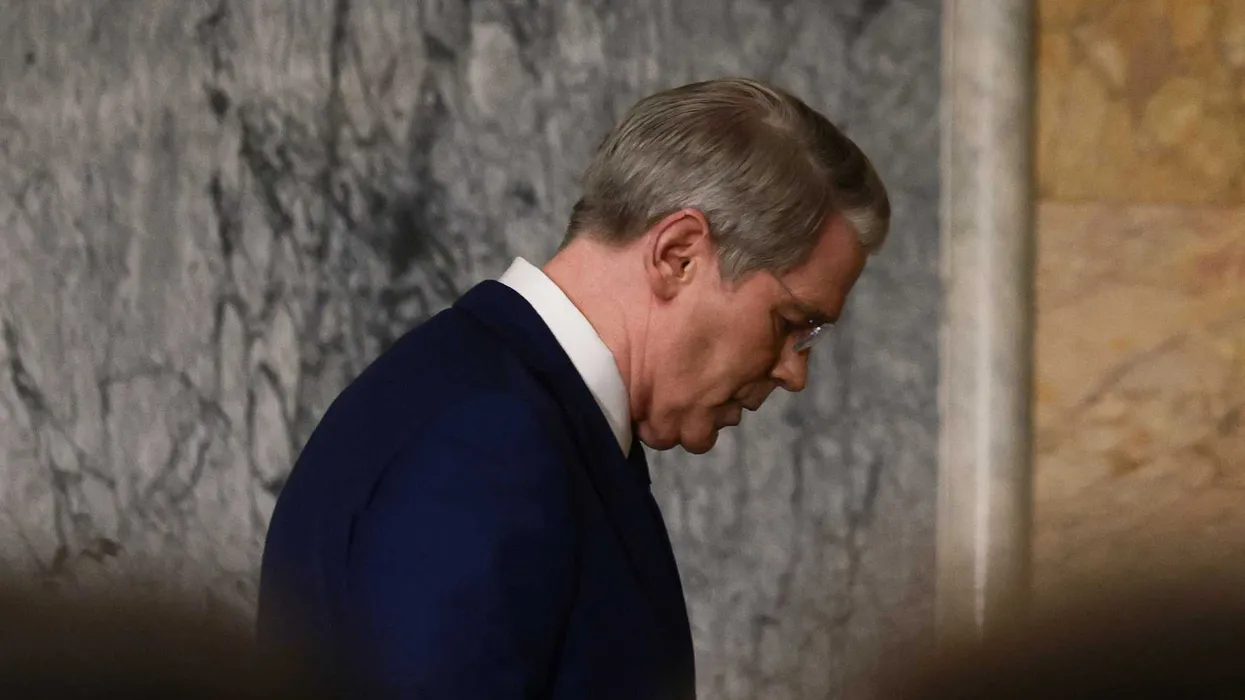
Treasury Secretary Scott Bessent, once seen as one of the more credible picks in Donald Trump's orbit, had a week that underscored how poorly the administration's preferred approach to international conflict — bully first, build a coalition later, and end with nothing to show — transfers from the Pentagon to the Treasury Department.
Bessent had looked like a solid choice for Treasury secretary when he was nominated and confirmed. He won a substantial 69 votes in the Senate — in the Trump era, about as close to unanimous as a confirmation gets. But his standing has diminished, and this week demonstrated why.
Bessent arrived at the G20 finance meeting in Asheville asking the world's finance ministers to unify behind a sanctions campaign against Iran. He left mostly empty-handed, having annoyed allies by inviting Russia's finance minister and by asking countries to join sanctions while the United States simultaneously punishes some of those same allies with tariffs — most jarringly Canada. He also excluded major business media organizations from covering the meeting.
The outcome was predictable. Bessent left the G20 without a joint communiqué because China's finance minister vetoed the U.S.-drafted text, blocking the required consensus. That dynamic is built into the G20's design: unlike institutions such as NATO or the IMF, where weighted voting or majority rules can carry decisions, the G20 operates on unanimity, so a single member can sink any statement — a structural feature that has blocked joint communiqués at previous summits when members disagreed over language on Ukraine and other conflicts.
Meanwhile, on the other side of the world, China's President Xi Jinping was doing something far more consequential. In Bishkek, Kyrgyzstan, Xi joined Vladimir Putin, India's Narendra Modi and seven other heads of state at the Shanghai Cooperation Organization's anniversary summit convened to counter U.S. influence. Founded in 2001 and now spanning much of Eurasia, the SCO has positioned itself as a security and economic counterweight to Western-led institutions, and its members include four nuclear-armed states. Unlike the G20, they issued a joint declaration on Iran that reads like a direct answer to everything Bessent and Defense Secretary Pete Hegseth spent the week asking for. The bloc explicitly rejected “unilateral coercive measures,” defended Iran's right to pursue peaceful nuclear development, and condemned U.S. and Israeli strikes on Iranian territory as violations of international law.
Then came the kicker: Putin separately pledged to keep supplying Iran with the “essential goods” it needs to get through the war. That followed CIA Director John Ratcliffe's trip to Russia last week to warn Moscow to stop violating U.S. sanctions and providing military support to Tehran. The pledge also underscores a core limitation of unilateral U.S. sanctions: enforcement depends heavily on other major economies refusing to fill the gap, and when a country like Russia openly commits to sustaining trade with the target, the measures lose much of their intended squeeze.
The administration seems to believe that countries will simply line up to help America because it is a military and economic superpower. But the obvious questions remain: sanctions work better when allies participate, and they work better when those allies are not being punished with a rolling game of tariffs. Diplomatic pressure works better when countries trust the person applying it, and coalitions work better when the people you want in them are actually consulted. On all of these fronts, Bessent failed.
His decision to invite Russian Finance Minister Anton Siluanov to Asheville — Siluanov's first in-person G20 appearance since Russia's invasion of Ukraine in 2022 — was particularly poorly received. European allies were not pleased. Germany's finance minister called the invitation “troubling” to Bessent's face, and when the time came for the G20's traditional group photo, delegation after delegation refused to stand next to the Russian minister. Treasury ultimately released an official photo with Russia's seat conspicuously empty.
Then there are the tariffs, which turned the whole trip into a self-inflicted problem. Bessent spent the summit pushing “Operation Economic Outcast,” his “D-Day” campaign to pressure countries into cutting off trade with Iran, while the same administration was fighting with Canada — one of America's closest and most reliable allies — over tariffs.
Bessent tried to save face by touting that 19 of the 20 nations agreed China's export practices were unsustainable. But because the G20 requires consensus and China vetoed it, there was no joint communiqué at the conclusion of the summit.
While Bessent struggled in the mountains of North Carolina, the other side was demonstrating how America's haphazard, edict-driven diplomacy has faltered. Hegseth started a war without a coalition, without clear objectives and without an endgame; Bessent is doing the same thing with ad hoc sanctions on Iran. Not only did Putin say Russia would help Iran economically, it also emerged that Russia was helping Iran militarily, aiding Tehran in developing advanced supersonic cruise missiles designed to target U.S. warships and aircraft carriers in the Middle East.
To avoid embarrassment, both Hegseth and Bessent have resorted to freezing out the media. Hegseth has heavily restricted the press by attempting to ban journalists, physically relocating them, and declining to hold press conferences — all during a war. Bessent, for his part, denied credentials to prominent economic and policy reporters from The New York Times, The Wall Street Journal, and Bloomberg News.
And so, after all the bluster, tariffs, sanctions, the empty chair and the press restrictions, Scott Bessent has earned a new distinction — not merely for turning American economic diplomacy into an international game of whack-a-mole, but for helping make America itself look diminished on the world stage. Under Trump, being a loyalist increasingly means being willing to embarrass yourself — and, in the process, the country you serve. Bessent, the author argues, is getting very good at it.
Source: Raw Story

