Berkshire Hathaway Deploys $19.8 Billion in Net Stock Purchases Under Greg Abel, Ending 14-Quarter Selling Streak
Key Takeaways
- •Berkshire Hathaway ended 14 consecutive quarters of net equity selling by deploying approximately $19.8 billion more in stock purchases than sales during the second quarter of 2026.
- •The company invested roughly $10 billion in Alphabet shares, making the Google parent one of Berkshire's largest equity holdings and providing exposure to digital advertising, cloud computing, and AI.
- •Berkshire repurchased approximately $4.5 billion of its own shares between April and June 2026, followed by an additional $3.3 billion in July, signaling management's confidence in the company's intrinsic value.
- •Berkshire's cash and Treasury holdings declined from approximately $380.2 billion to $364.7 billion during the quarter, indicating a shift toward greater capital deployment while maintaining a substantial liquidity cushion.
- •Second-quarter operating profit rose 16% year-over-year to $12.98 billion on revenue of approximately $101.81 billion, though Geico's pretax underwriting profit fell 45% due to higher accident claims and increased advertising costs.
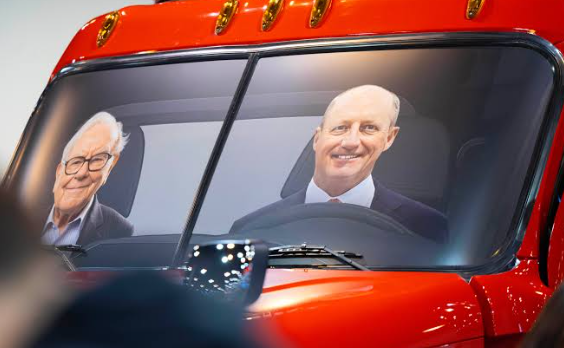
Berkshire Hathaway made a decisive shift in its investment strategy during the second quarter of 2026 under new Chief Executive Greg Abel, investing nearly $20 billion more in publicly traded stocks than it sold. The move ended a 14-quarter streak in which Berkshire was a net seller of equities, marking one of the clearest signals yet that the company is entering a new phase following Warren Buffett's departure as CEO.
According to reports from the Financial Times and Reuters, Berkshire purchased approximately $23 billion in publicly traded stocks during the quarter and sold roughly $3.7 billion, producing net stock purchases of about $19.8 billion. The buying included approximately $10 billion in Alphabet shares, making the Google parent one of Berkshire's largest equity holdings. The company also repurchased about $4.5 billion of its own shares between April and June.
The activity marks a notable reversal for a company that spent much of the past three years accumulating cash and trimming its equity exposure. During that selling streak, Berkshire had substantially reduced its once-massive Apple stake—a position Buffett had built starting in 2016 and which had become Berkshire's largest and most profitable equity holding.
Greg Abel Begins to Put His Stamp on Berkshire
Abel officially succeeded Buffett as chief executive at the start of 2026, a transition first announced at Berkshire's annual shareholder meeting in May 2025. Taking the helm of one of the most closely watched companies in global finance, Abel faces intense scrutiny as only the second CEO in Berkshire's modern history. Buffett, who led Berkshire for six decades, remains chairman and continues to participate in the company's strategic direction.
The transition was expected to be gradual, with investors monitoring whether Abel would preserve Buffett's conservative capital-allocation approach while developing his own strategy. The second-quarter figures provide the strongest indication yet that Abel is willing to deploy capital more aggressively when he identifies attractive opportunities.
According to Financial Times reporting, Berkshire invested $21 billion in listed companies categorized as commercial, industrial, and other stocks, while the broader stock-purchase total reached approximately $23 billion. The decision to increase equity exposure is particularly striking given that U.S. stocks remain at historically elevated valuations.
For years, Buffett's cash accumulation had been interpreted by some investors as evidence that Berkshire was struggling to find investments offering an attractive combination of price, quality, and long-term potential. Abel's approach suggests Berkshire may now be more willing to deploy capital even in a high-valuation environment.
Alphabet Investment Becomes a Major Focus
The most closely watched transaction was Berkshire's approximately $10 billion purchase of Alphabet shares. Alphabet, the parent company of Google and YouTube, is one of the world's largest technology companies and a central player in the global artificial intelligence race.
The investment gives Berkshire exposure to digital advertising, cloud computing, and artificial intelligence. Alphabet's core advertising business remains its most important revenue source, while Google Cloud has become an increasingly significant growth engine. The company is also investing heavily in AI infrastructure and new AI-powered products.
The purchase does not necessarily indicate a narrow bet on artificial intelligence. Rather, it provides exposure to a company with multiple established businesses and a massive global user base. Google Search, YouTube, Google Cloud, and Alphabet's expanding AI product lineup all contribute to the long-term investment case.
Berkshire Ends a Long Selling Streak
The end of Berkshire's 14-quarter net-selling streak may be more significant than any individual purchase. During that period, Berkshire repeatedly sold shares while accumulating cash and short-term U.S. Treasury securities, building a cash and Treasury portfolio to record levels.
At the end of the first quarter, Berkshire held approximately $380.2 billion in cash and Treasury securities. By June 30, that figure had declined to approximately $364.7 billion, according to Reuters. The decline indicates Berkshire has begun drawing on its liquidity, though the company's cash position remains extraordinarily large. Even after billions deployed into stocks, buybacks, and other commitments, Berkshire retains more than $360 billion in cash and Treasury securities.
The Cash Pile Remains a Major Advantage
Berkshire's enormous liquidity has long been a defining characteristic. The company can move quickly during market downturns, acquire businesses without heavy reliance on outside financing, and support its insurance operations during periods of financial stress.
The second-quarter investments do not suggest Berkshire is abandoning that philosophy. Rather, the company appears to be shifting toward a more balanced approach—deploying portions of its liquidity into stocks, acquisitions, and repurchases while retaining a substantial cushion. That flexibility may become one of Abel's most important advantages as he establishes his own track record.
Berkshire Repurchases $4.5 Billion of Its Own Shares
The company repurchased approximately $4.5 billion of its own shares between April and June, marking a significant acceleration in its buyback program after a lengthy period of minimal repurchases. Berkshire also bought back more than $3.3 billion in shares during July, according to Reuters.
Buybacks are closely watched at Berkshire because the company has historically maintained that repurchases make sense only when shares trade below management's conservative estimate of intrinsic value. The decision to spend billions on buybacks provides a clue about how Abel and his team view the company's valuation—and demonstrates that Berkshire has multiple avenues for deploying capital, including public equities, whole-business acquisitions, and self-investment.
A Different Capital-Allocation Environment
Abel faces a different landscape from the one Buffett encountered in his final years. Buffett's challenge was finding investments large enough to absorb Berkshire's growing capital base. As the company grew, smaller acquisitions became less meaningful, forcing Buffett to wait for opportunities capable of making a material difference.
Abel inherits the same constraint but appears more willing to spread capital across multiple opportunities. A $10 billion Alphabet investment may not transform a company worth more than $1 trillion, but it can still generate meaningful returns over a long period. The same logic applies to share repurchases: each individual transaction may appear small relative to Berkshire's total assets, but consistent deployment can have a meaningful effect on per-share value.
Berkshire's Operating Businesses Remain Important
Berkshire reported second-quarter operating profit of $12.98 billion, up 16% from $11.16 billion a year earlier, according to Reuters. Revenue rose 10% to approximately $101.81 billion, while net income more than doubled to approximately $25.67 billion.
Because accounting rules require changes in the market value of Berkshire's investment portfolio to flow through reported earnings, net income can fluctuate substantially. Investors therefore tend to focus on operating earnings when evaluating underlying business performance.
BNSF and Other Businesses Support Results
BNSF Railway contributed to the stronger quarter, benefiting from improved revenue and shipment activity. Berkshire Hathaway Energy remained an important earnings source, while service and manufacturing businesses provided additional support.
TTI, Berkshire's electronic components distributor, reported particularly strong growth. According to the Financial Times, TTI sales rose more than 26%, underscoring how demand for electronic components tied to computing infrastructure is becoming an increasingly important part of Berkshire's industrial profile. This is notable because Berkshire can now gain indirect exposure to technology and AI infrastructure through both its public equity portfolio and its operating businesses.
Geico Faces Pressure
Not all segments performed strongly. Geico, one of Berkshire's most important insurance operations, experienced weaker underwriting results. Reuters reported that Geico's pretax underwriting profit declined 45%, reflecting higher accident claims and increased advertising expenses.
Insurance remains central to Berkshire's financial model. Insurance operations generate premiums that Berkshire can invest before claims are paid—creating what is known as insurance float. This float has grown to well over $160 billion in recent years, providing one of the largest pools of low-cost investment capital available to any company worldwide. Buffett used that float as a powerful source of investment capital throughout his career. Abel now inherits the responsibility of maintaining that advantage while managing Berkshire's expanding collection of industrial and consumer businesses.
Alphabet Could Strengthen Berkshire's Technology Exposure
Berkshire's investment in Alphabet could reshape perceptions of its technology exposure. Apple remains one of Berkshire's most important holdings, providing substantial exposure to consumer technology.
Source: X post — Coin Bureau on Berkshire's capital deployment shift
Alphabet adds a different dimension. Unlike Apple, whose business depends heavily on hardware and its ecosystem of devices and services, Alphabet's core is built around digital advertising, internet services, and cloud computing. Its AI investments could strengthen each of those areas.
For Berkshire, the Alphabet investment offers exposure to long-term technological change without requiring the acquisition of an early-stage AI company or the acceptance of risks associated with speculative technology bets.
Why AI Matters to the Alphabet Investment
Artificial intelligence has become one of the most significant capital-spending themes in global markets. Alphabet is investing billions in data centers, processors, and other infrastructure required to train and operate increasingly sophisticated AI systems. The company competes with Microsoft, OpenAI, Amazon, and other major technology firms for AI leadership.
The investment gives Berkshire exposure to a sector that could reshape advertising, cloud computing, software, and digital services. Alphabet's established businesses remain the foundation—its ability to generate enormous advertising cash flows provides the financial resources to fund AI ambitions. That combination of existing profitability and future technological opportunity aligns with Berkshire's long-standing investment philosophy.
What the Full Holdings Disclosure Could Reveal
Investors will gain a more detailed view of Berkshire's second-quarter activity when the company files its latest portfolio disclosure with U.S. regulators. The filing, known as a Form 13F, is required quarterly from institutional investment managers overseeing at least $100 million in qualifying assets and is typically released within 45 days of quarter-end. It is expected to reveal changes in Berkshire's publicly traded holdings and could answer several key questions: How large is the Alphabet position? Did Berkshire purchase other technology stocks? Which existing positions were reduced? Did the company establish new stakes?
The answers could help investors determine whether the second-quarter activity reflects a broad strategic change or a small number of targeted investments. The filing is expected to draw significant attention from Wall Street.
Buffett's Philosophy Still Shapes Berkshire
Despite Abel's increased activity, Berkshire remains deeply influenced by Buffett's investment philosophy. Buffett spent decades emphasizing the importance of buying high-quality businesses at reasonable prices and holding them for the long term, while cautioning against decisions based on short-term market movements.
There is little evidence that Berkshire intends to abandon those principles. Abel appears to be applying them in a new environment. The Alphabet purchase, for instance, can be viewed as a long-term investment in an established company rather than a short-term bet on the AI boom. Berkshire's share repurchases similarly reflect management's confidence that intrinsic value will continue to grow.
Broader Attention to the Shift
The change in Berkshire's investment activity has attracted attention beyond traditional Wall Street research. The Coin Bureau account has also highlighted Berkshire's move from cash accumulation toward greater capital deployment under Abel, reflecting the broad interest surrounding the company's transition.
For decades, Buffett's decisions were followed by investors worldwide. The market is now studying Abel's choices with comparable intensity. Berkshire's regulatory filings and financial statements remain the primary sources for evaluating the company's actual holdings and capital allocation.
Abel's Next Challenge: Finding More Places to Invest
Berkshire still has hundreds of billions of dollars available. Even after investing nearly $20 billion more in stocks than it sold, the company's liquidity remains enormous. Finding sufficient attractive opportunities could become one of Abel's defining challenges.
Large acquisitions are difficult because Berkshire's size means only substantial transactions can materially affect overall results. Public equities offer greater flexibility, as Berkshire can build positions gradually. Share repurchases provide another option when management believes the stock is undervalued.
The Market Will Watch for More Acquisitions
Abel has already demonstrated willingness to pursue major corporate transactions. Berkshire agreed to acquire homebuilder Taylor Morrison in a deal with an enterprise value of approximately $8.5 billion—one of the company's larger recent acquisitions. Combined with the Alphabet investment and share repurchases, this suggests Abel is not waiting for a single transformative deal. Berkshire may be entering a period in which management uses multiple strategies simultaneously, including public equities, acquisitions, buybacks, and reinvestment in existing operations.
Berkshire's Cash Strategy Could Be Changing
For years, Berkshire's rising cash balance was one of the dominant narratives surrounding the company. Investors debated whether Buffett was waiting for a major market correction or simply unable to find opportunities large enough to justify Berkshire's size.
The second-quarter figures provide the first strong indication that the approach is shifting. Berkshire's cash reserves fell by roughly $15 billion during the quarter, coinciding with increased stock purchases, repurchases, and other capital commitments. The change is not dramatic enough to eliminate Berkshire's liquidity advantage, but it is significant enough to suggest the era of continuously rising cash reserves may be ending.
What Investors Should Watch Next
The coming quarters will be critical for understanding Abel's strategy. Investors will monitor whether Berkshire remains a net stock buyer, track the pace of buybacks, and look for additional acquisitions.
Alphabet will receive particular scrutiny. If Berkshire increases the position, it could become an even more significant portfolio holding. If the position is reduced, investors may interpret the move differently. The full regulatory filing will offer the first detailed snapshot, and subsequent quarterly reports will reveal whether the second-quarter buying represents a structural shift.
A New Era for Berkshire Hathaway
Greg Abel's second quarter as CEO has given investors an early glimpse of the company's next chapter. Berkshire invested approximately $23 billion in publicly traded stocks and sold roughly $3.7 billion, producing about $19.8 billion in net purchases and ending 14 consecutive quarters of net selling. The company purchased approximately $10 billion in Alphabet stock, repurchased $4.5 billion of its own shares, and still maintained approximately $364.7 billion in cash and Treasury securities.
Abel is putting Berkshire's financial strength to work without dismantling the liquidity cushion that has protected the company for years. The approach may represent a middle ground between Buffett's characteristic patience and the more aggressive deployment some investors anticipated from a new CEO.
After more than three years of net stock selling, Berkshire has returned to the market as a significant buyer. The approximately $19.8 billion net investment, the $10 billion Alphabet purchase, and the $4.5 billion repurchase program all point toward a company increasingly willing to deploy its capital reserves. Yet with nearly $365 billion in cash and Treasury securities at the end of June, Abel retains substantial flexibility. The central question is whether the second quarter was an isolated burst of activity or the start of a sustained new investment strategy. Berkshire's upcoming portfolio disclosure should offer further clarity.

