Berkshire Hathaway's Record $397 Billion Cash Pile Declines as Greg Abel Begins Deploying Capital
Key Takeaways
- •Berkshire Hathaway's cash position declined by approximately $32 billion in the second quarter, from a record $397.4 billion to $365.5 billion.
- •After 14 consecutive quarters as a net stock seller, Berkshire became a net equity buyer, investing $19.8 billion more in stocks than it sold during the period.
- •The company acquired roughly $10 billion in Alphabet stock, marking a significant new technology investment and providing exposure to artificial intelligence and cloud computing.
- •Berkshire completed a $6.8 billion acquisition of homebuilder Taylor Morrison while also repurchasing approximately $4.5 billion of its own shares in the second quarter.
- •Second-quarter operating earnings reached approximately $13 billion, up about 16% year-over-year, even as Geico's underwriting profit fell by roughly 45%.
Berkshire Hathaway's cash, cash equivalents, and short-term U.S. Treasury holdings fell from a record $397.4 billion at the end of the first quarter to approximately $365.5 billion by the end of the second quarter — a decline of roughly $32 billion. At its peak, the cash pile exceeded the annual economic output of many nations, making Berkshire one of the largest non-government holders of U.S. Treasury securities in the world. The reduction comes after Berkshire spent 14 consecutive quarters as a net seller of stocks.
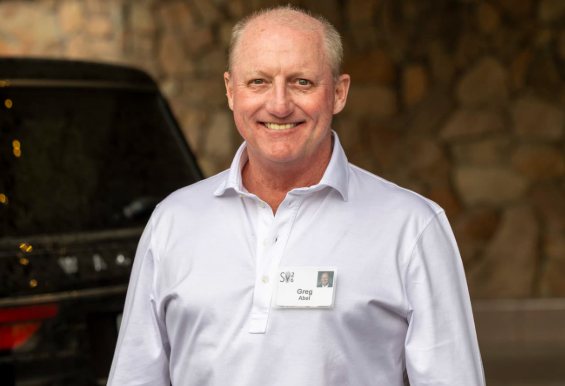
In a sharp reversal, Berkshire became a net buyer of equities in the second quarter, deploying approximately $19.8 billion more into stocks than it sold. The shift represents one of the clearest signals yet of how the conglomerate may operate under Greg Abel, who assumed the chief executive role at the beginning of 2026 after Warren Buffett stepped down as CEO. Abel had been formally identified as Buffett's designated successor at Berkshire's 2021 annual shareholder meeting, giving investors years of visibility into the eventual transition.
For years, Buffett allowed Berkshire's cash reserves to grow while waiting for attractive investment opportunities. Abel now appears to be putting at least part of that capital to work. The move does not signal an abandonment of Berkshire's conservative investment philosophy — the company still holds hundreds of billions of dollars in highly liquid assets — but it suggests the post-Buffett era may bring a more active approach to capital deployment.
Berkshire's Record Cash Pile Finally Declines
Berkshire Hathaway's cash position had become one of the most closely watched figures in global finance. At the end of March, the conglomerate held approximately $397.4 billion in cash, cash equivalents, and short-term Treasury securities, setting yet another record for a company already known for maintaining unusually large liquidity reserves. By June 30, that figure had fallen to approximately $365.5 billion.
A $32 billion decline would be extraordinary for most corporations. For Berkshire, the more important issue is not the size of the reduction but what caused it: the company was deploying capital. Berkshire purchased approximately $23.5 billion of equity securities during the quarter while selling around $3.7 billion, producing net equity purchases of roughly $19.8 billion. That ended a long stretch in which Berkshire consistently sold more stocks than it purchased.
The change has immediately focused attention on Abel's investment strategy and whether Berkshire is entering a new phase of capital allocation.
Greg Abel Breaks With a Three-Year Pattern
Warren Buffett spent much of his final years as CEO building Berkshire's cash reserves. The company repeatedly sold stocks without finding enough opportunities that met its standards for large investments. That behavior was interpreted by many investors as evidence that Buffett believed parts of the U.S. stock market had become too expensive. Berkshire's cash position continued to rise even as equity markets reached new highs.
Greg Abel inherited that enormous reserve when he became CEO. The company's nearly $20 billion net investment in stocks during the second quarter marks a sharp contrast with the previous 14 quarters. This is not necessarily evidence that Abel believes stocks across the board are cheap. Instead, it suggests that Berkshire has identified individual opportunities where management believes the potential return justifies putting capital at risk. That distinction is consistent with Berkshire's traditional approach — the company has never needed to invest simply because it had cash available. Its advantage is that it can wait.
Alphabet Emerges as a Major New Investment
One of the most significant transactions disclosed around the quarter was Berkshire's purchase of roughly $10 billion in Alphabet stock. Alphabet, the parent company of Google, represents a notable addition to Berkshire's portfolio, giving the conglomerate exposure to internet advertising, cloud computing, artificial intelligence, and other technology markets.
Berkshire has historically been associated with consumer brands, financial companies, industrial businesses, and other traditional sectors. However, the company has demonstrated a willingness to invest in technology when underlying businesses meet its investment criteria. Its experience with Apple, which grew into one of its largest and most profitable equity holdings, demonstrated that technology investments can play a meaningful role within Berkshire's portfolio when the underlying business is durable and well-managed. The Alphabet purchase could become an important test of Abel's investment philosophy. Alphabet has enormous cash generation, a strong balance sheet, and several businesses with significant long-term growth potential. Its position in artificial intelligence also gives Berkshire exposure to one of the most important investment themes in global markets.
Alphabet is spending heavily on computing infrastructure, AI models, and data centers as it competes in one of the fastest-changing areas of technology. For Berkshire, the investment potentially offers exposure to long-term AI growth without requiring the conglomerate to directly build an AI business.
Still, one investment does not transform Berkshire into a technology-focused company. The conglomerate remains heavily diversified across insurance, railroads, energy, manufacturing, retail, and services. Its stock portfolio contains businesses from multiple sectors, and its diversification allows individual holdings to perform differently while the overall portfolio continues generating value.
Berkshire Continues Share Buybacks
The capital deployment was not limited to outside companies. Berkshire also repurchased approximately $4.5 billion of its own shares during the second quarter. Share buybacks have long been part of Berkshire's capital-allocation strategy. The company has historically maintained that repurchases make sense when its stock trades below management's estimate of intrinsic value.
Rather than simply accumulating cash or waiting for a massive acquisition, Berkshire is now using several channels to deploy capital: purchasing publicly traded companies, repurchasing its own shares, and pursuing acquisitions of entire businesses. That flexibility remains one of Berkshire's most important competitive advantages.
The Taylor Morrison Acquisition
Berkshire's capital deployment also extends beyond the stock market. The company completed its acquisition of homebuilder Taylor Morrison, a deal reported at approximately $6.8 billion.
The transaction demonstrates why Berkshire's cash position cannot be viewed simply as an investment portfolio waiting to be deployed. The conglomerate can use its capital for public equities, private acquisitions, operating businesses, and share repurchases. If a large company becomes available at an attractive price, Berkshire can make an acquisition. If public markets offer better opportunities, it can buy stocks. If Berkshire shares become undervalued, the company can repurchase its own stock. And if none of those opportunities are compelling, Berkshire can simply keep the money in highly liquid investments.
Berkshire Still Has an Enormous Safety Cushion
Despite the $32 billion decline, Berkshire remains extraordinarily liquid. The company ended the second quarter with roughly $365.5 billion in cash, cash equivalents, and short-term Treasury holdings. Berkshire has used a portion of its enormous reserves while maintaining a substantial financial cushion.
That could be particularly important if economic conditions deteriorate. A company with hundreds of billions of dollars in liquid assets can act when competitors are struggling to raise capital, buy companies during periods of market stress, invest when valuations fall, and continue supporting its operating businesses without depending heavily on outside financing. That financial flexibility was one of the hallmarks of Buffett's Berkshire. Abel appears to be preserving it.
Operating Earnings Strengthen
The investment activity came alongside solid operating performance. Berkshire reported second-quarter operating earnings of approximately $13 billion, up about 16% from the same quarter a year earlier. The improvement was supported by several of Berkshire's operating businesses, including its railroad, energy, manufacturing, service, and retail operations. BNSF Railway posted stronger results, while TTI, Berkshire's electronics distribution business, benefited from demand connected to artificial intelligence infrastructure.
The performance is important because Berkshire is not simply an investment company. It owns a sprawling collection of operating businesses — ranging from Geico and BNSF to Dairy Queen and Berkshire Hathaway Energy — that generate revenue and cash flow independently of its stock portfolio. Those businesses provide Berkshire with another source of capital that can eventually be redeployed.
Insurance Remains a Challenge
Not every part of Berkshire performed strongly. Insurance remains one of the company's most important businesses, but Geico faced weaker underwriting performance during the quarter. Geico's underwriting profit fell sharply, declining by about 45%.
Insurance is particularly important to Berkshire because of the capital generated through its insurance operations. The company collects premiums before it pays claims, creating what is commonly known as insurance float. Float has been a cornerstone of Berkshire's financial model since Buffett acquired National Indemnity in 1967 and recognized that premium dollars could be invested while waiting for claims to be paid. Berkshire has historically been highly effective at investing that capital. The strength of the insurance operations remains an important component of the company's overall financial model. A weaker quarter at Geico does not undermine Berkshire's broader balance sheet, but investors will continue to watch the insurance businesses closely.
Buffett Remains Part of the Story
Although Buffett no longer serves as Berkshire's CEO, he remains chairman, meaning the transition is not a complete break with the past. Recent reporting indicates that Buffett had been involved in the Alphabet investment, although Abel now has final authority as chief executive. That arrangement could provide continuity while Abel gradually establishes his own capital-allocation record.
For decades, Berkshire Hathaway was effectively synonymous with Warren Buffett. His investment philosophy shaped the company's reputation. His annual shareholder letters became required reading for investors. His decisions on acquisitions, stocks, and buybacks were closely followed by markets around the world. Greg Abel now has the difficult task of leading Berkshire without simply attempting to reproduce Buffett. The second-quarter results offer an early indication that he intends to maintain the company's core principles while making his own decisions.
What Comes Next for Berkshire's Cash
The remaining cash pile leaves Berkshire with enormous flexibility. The company could continue buying stocks if attractive opportunities appear, pursue another large acquisition, increase share repurchases, or allow the cash balance to rise again if valuations become less appealing. That flexibility means investors should not assume the latest decline marks the beginning of a permanent downward trend in Berkshire's cash reserves. The company's capital allocation will likely remain highly dependent on market conditions and available opportunities.
Investors will be particularly interested in Berkshire's upcoming 13F filing with the SEC, the quarterly disclosure that institutional investment managers are required to file, because the second-quarter results do not immediately reveal every stock purchase. The company disclosed the broad scale of its equity activity, but some individual positions will become clearer through subsequent filings. Additional filings could also reveal changes in existing holdings. Berkshire's stock portfolio is closely followed because its purchases can influence market sentiment, and a new position can quickly become a major talking point across Wall Street.
Broader Market Attention
The shift has also been highlighted by the Coin Bureau account on X, bringing attention to Berkshire's changing capital-allocation strategy among a broader investment audience.
The connection is notable because Berkshire and cryptocurrency represent very different approaches to investing. Berkshire emphasizes cash flow, business fundamentals, and long-term ownership, while the crypto market is often driven by technology adoption, network effects, and digital-asset demand. Yet investors in both markets closely monitor large capital flows, and Berkshire's decision to deploy billions of dollars serves as an important signal about how major institutional capital is being allocated in the current market environment.
Source: Hokanews

