Greg Abel Begins Deploying Berkshire Hathaway's Record Cash Reserves
Key Takeaways
- •Greg Abel assumed the CEO role at Berkshire Hathaway in January 2026, succeeding Warren Buffett after his 64-year tenure at the company.
- •Berkshire closed the first quarter of 2026 with $397.4 billion in cash and equivalents, the highest level in company history, supported by insurance underwriting profits and investment income.
- •The company completed an approximately $6.8 billion all-cash acquisition of Taylor Morrison Home Corporation on July 24, 2026, paying a 24% premium to deepen its housing sector presence.
- •Berkshire committed roughly $23 billion to Alphabet across multiple transactions, resulting in a stake valued at approximately $31.5 billion and signaling Abel's willingness to build concentrated positions in major technology platforms.
- •Abel restarted share repurchases in the first quarter of 2026 with $234 million in buybacks, ending a suspension that had been in place since late 2024.
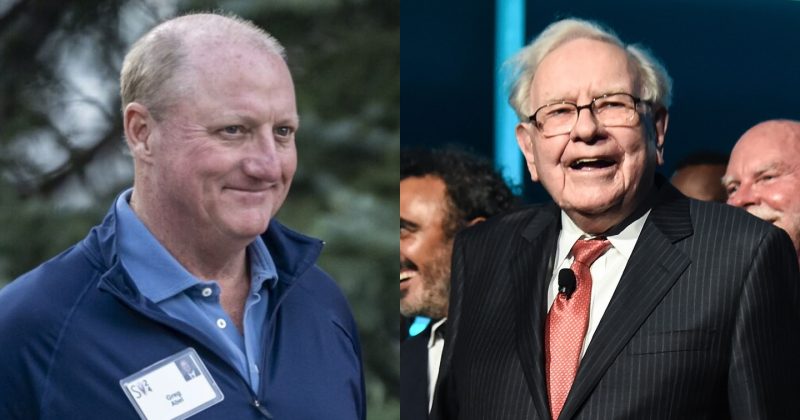
Warren Buffett spent years allowing Berkshire Hathaway's cash reserves to accumulate to levels that drew criticism from observers. His successor now appears ready to put that capital to use.
Greg Abel, who assumed the CEO role in January 2026 following Buffett's 64-year tenure, is deploying the company's capital at a notable pace. Abel had previously served as vice chairman of Berkshire's non-insurance operations, giving him direct oversight of subsidiaries including BNSF Railway and Berkshire Hathaway Energy before stepping into the top role. Berkshire closed the first quarter of 2026 with $397.4 billion in cash and equivalents — the highest in the company's history, up from approximately $373 billion at the end of 2025. That cushion has been sustained by steady insurance underwriting profits and investment income, core pillars of Berkshire's business model for decades.
Major Acquisitions and Investments
Berkshire's most prominent move was the all-cash acquisition of Taylor Morrison Home Corporation, finalized on July 24, 2026, at approximately $6.8 billion, representing a 24% premium to the share price prior to the announcement. The acquisition is intended to deepen Berkshire's presence in the housing sector and complement existing subsidiaries such as Clayton Homes. U.S. housing construction has trailed household formation for over a decade, and homebuilders with strong land positions and operational scale are positioned to benefit if that supply-demand imbalance persists.
Berkshire also committed roughly $23 billion to Alphabet across multiple transactions, including a $10 billion private placement completed in June 2026. The resulting stake in Alphabet is valued at approximately $31.5 billion. The move extends a pattern that began under Buffett, whose build-up of a large Apple position marked Berkshire's most significant technology holding. An Alphabet commitment of this size, executed partly through a private placement, points to Abel's willingness to pursue concentrated positions in platform companies whose revenue streams span digital advertising, cloud computing, and artificial intelligence.
Additionally, Abel restarted share repurchases in the first quarter, though on a modest scale — Berkshire bought back $234 million worth of its own stock. Berkshire had suspended buybacks in late 2024, and the resumption, even at a limited level, signals a degree of confidence in the company's valuation.
Capital Deployment Strategy
A $6.8 billion homebuilder acquisition combined with a $23 billion technology stake, both completed within the first half of 2026, signals a significant acceleration in capital deployment. Executing an investment of that magnitude through a private placement indicates that Berkshire and Alphabet engaged in structured discussions regarding the terms, rather than a conventional open-market purchase. Despite these commitments, the remaining cash position remains substantial by any historical measure, leaving Berkshire with considerable firepower for further acquisitions or investments — a capacity that rivals most private equity funds and sovereign wealth funds.

