Benz Mining Identifies High-Grade Gold Zones at Glenburgh Project in Western Australia
Key Takeaways
- •Benz Mining's drilling at the Icon deposit returned 41 metres grading 14.5 grams gold per tonne from 260 metres downhole, among several new high-grade intercepts.
- •The company's structural fold model identifies high-grade gold within northeast-plunging hinge zones, a pattern now confirmed at both the Icon and Hurricane targets.
- •Benz plans to publish a maiden mineral resource estimate for Glenburgh during the first half of next year, with nine drill rigs currently active and 250,000 additional metres planned before year-end.
- •Glenburgh's exploration target ranges from 10.1 to 12 million ounces of gold, a scale that would place it among Australia's larger gold deposits if confirmed by further drilling.
- •Benz shares have risen nearly sixfold over the past year to $3.75 per share, giving the company a market capitalization of C$1.3 billion.
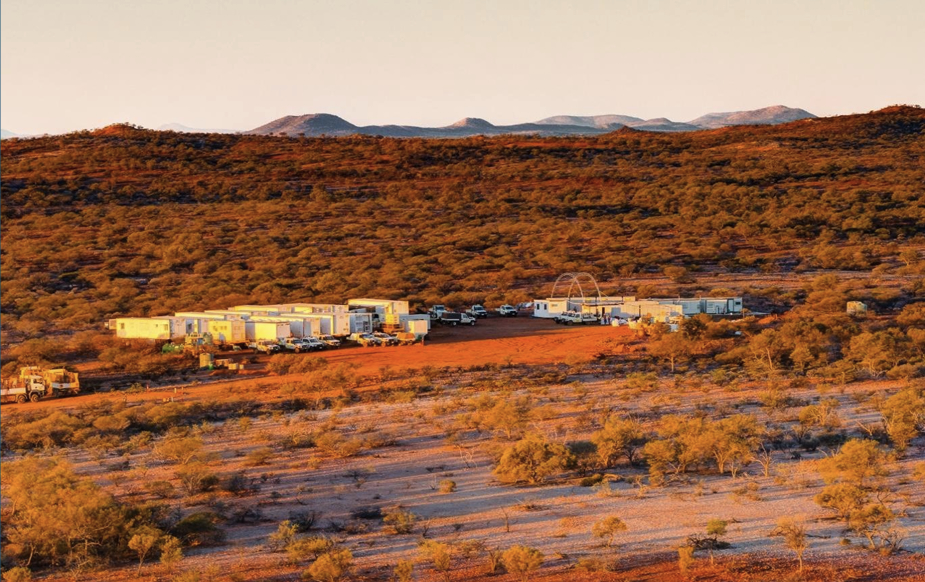
Benz Mining (TSXV: BZ; ASX: BNZ) has intersected 41 metres grading 14.5 grams gold per tonne at its Glenburgh project in Western Australia, indicating that tighter drilling could unlock additional ounces within the known Icon deposit.
Hole 26CN079 returned the interval from 260 metres downhole. A second hole at Icon produced 75 metres at 2.3 grams gold from 253 metres. The Glenburgh project is located approximately 730 km north of Perth in the Gascoyne region, an emerging gold province that has seen comparatively little modern exploration relative to Western Australia's established Goldfields and Pilbara mining districts.
"What excites us at Icon is that every new drill line seems to reveal more of the system," CEO Mark Lynch-Staunton said in a Monday release. "As drilling tightens, new NE-plunging high-grade hinge zones keep emerging, unlocking substantial additional ounce potential within the existing footprint."
Vancouver-based Benz intends to convert Glenburgh's largely drill-supported exploration target into a maiden resource during the first half of next year. A maiden mineral resource estimate would mark a critical step in de-risking Glenburgh, providing a JORC- or NI 43-101-compliant foundation for future scoping and economic studies. If the fold model proves consistent across the project, Benz could identify additional gold within areas that earlier drilling had already tested, rather than relying solely on step-out exploration.
Benz shares have risen nearly sixfold over the past year. The stock climbed 19% on Tuesday in Toronto to $3.75 per share, giving the company a market capitalization of $1.3 billion (US$924 million). Shares have traded in a range of 66¢ to $3.86 over the period.
Structural Model Guides Drilling
Benz is drilling Icon on a 50-by-25-metre pattern. Previous explorers relied on wider-spaced, shallow holes that could not adequately resolve the project's tightly folded geology. Benz's model positions much of the high-grade gold within the hinge zones of those folds, which plunge to the northeast through the deposit. The approach of applying refined structural understanding to historically drilled ground is a well-established exploration strategy in Western Australia, where earlier campaigns often lacked the geological modelling tools now available.
An additional new hole, 26CN074, returned 39 metres grading 3.6 grams gold from 186 metres, including a higher-grade interval of 8 metres at 15.6 grams from 192 metres. The same structural pattern has been identified at the Hurricane target, supporting Benz's application of the fold model beyond Icon. Benz has not yet determined the true widths of the reported intervals.
Resource and Exploration Target
Glenburgh's 2024 resource stands at 16.3 million tonnes grading 1 gram gold per tonne, containing 510,100 ounces. Benz's substantially larger exploration target ranges from 485 million to 540 million tonnes grading 0.65 to 0.69 gram per tonne, for 10.1 million to 12 million ounces of gold. If confirmed through further drilling, that scale would place Glenburgh among Australia's larger gold deposits, though exploration targets are by definition conceptual and not equivalent to a mineral resource.
Approximately 80% of the exploration target is supported by drilling and modelled mineralized zones. The remaining 20% relies on geological projections beyond current drilling.
Ongoing Work Program
Benz plans to complete the drill pattern across the Hurricane, Icon, and Thunderbolt targets before finalizing the resource model. Nine drill rigs are currently active at Glenburgh, where the company had completed more than 210,000 metres of drilling by early August and intends to add another 250,000 metres before year-end.
The Thunderbolt target, which Benz began drilling this year, had only been tested to depths of less than 100 metres in previous campaigns.
Glenburgh already holds a mining lease, clearing permit, water licence, and Native Title agreement. Carbon-in-leach metallurgical tests achieved gold recoveries exceeding 95%, addressing two common early-stage development risks — permitting and processing — while Benz continues to demonstrate the project's scale.
Benz also owns the Eastmain gold project in Quebec and the Mt Egerton gold project in Western Australia. Together, these assets provide the company with a global inferred and indicated resource base of approximately 1.54 million ounces of gold at an average grade of about 2.2 grams per tonne.

