Rep. Bennie Thompson Says Scott Colom's Historic Mississippi Senate Win Came Despite Lack of DSCC Support
Key Takeaways
- •Scott Colom's 2026 midterm victory made him the first Black U.S. Senator from Mississippi since the Reconstruction era.
- •Rep. Bennie Thompson accused the Democratic Senatorial Campaign Committee of refusing to back Colom's campaign, suggesting possible regional bias against Southern candidates.
- •Black residents constitute roughly 38 percent of Mississippi's population, the largest share of any U.S. state, according to Census Bureau data.
- •Thompson helped launch Colom's political career through the Mississippi Black Leadership Institute, and Colom's first win came as a district attorney who defeated a 28-year incumbent in a majority-white district.
- •Colom's Senate term is scheduled to begin when the new Congress convenes in January 2027.
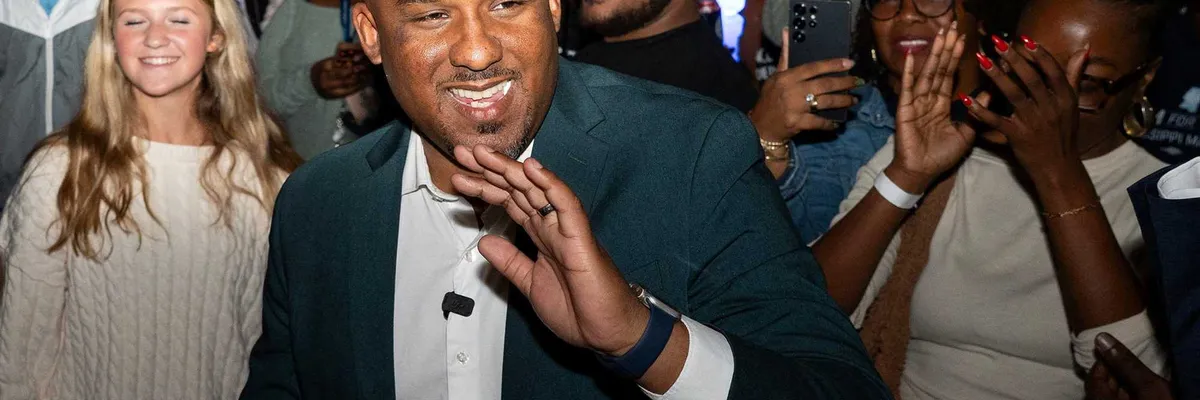
Fresh off Scott Colom's historic 2026 midterm election victory — which made him the first Black U.S. Senator from Mississippi since Reconstruction — Rep. Bennie Thompson (D-MS) is calling out Democratic Party leaders he says failed to support Colom's campaign. Black residents make up roughly 38 percent of Mississippi's population, the largest share of any U.S. state according to Census Bureau data, yet the state's only previous Black senators — Hiram Revels, the first Black senator in U.S. history, and Blanche K. Bruce — served during the Reconstruction era. In an interview with Vox's Today, Explained podcast, Thompson reflected on what contributed to Colom's win while sounding the alarm about the struggle it took to get there without help from those in power.
Thompson has represented Mississippi's majority-Black Second Congressional District since 1993. His work with Colom began early in the now-senator's political career. Thompson and his peers formed the Mississippi Black Leadership Institute as a way to get others involved in enacting change, and it was through that institute that he first met Colom.
"And he [Colom] really said, 'I want to run for something. I don't know what it is.' He said, 'But there's a district attorney's position that's available. It's three counties,'" Thompson recalled.
From there, the group got to work. "We helped Scott put his campaign together. We hooked him up with various people, and he beat a 28-year incumbent as district attorney," Thompson said.
Southern politics in Mississippi have long been shaped by socioeconomic struggles that impact Black residents and historical racial divides. Even so, Thompson says Colom stood out as a candidate, despite the fact that the district he ran in did not have a majority-Black population. "He had the fire in the belly. And he never met a stranger. And so we prepared him, and he's one of our star pupils of that class," Thompson said of Colom.
Their biggest obstacle, according to Thompson, was the Democratic Senatorial Campaign Committee (DSCC), the official campaign arm of the Democratic Party dedicated solely to electing and re-electing Democrats to the United States Senate. Thompson said he does not know why the DSCC pushed back, though he believes "Northeasterners were still looking down on Southerners."
Without the committee's support, the campaign worked even harder, relying on messaging more than anything else. "We did everything that the system says you should do. We gave the demographics. That district [Colom] represented was not a majority-African American district. He beat that sitting district attorney in a majority-white district because he had a plan and he had a message. We had a rich message, but a poor campaign. Because we couldn't get our DSCC to help," Thompson said.
With Colom's victory now secured — and his Senate term set to begin when the new Congress convenes in January 2027 — Thompson said he is finally in a position to tell the DSCC, "I told you so."

