Bekia Raises $765,000 to Build a Digital Record Layer for Egypt's Recycling Industry
Key Takeaways
- •Bekia raised $765,000 in a seed round led by Madica, with follow-on investment from Catalyst Fund and participation from Jambaar Capital.
- •The company will launch Bekia Next at the end of October, its first B2B software product that converts collection data into verified CO₂-avoidance certificates for corporate clients.
- •produces roughly 60,000 tonnes of municipal waste per day, and the government targets lifting the national recycling rate to 60% by 2027 from around 37% in 2024.
- •Bekia self-reports having diverted more than 25,000 tonnes of waste from landfill, served over 100,000 customers of whom 97% are women, and grown more than sevenfold since 2023.
- •The new funding will also finance a first test of Bekia's model in a second, unnamed African market.
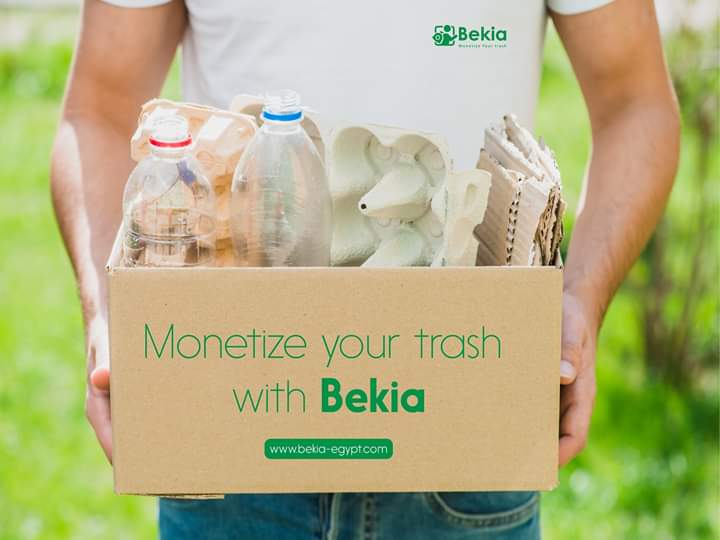
Egyptian recycling-technology startup Bekia has raised $765,000 in seed funding to build what its founder describes as a missing record layer for the country's waste economy. The capital will also fund the launch of a new business product and a first test of the company's model in a second African market.
The round was led by Madica, the Africa-focused investment programme affiliated with Flourish Ventures. Catalyst Fund, which first backed Bekia in 2023, returned with follow-on investment, while Dakar-based Jambaar Capital also participated.
Founded in 2019 by Alaa Afifi, a computer science graduate of Cairo University, Bekia began with a straightforward consumer service: households schedule a collection through the app, a collector arrives at an agreed time, the material is weighed and priced on site, and the household is paid directly into a bank account or e-wallet.
According to Afifi, Egypt has never lacked recyclable material or demand for it. What the market lacked, he argues, was a link between the households sitting on that material and the factories that wanted to buy it.
“Egypt’s recycling sector has always worked — it just worked invisibly, on cash and trust, with no record of any of it,” Afifi said. “We built the software layer that changes that: a collector gets a transaction history, a factory gets traceable supply, a household learns what its waste is actually worth. The material itself is a commodity, but the record of it isn’t, and nobody in our market owns that record yet.”
Egypt produces roughly 60,000 tonnes of municipal waste a day — a pace of more than 20 million tonnes a year — most of which still ends up in open dumps rather than recycling plants. The government has set a target of lifting the national recycling rate to 60% by 2027, up from around 37% in 2024, a gap of roughly 23 percentage points to close in three years. Almost all collection that takes place today runs through informal channels, without contracts, licences, or records of any kind.
That regulatory push gives Bekia's traceability product a commercial use case that goes beyond convenience. Businesses able to verify where their recycled material came from may be better positioned as reporting requirements tighten, particularly when working with multinational clients that need to document their waste footprint.
The new funding will expand Bekia's engineering team and finance the launch, at the end of October, of Bekia Next, the company's first B2B software product. Bekia Next converts the platform's collection data into verified CO₂-avoidance certificates for corporate clients, using established international carbon accounting methodology. The product marks a shift from selling a collection service to selling a subscription built on data the company already holds — a notable move for a startup whose original business was logistics rather than software licensing. It is also the first time the record layer Afifi describes has been offered to corporate clients as a product in its own right.
According to Bekia has self-reported, the company has diverted more than 25,000 tonnes of waste from landfill, served more than 100,000 customers — 97% of them women — and enabled more than 2,400 people to earn income through its network, while growing more than sevenfold since 2023. Enterprise retention is reported to be above 95%, a metric that becomes more meaningful as the company shifts toward subscription revenue.
Revenue currently comes from a mix of enterprise contracts, household collections, and refurbished electronics, the last of which generated its first revenue in June 2026.
Investors framed the raise around infrastructure rather than any single product line. “Since then, Bekia has grown more than 7x while building a stronger B2B-led platform that diverts waste from landfill and formalises a fragmented waste sector,” said Maxime Bayen, Partner at Catalyst Fund. “Our decision to re-invest reflects our conviction that Bekia can become critical climate infrastructure for Egypt and the region.”
July Andraous, managing partner at Jambaar Capital, described Bekia as building “an important infrastructure layer in Egypt’s recycling economy,” citing improving unit economics alongside the company's growth as the basis for reinvesting.
Bekia has said it will begin testing its approach in a second African market with this funding, without naming which one. The expansion will test Afifi's core thesis — that the real value sits in the record of a transaction rather than the material itself — against a different regulatory environment and a different informal waste economy from the one Bekia has spent six years learning to formalise in Egypt.

