Richmond Fed's Barkin Says Rate Decision Remains a "Close Call"
Key Takeaways
- •Richmond Fed President Thomas Barkin stated that determining whether interest rates are sufficiently restrictive remains a close call due to uneven inflation and an unconvincing labor market.
- •Barkin declined to indicate whether he would have supported the three FOMC members who dissented in favor of an additional rate hike at the most recent policy meeting.
- •Price increases are spreading unevenly through the economy, with goods costs moderating while services and shelter expenses remain elevated, complicating the assessment of overall inflation trends.
- •Barkin expressed skepticism about labor market strength and described his current policy stance as undecided while he weighs competing economic signals.
- •As a current rotating voting member of the FOMC, Barkin's input will carry particular weight at upcoming rate decisions.
Richmond Fed's Barkin Says Rate Decision Remains a "Close Call"
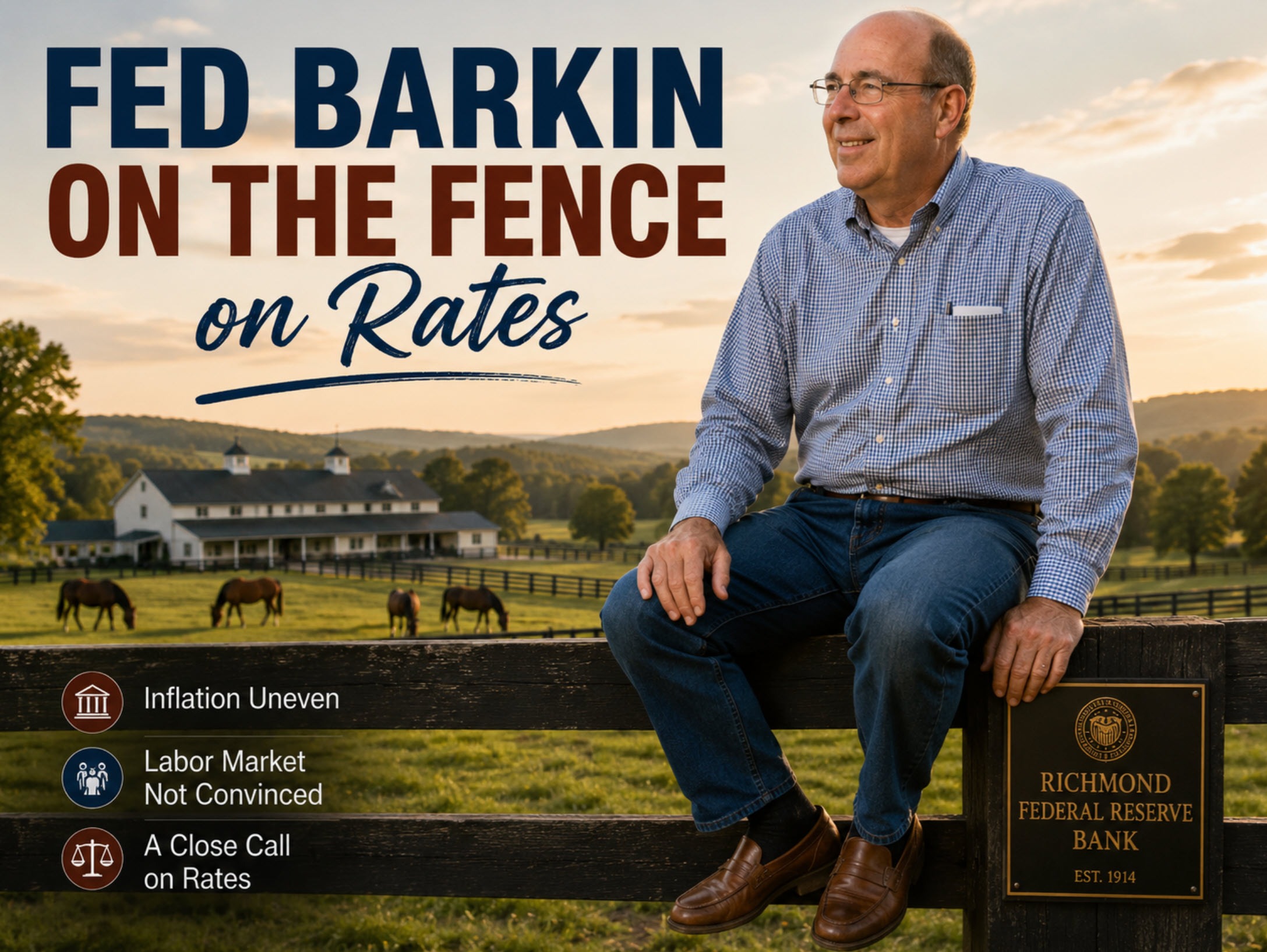
Richmond Federal Reserve President Thomas Barkin indicated that the decision on whether interest rates are sufficiently restrictive remains a "close call," noting that inflation pressures continue to spread unevenly throughout the economy while the labor market has yet to demonstrate convincing strengthening.
Barkin declined to say whether he would have joined the three Federal Open Market Committee (FOMC) officials who dissented in favor of an additional rate hike at the most recent policy meeting. Dissents at FOMC meetings are relatively uncommon, and three dissenting votes in a single meeting underscored the depth of internal debate at the central bank over whether the cumulative tightening delivered since early 2022 has been enough. His remarks reflect ongoing uncertainty within the Federal Reserve about whether the current level of interest rates — already at their highest in over two decades — is high enough to bring inflation sustainably back to the central bank's 2 percent target.
Inflation Pressures Moving Unevenly
According to Barkin, price increases are propagating through the economy in an uneven manner, complicating the assessment of overall inflation trends. This pattern has been a recurring feature of the post-pandemic inflation cycle, where goods prices have moderated in some categories while services and shelter costs have proven more sticky. He emphasized that this unevenness makes it difficult to determine with confidence whether further monetary tightening is warranted.
Labor Market Skepticism
Barkin expressed skepticism that the labor market has strengthened in a meaningful way, suggesting that employment conditions alone do not yet justify another rate increase. The Federal Reserve closely monitors labor market data as part of its dual mandate, which includes maximum employment alongside price stability. The tension between those two mandates is at the heart of the current policy debate: further rate hikes could help cool inflation but risk dampening job growth.
An Undecided Voter
Barkin characterized his current stance as undecided, indicating he is weighing competing signals before committing to a position on the next move for rates. He is effectively sitting on the fence while evaluating incoming economic data.
Barkin currently holds a vote on the Federal Open Market Committee as a rotating member. Regional Fed presidents rotate into voting seats each year, meaning his direct input on rate decisions carries particular weight at upcoming meetings.
Source: ForexLive / InvestingLive

