BankChain Alliance Targets 2027 U.S. Blockchain Launch Backed by 39 State Banking Groups
Key Takeaways
- •The BankChain Alliance is targeting a U.S. blockchain launch in 2027.
- •Support for the initiative is tied to 39 state banking groups across the United States.
- •The proposed network is designed to be owned and operated by banks rather than a third-party crypto company.
- •The project is intended for regulated banking use, not speculative token trading.
- •The 2027 launch date is only a target, and no network is live yet.
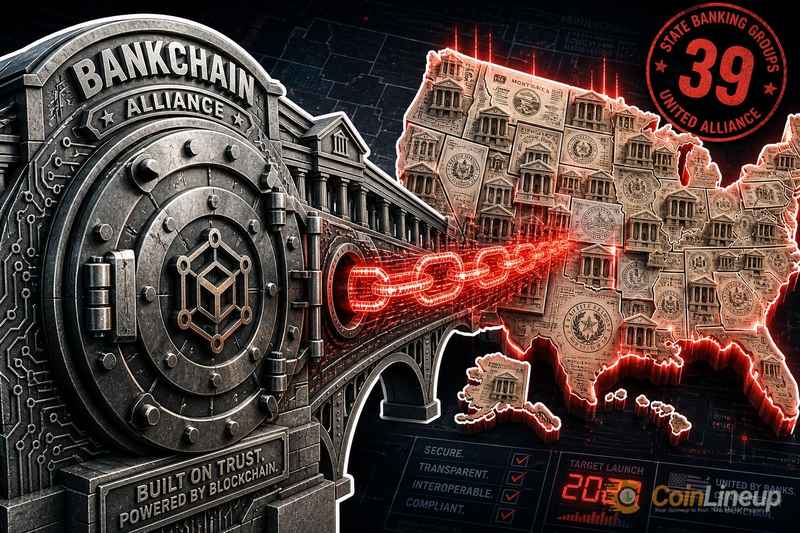
The BankChain Alliance is planning a U.S. blockchain launch in 2027, backed by a coalition tied to 39 state banking groups. The effort is aimed at creating an industry-owned blockchain network for regulated banks, rather than a platform for speculative crypto trading.
The initiative is centered on a single milestone: launching the network in 2027. According to the Indiana Bankers Association, that timeline gives banks, regulators, and technology partners a fixed horizon for planning. For related coverage, see Artificial Intelligence Summit –Philippines 2026.
A blockchain is a shared digital ledger that multiple parties can update and verify at the same time. In this case, an “industry-owned” blockchain means the banks themselves would control the network instead of a third-party crypto company. For related coverage, see Top 7 Cryptocurrencies Of August 24, 2026 – Featuring the Next 1000x Meme Coin.
Put another way, it is a private club ledger: the banks build it, operate it, and set the rules together. That model is very different from an open network such as Ethereum. For related coverage, see Artificial Intelligence Summit –Malaysia 2026.
Why 39 state banking groups matter
The scale of the coalition is one of the most notable parts of the plan. Support is tied to 39 state banking groups, which represent local and regional banks across the United States.
That breadth suggests a multi-state effort rather than a small regional pilot. Backing from established banking groups also gives the project a level of credibility that a lone startup initiative would not have, and it could make it easier to coordinate standards across banks that already operate under overlapping state and federal oversight.
The BankChain Alliance presents the project as a network owned by the banking industry itself. When many state associations line up behind a single initiative, it indicates institutional weight and may help the project gain adoption momentum.
For everyday bank customers, the message is straightforward: this is a traditional bank-led blockchain effort operating under existing banking oversight, not a new crypto app asking users to buy tokens.
What the 2027 target could mean
A dated target creates a concrete deadline and forces decisions on infrastructure, compliance, and execution well before launch, according to the alliance’s own materials.
Because the participants are regulated banks, the likely uses appear to lean toward practical banking functions rather than trading. That points to regulated blockchain adoption, where the same rules that govern banks would also apply to the network.
The move fits a broader trend of legacy finance testing blockchain rails. Japan, for example, is studying 24/7 blockchain settlement for stocks and government bonds.
One important caveat remains: 2027 is a target, not a finished product. Large-scale plans can slip, and no network is live today.
For now, nothing changes immediately for ordinary crypto holders or bank customers. But it will be worth watching whether traditional banks bring blockchain deeper into regulated finance by 2027, especially as other financial institutions continue testing similar infrastructure and policy decisions such as crypto taxation rules shape how broadly the technology is used.
Disclaimer: This article is for informational purposes only and does not constitute financial or investment advice. Cryptocurrency and digital asset markets carry significant risk. Always do your own research before making decisions.
