Russia's Central Bank Adds Sberbank to Official Crypto Exchange Register
Key Takeaways
- •The Bank of Russia has added Sberbank to its official register of organizations authorized to exchange cryptocurrency.
- •Russia opened applications for crypto exchange licenses on October 5 as part of an effort to formalize the sector rather than leave it in a legal gray area.
- •Sberbank's authorization is limited specifically to cryptocurrency exchange and does not automatically permit full crypto trading, custody, or investment products for retail customers.
- •The exact scope of Sberbank's authorization, including which assets it may exchange and which customer types it may serve, has not been specified in the available information.
- •Sberbank is Russia's dominant retail bank serving tens of millions of customers, and its inclusion signals that major institutional players are entering the regulated crypto space.
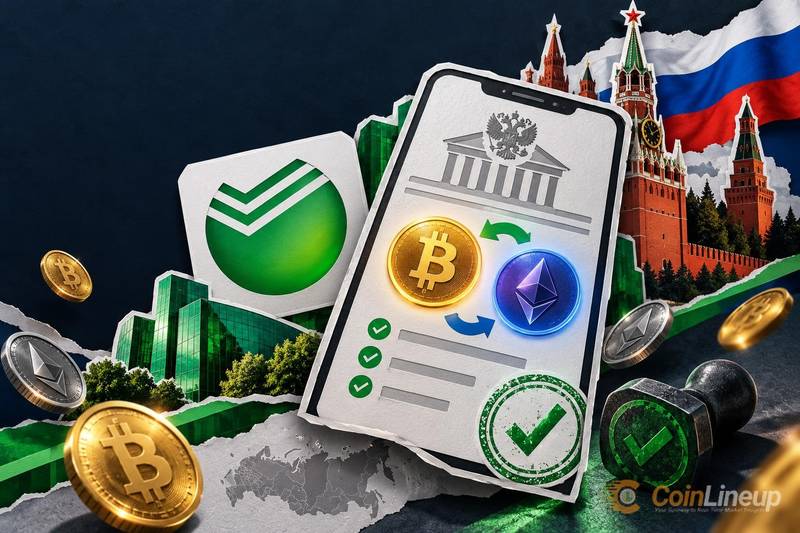
The Bank of Russia has added Sberbank, the country's largest state-owned lender, to its official register of organizations authorized to exchange cryptocurrency. The listing marks a notable step in Russia's effort to bring crypto activity under formal regulatory oversight and underscores the entry of a major state-controlled financial institution into the supervised digital asset space.
Central Bank Updates Its Crypto-Exchange Register
The Bank of Russia maintains a register of organizations that have received authorization to exchange cryptocurrency. With its addition to the list, Sberbank now holds official standing to conduct crypto exchange operations under the regulator's framework.
Russia has been building out its regulated crypto infrastructure in recent months. The country opened applications for crypto exchange licenses on October 5, signaling a push to formalize the sector rather than leave it operating in a legal gray area.
What Sberbank's Authorization Means
Placement on the register means Sberbank has been granted permission specifically to exchange cryptocurrency. This is a defined, limited authorization. It does not automatically permit the bank to offer full crypto trading, custody, or investment products to retail customers.
The exact scope of what Sberbank can do under this authorization — including which assets it may exchange and which customer types it may serve — has not been specified in the available information. Further operational details are expected to emerge as the bank moves toward any public-facing service.
Russia's regulatory approach has drawn international attention. The UK has sanctioned crypto exchanges over their Russia links, reflecting the geopolitical tension surrounding Russian crypto activity even as the country formalizes its domestic framework.
Why the Sberbank Listing Matters for Russia's Crypto Market
Sberbank is not a small regional lender. It is the dominant retail bank in Russia, serving tens of millions of customers. Its inclusion on the authorized exchange register signals that major institutional players — not just specialist firms — are entering the regulated crypto space.
A central bank register serves as a gatekeeper: organizations included on the list have met the requirements the Bank of Russia has set for crypto exchange activity. Sberbank's presence suggests the regulator is comfortable allowing systemic financial institutions to participate, at least in an exchange capacity.
For observers of Russia's crypto policy, the listing is a concrete data point. It shows the framework is operational and that major banks are moving through it. What remains unclear is how quickly Sberbank will launch any customer-facing service, and under what conditions ordinary account holders might eventually access crypto exchange features through the bank.
The practical takeaway is that Russia is building a state-supervised crypto market, and its biggest bank now has a formal role in it. Whether that translates into meaningful access for everyday users will depend on details that have not yet been made public.
Disclaimer: This article is for informational purposes only and does not constitute financial or investment advice. Cryptocurrency and digital asset markets carry significant risk. Always do your own research before making decisions.

