Bank of Korea Faces Close Call on Back-to-Back Rate Hike
Key Takeaways
- •The Bank of Korea raised its benchmark rate to 2.75 percent in July, marking its first increase in more than three years.
- •Second-quarter real GDP grew 0.6 percent from the previous quarter, beating the central bank’s 0.2 percent forecast.
- •Headline consumer inflation returned to the 2 percent range in July, while core inflation rose 2.6 percent, its fastest pace in more than two years.
- •Markets are pricing in the possibility of one more rate hike this year, which would lift the base rate to 3 percent by year-end.
- •Governor Shin Hyun-song’s post-meeting comments are expected to be closely watched for signals on the pace and size of further tightening.
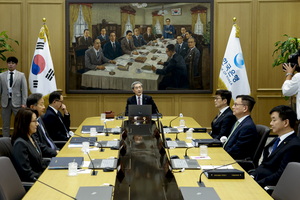
The Bank of Korea will hold its next rate-setting meeting on Thursday, with markets split over whether the central bank will deliver another rate hike or stand pat — a decision that could offer clues on the pace and extent of its current tightening cycle.
The BOK raised its benchmark rate by 0.25 percentage point to 2.75 percent in July, the first increase in more than three years and the first since January 2023. Markets are now watching whether the central bank will deliver a back-to-back rate hike. The base rate anchors short-term borrowing costs across the economy, with changes typically feeding through to interest rates on mortgages, household loans and corporate credit, and to returns on deposits.
Following the July policy meeting, BOK Gov. Shin Hyun-song said second-quarter gross domestic product growth and July consumer inflation would be key factors in determining the pace and extent of further monetary tightening. Both indicators have since pointed to stronger-than-expected economic conditions, potentially adding to the case for further tightening.
Real GDP grew 0.6 percent in the second quarter from the previous quarter, three times faster than the BOK's 0.2 percent forecast. If the current trend continues, the economy is on track to grow by around 3 percent for the full year.
Consumer inflation fell back to the 2 percent range last month for the first time in three months, but core inflation, which excludes volatile items, rose 2.6 percent, marking its fastest increase in over two years. With Shin having repeatedly stressed in public remarks that he places greater weight on core inflation, the BOK is expected to pay closer attention to the underlying inflation trend in its rate decision.
An additional rate hike would signal that the BOK is taking a preemptive approach to containing inflation and maintaining financial stability. It would also mean Korea is moving to tighten monetary policy ahead of the US Federal Reserve, which has kept its policy rate unchanged for five consecutive meetings through last month.
"The August decision is important because it will determine whether the current rate-hike cycle is characterized by a preemptive or cautious approach," Kang Seung-won, an analyst at NH Investment & Securities, said.
"There is little to be gained from waiting until October, while the costs of delaying a rate hike are growing," Kim Myung-sil, an analyst at iM Securities, said.
Meanwhile, those projecting a rate hold argue that the BOK could take more time to assess the impact of last month's rate hike, pointing to a slowdown in inflation in July, the strengthening of the Korean won and the recent correction in the stock market.
"There is no need to take unnecessary risks. A message keeping the possibility of another rate hike open could itself deliver a degree of tightening," Kim Ji-na, an analyst at Eugene Investment & Securities, said.
Beyond Thursday's decision, attention is also focused on how high the BOK will ultimately raise its base rate. Markets are currently pricing in the possibility of one more rate hike this year, which would bring the base rate to 3 percent by the end of the year.
"However, if oil prices rise and the value of the won per dollar weakens simultaneously, while core inflation picks up again or household lending and housing prices in the Seoul metropolitan area rebound rapidly, the possibility of an upward revision to the projected terminal rate cannot be ruled out," Ahn Ye-ha, an analyst from Kiwoom Securities, said. Beyond the statement itself, Shin's post-meeting comments — the same channel he used after July's decision to flag the indicators the bank is watching — will be closely read for any shift in tone on the pace and scale of further increases.
During the previous monetary tightening cycle following the COVID-19 pandemic, the benchmark rate peaked at 3.5 percent.

