BOK raises key rate for second straight meeting to 3%, lifts 2026 growth forecast to 3.3%
Key Takeaways
- •The Bank of Korea increased its key rate to 3 percent, the highest level since January 2025.
- •Thursday's decision was the central bank's second consecutive rate hike and its first back-to-back increases since January 2023.
- •Six of the seven Monetary Policy Board members backed the rate increase, while Hwang Kun-il opposed it and favored leaving the rate unchanged.
- •South Korea's consumer inflation rose 2.8 percent in July from a year earlier, still above the BOK's 2 percent target.
- •The BOK raised its 2026 growth forecast to 3.3 percent from 2.6 percent and kept its inflation forecasts unchanged.
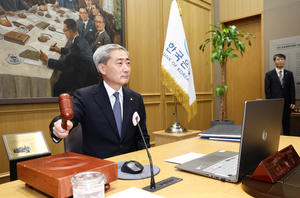
The Bank of Korea (BOK) raised its benchmark interest rate by 0.25 percentage point for a second consecutive meeting on Thursday, citing rising inflationary pressure.
The Monetary Policy Board increased the key rate to 3 percent at its regular rate-setting meeting in Seoul, the highest level since January 2025.
The central bank delivered its first rate hike in 3 1/2 years in July. Thursday's move marked the first back-to-back rate increases since January 2023, when the BOK raised rates at seven consecutive meetings beginning in April 2022.
"It is important to prevent inflationary pressures from becoming widespread through preemptive action, and it is also necessary to continue paying attention to financial stability risks," the board said in a statement. "The board will decide the timing and pace of further increases in the Base Rate while assessing the trends in inflation and the domestic economy, as well as financial stability."
The board said six of its seven members supported the rate hike, while Hwang Kun-il voted against the decision and proposed keeping the base rate unchanged at 2.75 percent.
The BOK has signaled that it intends to maintain a hawkish stance for the time being, citing higher oil prices, renewed uncertainty in the Middle East and a stronger-than-expected economic recovery.
Recent government data showed consumer prices in South Korea rose 2.8 percent in July from a year earlier. That was below the 3 percent level for the first time in three months, but still well above the BOK's 2 percent target. Core inflation, which excludes volatile food and energy prices, rose 2.6 percent from a year earlier in July, the sharpest increase since the 2.8 percent gain recorded in December 2023.
International crude prices also remained elevated amid escalating military tensions between the United States and Iran, a factor the central bank has pointed to as adding to imported inflation pressure.
At the same time, the South Korean economy is on track to grow 3 percent or more in 2026 for the first time in five years, as Asia's fourth-largest economy expanded 3.8 percent in the first six months of the year. Last month, the government projected 3 percent growth for the national economy in 2026.
In its economic outlook report, the BOK raised its 2026 growth forecast to 3.3 percent from 2.6 percent, while forecasting 2.9 percent growth for 2027. It kept its consumer price inflation forecasts unchanged at 2.7 percent for 2026 and 2.3 percent for 2027.
(Yonhap)

