Bahrain and Kuwait Reportedly Conduct First Direct Strikes Against Iran as Gulf Tensions Escalate
Key Takeaways
- •Bahrain and Kuwait reportedly launched airstrikes against suspected Iranian drone and missile storage facilities in their first direct military response to Iran, according to The Wall Street Journal.
- •Neither Bahrain nor Kuwait has publicly confirmed the reported strikes, creating uncertainty about the exact scope and impact of the operations.
- •The reported military actions followed weeks of Iranian attacks targeting both Gulf countries, which host significant U.S. military facilities including the Navy's Fifth Fleet in Bahrain.
- •If verified, the strikes would represent a significant departure from both nations' decades-long strategy of avoiding direct military confrontation with Iran in favor of diplomatic and defensive measures.
- •The development carries broad global implications as the Persian Gulf remains critical to energy markets, with the Strait of Hormuz handling approximately one-fifth of global daily oil consumption.
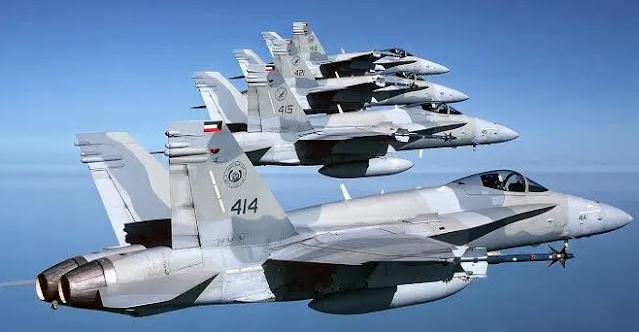
Bahrain and Kuwait have reportedly carried out their first direct military response against Iran, launching airstrikes targeting suspected drone and missile storage facilities, according to reports cited by The Wall Street Journal.
The reported strikes, said to have been conducted earlier this month, mark a significant escalation in regional tensions and represent a major shift in the security dynamics between Gulf states and Iran.
According to information discussed by international observers and referenced through Coin Bureau's X account, the operations followed weeks of Iranian attacks targeting both Gulf countries, which host U.S. military facilities and maintain close security relationships with Washington.
Neither Bahrain nor Kuwait has publicly confirmed the reported strikes or provided official details about the operations.
Strategic Significance
The reported airstrikes represent a notable departure from Bahrain and Kuwait's historical approach. For decades, both nations — along with other Gulf states — have avoided direct military confrontation with Iran, relying instead on diplomatic channels, international partnerships, and defensive measures to manage regional security challenges. A direct strike against Iranian military infrastructure would constitute a significant change in strategy.
Bahrain's regional posture has shifted in recent years. Under the 2020 Abraham Accords, Bahrain normalized diplomatic relations with Israel, aligning Manama more closely with countries that share concerns about Iran's regional activities. The reported strikes, if confirmed, would be consistent with that trajectory.
Recent military exchanges, however, have increased pressure on governments in the region to respond more directly to perceived threats. The reported actions highlight the growing risks facing Gulf nations as tensions between Iran and regional governments continue to intensify.
The reported targets included drone and missile-storage locations — two areas of increasing importance in modern regional conflicts. Iran has developed a large missile and unmanned aerial vehicle program over the past several years, much of it overseen by the Islamic Revolutionary Guard Corps (IRGC) Aerospace Force, integrating these systems into its broader military strategy. Drones and missiles have played a growing role in Middle Eastern conflicts because they can be deployed at relatively low cost compared with traditional military equipment, and have been used for surveillance, attacks, and strategic deterrence.
U.S. Military Presence
Kuwait and Bahrain are both strategically important locations in the region. Bahrain hosts the U.S. Navy's Fifth Fleet, which plays a central role in maritime security operations in the Persian Gulf and surrounding waters. Kuwait hosts significant U.S. military forces and has served as an important logistics center for American operations in the Middle East.
The presence of U.S. military facilities has made both countries key players in regional security calculations. Any conflict involving these states carries broader international implications due to their connections with U.S. defense operations. American officials have not publicly confirmed details of the reported operations.
Regional Context
The reported strikes come after a period of increasing tensions involving Iran and Gulf countries. Iran has long maintained that its military programs are necessary for national defense and deterrence against foreign threats. Neighboring governments have repeatedly expressed concerns about Iran's missile capabilities, regional influence, and support for allied armed groups.
Both Bahrain and Kuwait are members of the Gulf Cooperation Council (GCC), the six-nation bloc that has served as a primary framework for collective Gulf security since 1981. The reported actions would represent one of the most direct military responses to Iran by GCC members. Saudi Arabia and the United Arab Emirates have previously been targeted by drones and missiles attributed to Iranian-aligned groups, and Saudi Arabia launched retaliatory strikes after the 2019 attacks on its Aramco oil facilities, which were widely attributed to Iran. The reported Bahraini and Kuwaiti operations, if confirmed, would extend that pattern of more direct response.
Military technology has transformed how conflicts are conducted. Drones, precision-guided missiles, cyber operations, and advanced intelligence systems have become central components of modern warfare. These technologies allow states and non-state actors to conduct operations without relying solely on traditional military forces. The increasing use of drones has created new challenges for defense systems worldwide, as they can be smaller, cheaper, and more difficult to detect than conventional aircraft. For Gulf nations, defending against drone and missile attacks has become a top national security priority.
Global Implications
The Persian Gulf remains one of the most strategically important regions in the world due to its energy resources and major shipping routes. Millions of barrels of oil pass through the region every day, making stability essential for global energy markets. The Strait of Hormuz, the narrow waterway connecting the Persian Gulf to the open ocean, handles roughly one-fifth of global daily oil consumption, making it one of the most critical energy chokepoints in the world. A wider military confrontation could affect oil prices, international trade, and economic conditions worldwide.
The United States has historically played a major role in Gulf security. Washington maintains military partnerships with several countries in the region and has repeatedly emphasized the importance of protecting allies and maintaining freedom of navigation. The reported involvement of Bahrain and Kuwait adds another layer of complexity to U.S. foreign policy decisions.
Uncertainty and Verification
The lack of official statements from Bahrain and Kuwait has created uncertainty about the exact scope and impact of the strikes. In previous regional conflicts, governments have sometimes avoided immediate public acknowledgment of military actions to limit political consequences.
Analysts will likely continue examining satellite imagery, military statements, and regional developments to better understand what occurred. Independent verification of military operations can be difficult, especially when governments involved do not release detailed information.
The reported airstrikes also raise questions about Iran's potential response. Historically, Iran has responded to military pressure through a combination of diplomatic statements, proxy actions, and direct military operations. The nature of any response could determine whether tensions increase further or move toward negotiation.
Regional security experts have emphasized the importance of avoiding a broader conflict. While countries seek to protect their interests and respond to threats, escalation can quickly create consequences that extend beyond the original actors. Energy markets, shipping routes, and global security relationships are all connected to developments in the Gulf.
The reported actions by Bahrain and Kuwait demonstrate how regional governments are adapting to new security challenges. Countries that previously focused primarily on defensive strategies are increasingly considering more active responses to military threats. The long-term impact of the reported strikes will depend on how all parties respond, as diplomatic efforts, security partnerships, and military developments continue to shape the balance of power in the region.
Source: Hokanews

