B2Gold Secures Mali Permit for Fekola Regional Expansion Following Production Guidance Cut
Key Takeaways
- •B2Gold obtained the Menankoto exploitation permit for its Fekola Regional project in Mali, enabling waste stripping and securing the operation's future into the late 2030s.
- •B2Gold lowered its 2026 production guidance midpoint by 25,000 oz. to 870,000 oz., driven primarily by Menankoto permit delays and reduced output expectations at the Goose and Fekola operations.
- •Under Mali's 2023 mining code, B2Gold will hold a 65% stake in Fekola Regional while the Malian government retains 35%, compared with the existing Fekola mine's 80/20 split under the 2012 code.
- •An April fire at the Goose project's crushing circuit caused quarterly production to drop 70% sequentially, and full crushing capacity is not expected until the first half of next year.
- •B2Gold completed all gold prepayment deliveries in June totaling 264,768 oz., which Scotia Capital cited as a key catalyst for projected free cash flow growth to approximately $1.1 billion next year.
B2Gold (TSX: BTO; NYSE-A: BTG), a mid-tier gold producer with operations spanning Mali, Namibia, the Philippines, and Canada, secured a critical permit on Friday for its Fekola Regional gold expansion project in Mali, clearing a major growth obstacle just one day after the company trimmed its 2026 production outlook.
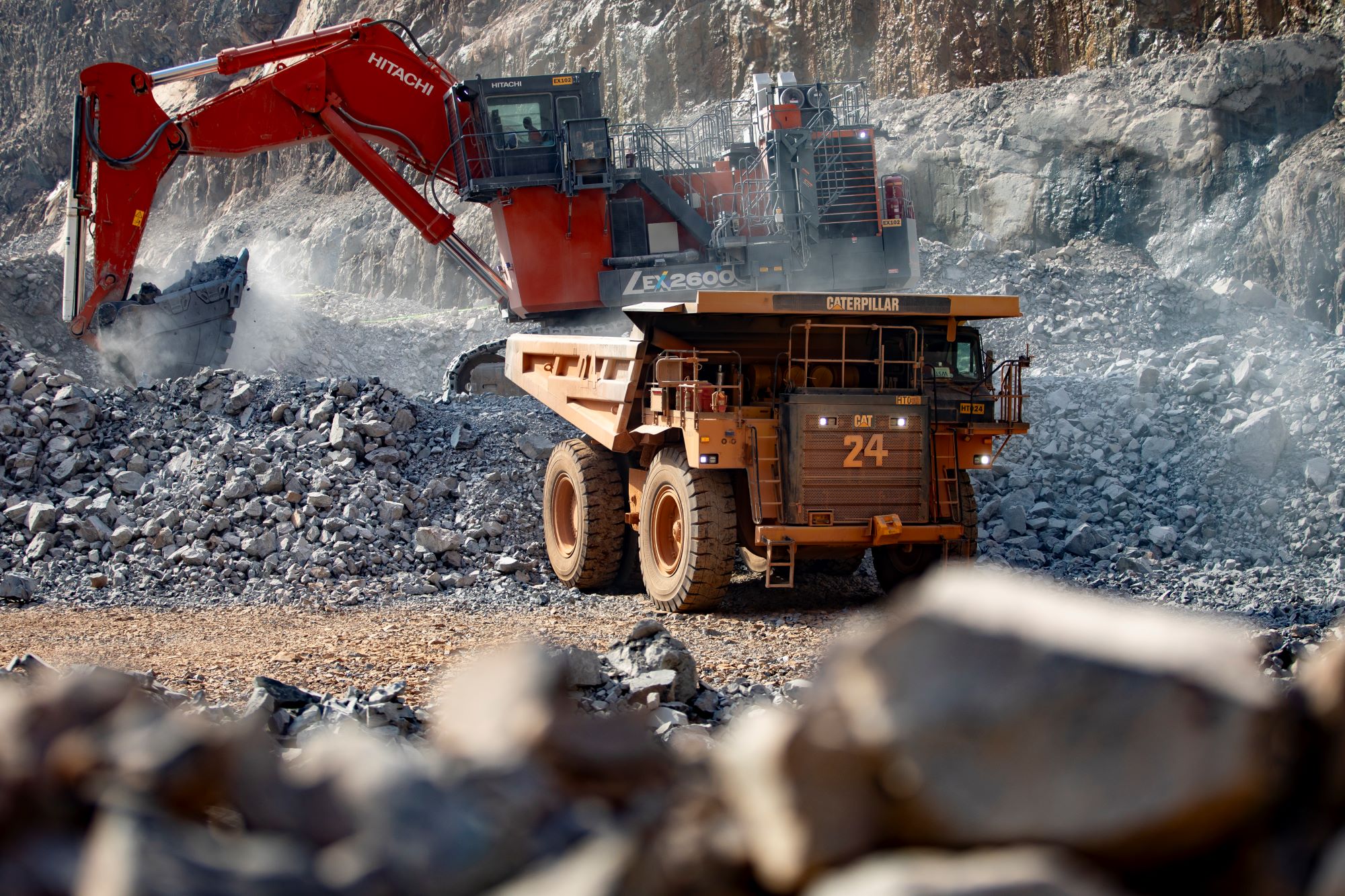
The Fekola complex is situated approximately 500 km west of Bamako along Mali's border with Senegal, with the Fekola Regional area located about 20 km from the existing mine. The Menankoto exploitation permit, combined with the Dandoko exploration permit, authorizes B2Gold to begin work in preparation for regional mining operations.
"The Fekola Complex is currently the largest producing gold mine in Mali and issuance of the Menankoto Exploitation Permit secures the future of the operation well into the late 2030s," CEO Mike Cinnamond said in a Friday statement.
The permit resolves one of two challenges analysts identified in connection with Thursday's guidance reduction. The second issue — a fire-damaged crushing circuit at the Goose project in Nunavut, a mine B2Gold acquired through its 2023 purchase of Sabina Gold & Silver — continues to be the primary operational challenge for the remainder of the year, according to Don DeMarco, an analyst at National Bank of Canada (TSX: NA), who published his note before Mali issued the permit.
BMO analyst Brian Quast noted that despite the permit approval, any Fekola Regional production this year is unlikely to have a material impact on overall output.
B2Gold shares rallied 22% to C$7 in late Friday afternoon trading in Toronto, resulting in a market capitalization of C$9.4 billion ($6.7 billion).
Permit Terms and Ownership Structure
Under Mali's 2023 mining code — introduced as part of a sector-wide review of mining contracts by the country's transitional government — B2Gold will hold a 65% stake in Fekola Regional, with Mali holding the remaining 35%. The existing Fekola mine continues to operate under the 2012 code, with B2Gold owning 80% and Mali 20%.
The permit allows B2Gold to begin waste stripping ahead of mining operations and to finalize terms for processing regional ore. The company anticipates that Fekola Regional will ramp up through the end of next year and produce more than 150,000 oz. annually from 2028 through the mid-2030s.
The approval follows a September 2024 agreement between B2Gold and Mali governing Fekola and its regional deposits, part of a broader push by Bamako to renegotiate terms with foreign mining companies under the new code. Mali had previously approved underground mining at the existing operation in July of last year.
Revised Production Guidance
On Thursday, B2Gold narrowed its 2026 production forecast to a range of 820,000 to 920,000 oz., down from the previous range of 820,000 to 970,000 oz. The midpoint dropped 25,000 oz. to 870,000 ounces.
The Fekola Complex is now projected to produce 390,000 to 420,000 oz. this year, a reduction from the prior forecast of 410,000 to 460,000 oz. The company attributed the decrease primarily to delays in receiving the Menankoto permit. Goose production is now expected at 170,000 to 200,000 oz., compared with the earlier forecast of 170,000 to 230,000 ounces.
Improved performance at the Masbate mine in the Philippines and the Otjikoto mine in Namibia partially offset those reductions. National Bank calculated that the Fekola guidance midpoint declined by 30,000 oz. and Goose by 15,000 oz., while Masbate and Otjikoto each increased by 10,000 ounces.
Despite the production cut, B2Gold also lowered its full-year all-in sustaining cost forecast to $2,370 to $2,550 per oz. sold, down from the previous range of $2,400 to $2,580.
Second-Quarter Results
B2Gold produced 203,648 oz. in the second quarter, as Fekola, Masbate, and Otjikoto all exceeded expectations by a sufficient margin to compensate for weaker output at Goose.
Total production came in 7% above Scotia Capital's estimate, while all-in sustaining costs of $2,356 per oz. sold were 18% below the firm's forecast. However, adjusted earnings of 3¢ per share fell short of the 7¢ market consensus, prompting Scotia Capital mining analyst Ovais Habib to characterize the quarter as "mixed."
B2Gold reported net income of $417 million, or 31¢ per share, compared with adjusted earnings of $41 million, or 3¢ per share. The adjusted figure excluded a $292-million gain from mining-interest sales and $135 million in unrealized derivative gains, while including $71 million in realized losses on gold-price collar contracts — hedging instruments that set a floor and ceiling on sale prices, which generate losses when market prices exceed the agreed cap.
Habib attributed the earnings shortfall to weaker-than-expected realized gold prices and the collar losses. Excluding those collar losses, adjusted earnings would have matched Scotia Capital's estimate.
Goose Recovery Efforts
Goose produced 12,890 oz. during the quarter, a 70% decline from the first quarter, following an April fire that damaged portions of its crushing circuit. All-in sustaining costs at the operation surged to $6,390 per oz. sold, up from $2,806 in the previous quarter.
B2Gold has been relying on mobile crushing equipment while repairs and upgrades to the permanent circuit are underway. Carey MacRury, an analyst at Canaccord Genuity Group (TSX: CF), said the company is targeting 80% of its planned 4,000-tonne-per-day crushing capacity — equivalent to 3,200 tonnes per day — by the end of September, with full capacity expected in the first half of next year.
Cash Position and Prepayment Completion
In June, B2Gold completed all deliveries under its gold prepayment agreements, having handed over a total of 264,768 oz. This averaged approximately 66,000 oz. per quarter over the past year, according to MacRury. The company now expects cash flow to improve in the second half, as future gold sales will be at spot prices rather than under the fixed-ounce prepayment terms that had committed production at previously set prices.
B2Gold ended June with $287 million in cash and its entire $800-million revolving credit facility available, having repaid $75 million during the quarter. The company also spent $92 million on share buybacks.
Scotia Capital projects free cash flow of approximately $236 million this year and $1.1 billion next year under its gold-price assumptions, with the conclusion of prepayment deliveries cited as a key factor driving the expected increase.

