Reported Avici Attack Drains Over $1 Million From Solana Users
Key Takeaways
- •An attack linked to an entity known as Avici has allegedly stolen over $1 million from Solana users, according to early reports.
- •The reported victims are individual wallet holders, not a single company, and the Solana network itself is not reported to have failed or halted.
- •Neither the loss figure nor the attribution has been independently verified, and the method of the attack remains unconfirmed.
- •No verified remediation steps, official statements, or investigator findings had been released at the time of reporting.
- •Security experts advise standard precautions such as never sharing seed phrases, verifying links before connecting a wallet, and reviewing transaction approvals before signing.
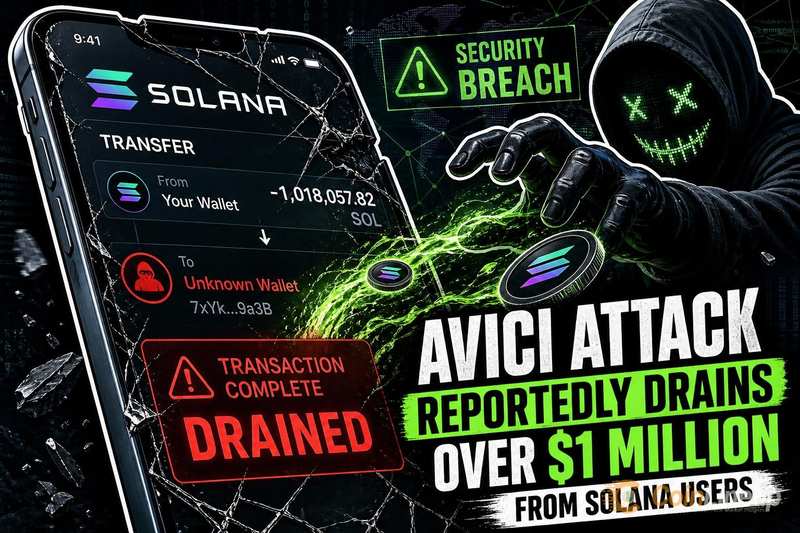
An attack linked to an entity known as Avici has allegedly drained more than $1 million from Solana users, according to early reports. Details remain limited, and key facts about how the attack was carried out are still unconfirmed.
What the reported Avici attack allegedly did
The core claim is straightforward: a campaign tied to "Avici" reportedly took more than $1 million from people using the Solana blockchain, as reported by crypto.news.
The reported victims are Solana users — individual holders rather than a single company. That framing points to wallets being drained, not a confirmed failure of the Solana network itself.
Both the loss figure and the attribution should be treated cautiously. No independent, verified breakdown of the losses or the method was available at the time of writing.
Why the incident matters for Solana users
A seven-figure loss is significant in human terms. For everyday holders, it is the difference between a minor scare and losing real money that may not come back.
Because the report describes user-level losses, the concern is personal wallet security. Based on the available report, it is not a claim that the wider Solana chain was broken or halted.
Solana has been a busy hub for retail activity, from trading to memecoin projects that route real money to their creators. That heavy user traffic is exactly why attacks aimed at individuals can add up quickly. Incidents of this kind in crypto have historically involved tactics such as malicious links, fake apps, or deceptive transaction prompts that trick users into signing away wallet access — though no specific method has been confirmed in this case.
The broader takeaway
This story is still developing. There were no verified remediation steps, official statements, or investigator findings in the material available for this report.
The account at the center of the story has posted publicly on X, and its own posts are the primary trail readers can follow directly.
Avici — Avici (@avici) View on X
Avici
— Avici (@avici) View on X
Source: @avici on X
For a regular crypto holder, the practical lesson is to watch security incidents closely and confirm details before acting. Standard precautions that security professionals consistently recommend — never sharing seed phrases, verifying links before connecting a wallet, and reviewing what a transaction will approve before signing — remain relevant regardless of how this particular incident is eventually explained. When a report is this early, patience and verified sources matter more than fast reactions.
