Australian Gold Output Poised to Climb as Major Producers Expand Plant Capacity
Key Takeaways
- •Australia produced 303 tonnes of gold valued at A$54 billion last year, maintaining its position as the world's second-largest gold producer behind China.
- •Northern Star Resources is commissioning a new processing plant at its Super Pit operation that will more than double annual throughput capacity from 13 million to 27 million tonnes.
- •Elevated gold prices have made it economically viable for mining companies to process low-grade stockpiles and smaller deposits across roughly 80 primary gold mines nationwide.
- •Western Australia accounts for approximately two-thirds of national gold production, making the state's project pipeline critical to any sustained output growth.
- •Several new projects targeting production from 2028 onward, including Ora Banda's Davyhurst plant and Capricorn Metals' Mt Gibson, form a next wave of developments expected to further boost output.
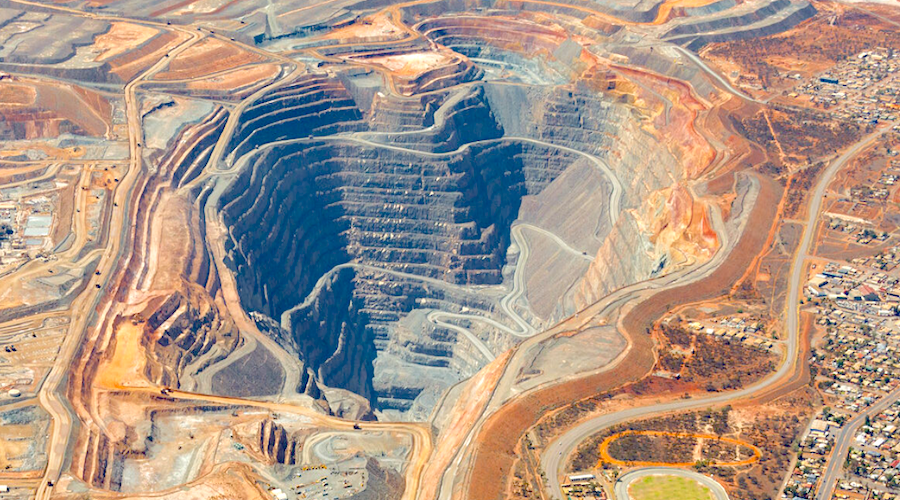
Australian gold production is forecast to increase as mining companies enlarge existing operations ahead of a fresh wave of project developments scheduled for later this decade, according to Melbourne-based consultancy Surbiton Associates. Australia, the world's second-largest gold producer behind China, has seen output hover near record levels in recent years even as the industry contends with aging mines and declining grades at legacy operations.
Australia produced 303 tonnes of gold valued at A$54 billion (C$53.2 billion) last year. Near-term growth is anchored by Northern Star Resources' (ASX: NST) Super Pit operation in Kalgoorlie, located approximately 600 km east of Perth. Commissioning is underway on a new processing plant designed to more than double annual throughput capacity to 27 million tonnes, up from 13 million tonnes.
"Late 2026 and during 2027 will see several substantial expansions of existing operations," Surbiton Associates director Sandra Close said in a statement released this week ahead of the Diggers & Dealers conference, Australia's premier mining investment forum held annually in Kalgoorlie. "Of these Super Pit will be the largest by far, with its treatment capacity doubling."
The expansion push could lift national output beyond levels that have remained largely flat since 2017, offsetting declining production as older mines close. Elevated gold prices have also made it economically viable to process low-grade stockpiles and smaller deposits across the country's roughly 80 primary gold mines and an additional 20 operations that recover gold as a by-product. Western Australia accounts for roughly two-thirds of national production, making the state's project pipeline a critical driver of any sustained output growth.
Near-term expansions
Northern Star intends to supply the expanded Super Pit facility using substantial stockpiles of low-grade material that have become profitable at current gold prices. The company has already begun commissioning the new processing circuit.
Newmont (NYSE, ASX: NEM; TSX: NGT) has invested more than A$2.3 billion in a new shaft at its Tanami mine in the Northern Territory. The shaft is engineered to hoist 3.8 million tonnes of ore annually, replacing a truck haulage system capped at 2.7 million tonnes. Newmont expects the project to reduce costs and add approximately 150,000 oz. of annual gold production.
Capricorn Metals (ASX: CMM) is upgrading its Karlawinda plant in Western Australia, increasing throughput from 4 million tonnes to 6.5 million tonnes per year. The company anticipates the expansion will raise annual output to 150,000 oz.
Vault Minerals (ASX: VAU) plans a 50% capacity increase at King of the Hills, bringing annual processing to 7.5 million tonnes and boosting gold production by an estimated 35%. Commissioning is targeted for mid-2027, though Vault's proposed merger with Genesis Minerals (ASX: GMD) may alter the project's scope or schedule.
Next wave of projects
Ora Banda Mining (ASX: OBM) intends to construct a 3-million-tonne-per-year processing plant at Davyhurst in Western Australia at a cost of A$375 million, with production slated to begin in the second half of 2028.
Capricorn Metals is targeting early 2028 commissioning at Mt Gibson, where it plans to scale production to 260,000 oz. annually. The project's resource base includes 150.9 million indicated tonnes grading 1 gram gold per tonne for 4.7 million oz., plus 38.1 million inferred tonnes at 0.8 gram for 969,000 oz. Probable reserves stand at 119.3 million tonnes at 1 gram for 3.67 million oz.
Minerals 260 (ASX: MI6) is planning first production from Bullabulling in late 2028. The Western Australian project holds 140 million indicated tonnes grading 0.98 gram gold per tonne for 4.4 million oz. and 51 million inferred tonnes at 1 gram for 1.7 million oz. Probable reserves total 90 million tonnes at 0.86 gram for 2.5 million oz., based on the December 2025 estimate.
Longer-term outlook
Northern Star's Hemi project represents the largest later-stage addition in Surbiton's forecast. The company plans to process 10 million tonnes of ore annually from 2030, producing approximately 550,000 oz. per year.
Vista Gold (TSX, NYSE-A: VGZ) is working to bring Mt Todd in the Northern Territory into production by 2030, targeting roughly 150,000 oz. annually from 5 million tonnes of ore. Mt Todd carries execution risk, however. Hard ore, low recovery rates, and high reagent consumption contributed to the failure of a prior development attempt, leaving Vista Gold to demonstrate it can operate the deposit profitably.
Regis Resources' (ASX: RRL) McPhillamys project in New South Wales remains subject to regulatory approvals before a planned final investment decision in 2028.

