Australian Shares Rise as Iran Peace Talks Progress Lifts Banking and Healthcare Sectors
Key Takeaways
- •Australian equities advanced on Monday with banking and healthcare stocks leading gains after reports surfaced of progress in Iran-related peace talks.
- •Australia's four major banks — Commonwealth Bank, Westpac, ANZ, and NAB — account for a substantial portion of the ASX 200 index, making their performance a key driver of overall market direction.
- •The Strait of Hormuz, through which approximately one-fifth of the world's daily seaborne oil consumption passes, could be significantly impacted by any de-escalation of tensions involving Iran.
- •As a net energy exporter oriented toward Asian markets, Australia benefits from reduced Middle East instability through lower shipping costs and freight insurance rates.
- •Observers are monitoring for diplomatic progress indicators, including public statements from Iranian leadership and confirmation from the International Atomic Energy Agency regarding nuclear compliance.
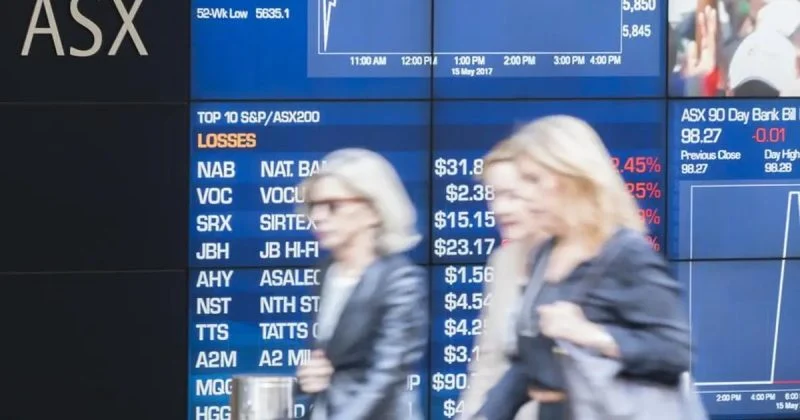
Australian equities advanced on Monday, led by gains in banking and healthcare stocks, after Reuters reported progress in peace talks involving Iran that could ease broader hostilities across the Middle East.
The discussions center on achieving a ceasefire and addressing regional conflicts that have weighed on energy supply routes and investor sentiment. The apparent reduction in immediate escalation risks prompted buyers to rotate into sectors less directly exposed to geopolitical volatility, with financial institutions and healthcare companies among the primary beneficiaries.
While the situation remains fragile and no formal agreement has been announced, the market response reflected growing confidence in the possibility of a diplomatic resolution to tensions that have persisted between Iran, the United States, and regional actors.
The Australian Securities Exchange (ASX) has historically been sensitive to shifts in global risk appetite. Banking stocks, which represent a significant weighting in the ASX 200 index, tend to perform well when investors perceive a stabilizing macroeconomic and geopolitical environment. Australia's major lenders — Commonwealth Bank, Westpac, ANZ, and NAB — collectively account for a substantial portion of the benchmark index, meaning broad market direction often hinges on their performance. Similarly, healthcare companies are often viewed as defensive holdings that attract capital during periods of uncertainty, but can also benefit from broad-based rallies driven by improved sentiment.
Iran has been engaged in tensions with the United States and its allies over its nuclear program, regional influence, and involvement in proxy conflicts across the Middle East. The current diplomatic efforts come against the backdrop of the collapsed 2015 Joint Comprehensive Plan of Action (JCPOA), from which the United States withdrew in 2018, followed by the reimposition of sweeping sanctions on Iran's energy and financial sectors. Any meaningful de-escalation could have wide-ranging implications for global oil markets, given Iran's position as a major producer and its proximity to the Strait of Hormuz, through which roughly a fifth of the world's daily seaborne oil consumption passes.
For Australia, a net energy exporter with trade links heavily oriented toward Asian markets, prolonged Middle East instability can affect shipping costs and freight insurance rates even though the country is geographically distant from the conflict zone. A reduction in those pressures tends to be received positively by domestic equities.
Market participants indicated that pricing across multiple asset classes suggested investors were interpreting the reported diplomatic progress as supportive of scenarios involving reduced near-term conflict risk.
Observers are now closely monitoring further diplomatic developments between Washington and Tehran, particularly any potential formal agreements on uranium enrichment. Key indicators of progress could include public statements from Iranian leadership or confirmation from the International Atomic Energy Agency (IAEA), the United Nations body responsible for monitoring nuclear compliance. The IAEA's inspection access and reporting have been a recurring point of contention in past negotiation rounds.
The continuation of peace talks and any easing of sanctions by the United States could further influence market sentiment, especially in sectors sensitive to geopolitical developments and energy price fluctuations.

