Australia and New South Wales Commit A$2.5 Billion to Keep Rio Tinto's Tomago Aluminium Smelter Operating Beyond 2028
Key Takeaways
- •The Australian federal and New South Wales governments have pledged A$2.5 billion to secure Tomago smelter's operations from 2029 through 2038 under a 10-year electricity supply agreement.
- •Tomago began consulting employees on a potential shutdown in October 2023 after failing to find commercially viable electricity options, with power representing over 40% of operating costs.
- •All electricity supplied to Tomago will come from renewable sources starting in 2033, which Rio Tinto expects will reduce annual operating emissions by 7.1 million tonnes of carbon dioxide.
- •Combined with a prior A$2 billion commitment to the Boyne smelter in Queensland, total government backing for Australia's two largest aluminium smelters reaches A$4.5 billion this year.
- •Tomago produced 574,000 tonnes of aluminium last year, representing approximately 97% of its capacity and nearly 40% of Australia's total aluminium output.
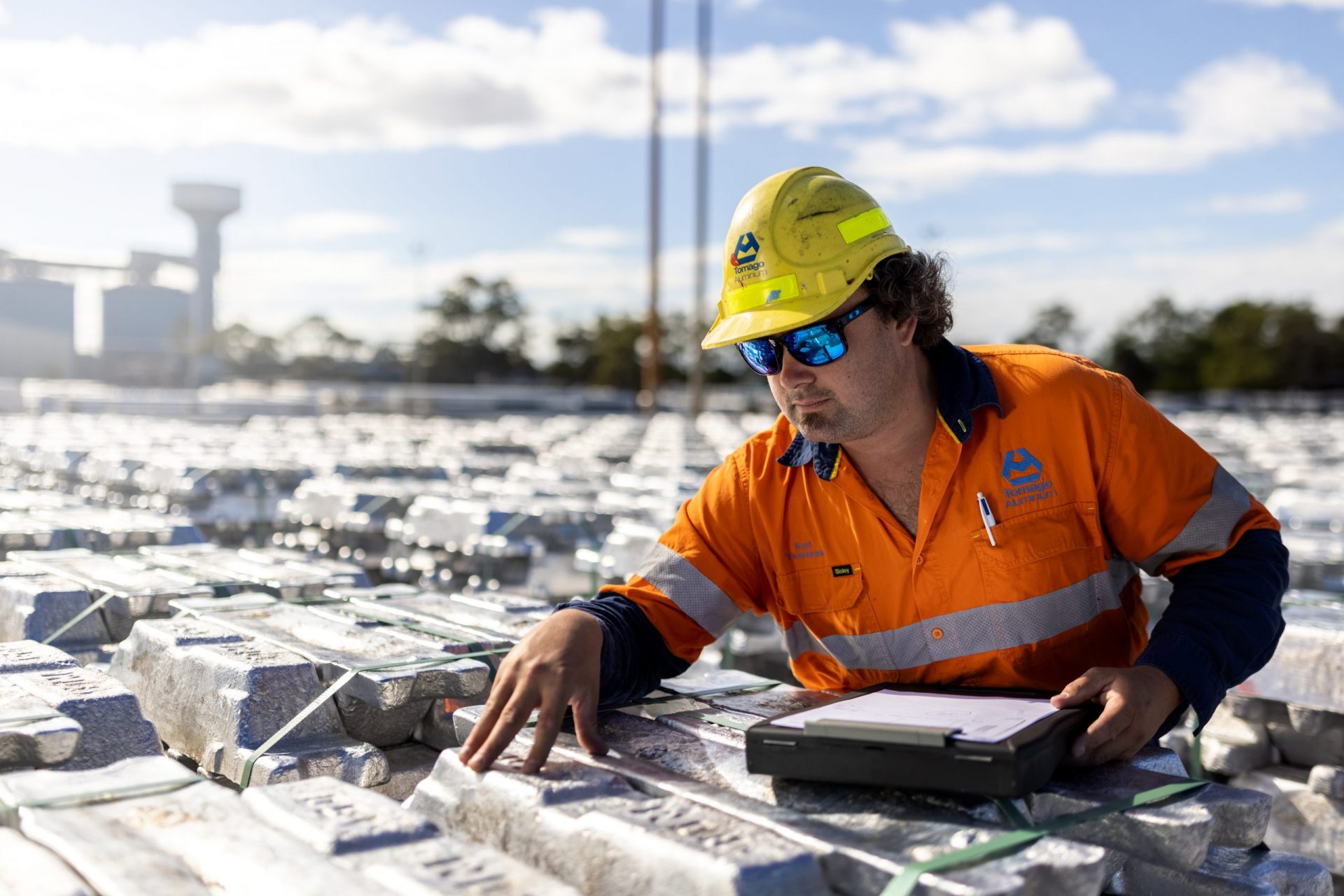
The Australian federal government and the state of New South Wales have pledged A$2.5 billion (US$1.76 billion) in support to keep Rio Tinto's (ASX, NYSE, LSE: RIO) majority-owned Tomago aluminium smelter operating beyond 2028, after soaring electricity costs brought Australia's largest smelter to the edge of closure.
Aluminium smelting relies on continuous electrolysis to convert alumina into molten metal, making it one of the most power-intensive industrial processes in the world. For Tomago, this means the facility must draw electricity around the clock with no practical ability to pause production without risking permanent damage to its reduction cells.
The 10-year electricity supply agreement will commence once Tomago's existing power contract with AGL Energy (ASX: AGL) expires on December 31, 2028, and will run through 2038. Beginning in 2033, all electricity supplied under the deal will come from renewable sources. Located in the Hunter region, approximately 160 km north of Sydney by road, the Tomago facility has a production capacity of up to 590,000 tonnes per year, accounting for nearly 40% of Australia's total aluminium output.
"The idea that we would sit back and watch this facility just disappear is not in Australia's national interest," Prime Minister Anthony Albanese said Thursday during a news conference held at the smelter.
Tomago produced 574,000 tonnes of aluminium last year, representing roughly 97% of its 590,000-tonne annual capacity, according to CRU data referenced by BMO Capital Markets in a note published Thursday.
The latest commitment brings total government backing for Australia's two largest aluminium smelters to A$4.5 billion this year. In March, the federal government and Queensland committed A$2 billion to keep Rio's Boyne smelter operating through at least 2040, thereby preserving both major smelters within a domestic supply chain that spans bauxite mining, alumina refining, and primary aluminium production. Australia is one of the world's top producers of bauxite and alumina, and retaining domestic smelting capacity means the country maintains a fully integrated aluminium supply chain from mine to metal—a rarity among producing nations.
Power supply challenges
Tomago began consulting employees on a potential shutdown in October of last year after a three-year effort to secure commercially viable electricity beyond 2028 proved unsuccessful. Electricity represents more than 40% of the smelter's operating costs, and the company reported that bids for both coal-fired and renewable supply from 2029 onward would render the operation unviable.
The pressure on Tomago reflects a broader challenge facing energy-intensive industries worldwide. Several European aluminium smelters have curtailed or closed production in recent years due to elevated power prices, reducing the continent's primary aluminium capacity and tightening global supply.
Under the agreement, Tomago will invest A$1.1 billion through 2038. Approximately A$1 billion is earmarked for plant upgrades, major maintenance, equipment life extension, and productivity improvements. A further A$100 million will support lower-emission technology and equipment enabling the smelter to reduce power consumption during periods when the New South Wales electricity grid is under strain. New South Wales has capped its contribution at A$1.23 billion over 10 years beginning in 2029, accounting for roughly half of the total government package.
The federal government will receive repayments during periods when aluminium prices are high.
Tomago is the largest single electricity consumer in New South Wales. According to Rio Tinto, the facility draws approximately 950 MW continuously, equivalent to 12% of state demand. The governments stated that the agreement will underpin nearly 3 GW of new renewable generation and backup capacity.
Ownership and employment
Rio Tinto holds a 51.55% stake in Tomago, while Gove Aluminium Finance owns 36.05% and Norsk Hydro (OSE: NHY) holds 12.4%. The plant directly employs approximately 1,000 people, engages an additional 200 full-time-equivalent contractors, and supports an estimated 5,000 indirect jobs.
Starting in 2033, Rio Tinto expects renewable electricity to reduce Tomago's direct and electricity-related operating emissions by 7.1 million tonnes of carbon dioxide annually. The smelter will continue to curtail its power draw during grid stress events, assisting New South Wales in integrating a greater share of renewable generation.

