August Real Average Hourly Earnings Nowcasted
Key Takeaways
- •August real wages were calculated using newly available hourly earnings deflated by the Cleveland Fed's nowcast of the August CPI.
- •Wages are expressed in 2025 dollars using two deflators: the CPI-U for all urban consumers and the narrower CPI-W for wage earners and clerical workers.
- •Because the CPI nowcast is an estimate, the August real wage figures may shift slightly once the BLS releases the official August CPI.
- •The CPI-W is the index used to set the annual cost-of-living adjustment for Social Security benefits.
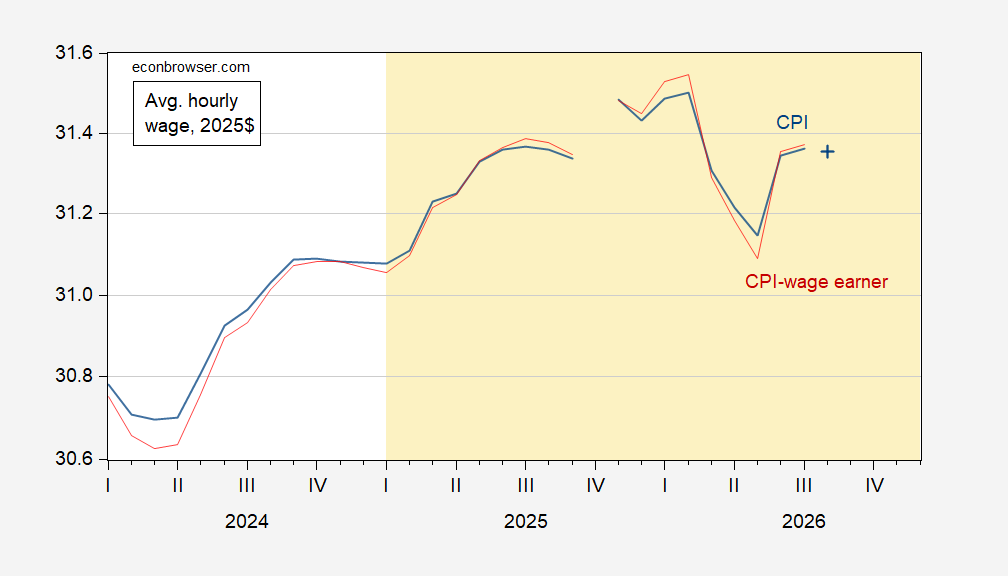
With August hourly earnings now available, real wages can be updated using the nowcasted August CPI. Figure 1 shows the average hourly wage expressed in 2025 dollars, deflated using two measures: the CPI for all urban consumers (blue) and the CPI specifically for wage earners and clerical workers (red). The August figures are deflated using the Cleveland Fed's CPI nowcast. The data sources are the Bureau of Labor Statistics (BLS), the Cleveland Fed, and the author's calculations.
For context, the CPI for all urban consumers (CPI-U) measures price changes experienced by urban households, while the CPI for wage earners and clerical workers (CPI-W) covers a narrower subset of the population. Real, or inflation-adjusted, wages are calculated by dividing nominal earnings by a price index, so they reflect purchasing power rather than just dollar amounts. The Cleveland Fed publishes nowcasts of upcoming inflation releases based on current data, allowing analysts to estimate real values before the official CPI report is published by the BLS. Because the nowcast is an estimate rather than a final figure, the August real wage values shown here may shift slightly once the BLS publishes the official August CPI. The CPI-W series also carries policy relevance beyond wage analysis: it is the index used to calculate the annual cost-of-living adjustment for Social Security benefits, which is why tracking both deflators can matter for more than just labor market commentary.

