ASIC Sets September 30, 2026 Deadline for Australian Crypto Firms' Licensing
Key Takeaways
- •ASIC's no-action position for digital asset businesses will end on September 30, 2026, after which full licensing rules apply.
- •The no-action position is a temporary grace period, not a permanent exemption from licensing requirements.
- •Crypto licence applications in Australia have been rising ahead of the September deadline, with Finance Magnates reporting over 45 filings.
- •The Australian federal government has been consulting on a proposed licensing regime for digital asset platforms, while ASIC has issued guidance on when crypto businesses need an Australian financial services licence.
- •The move aligns with international trends such as the EU's Markets in Crypto-Assets framework and the UK's registration regime for crypto firms.
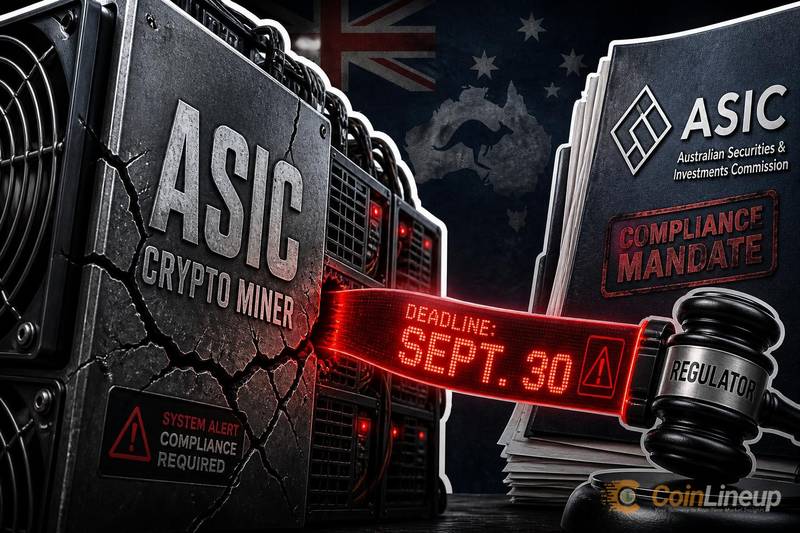
Australia's markets regulator has set September 30, 2026, as the deadline for crypto firms to sort out their licensing status. The date marks the end of ASIC's "no-action" position for digital asset businesses, giving every crypto company operating in Australia a firm line to plan around.
What ASIC changed and why Sept. 30, 2026 matters
ASIC is the Australian Securities and Investments Commission, the country's financial regulator. It has extended its no-action position for digital asset businesses until September 30, 2026.
A "no-action" position simply means ASIC has said it will not take enforcement action against certain firms for now. It is a temporary grace period, not a permanent exemption. Once it ends, the usual licensing rules apply in full.
The backdrop is Australia's broader work on regulating digital assets. ASIC has published guidance on when crypto-asset businesses need an Australian financial services licence, and the federal government has been consulting on a proposed licensing regime for digital asset platforms. The no-action position exists in part because that framework has been taking shape, giving firms a bridge while the rules settle.
In plain terms, Australian crypto firms now have a clear regulatory date to work toward. This concerns licensing and how crypto businesses are treated under existing financial rules. The latest extension follows earlier rounds of licensing relief that ASIC granted to the sector.
What the deadline means for crypto firms and their customers
For exchanges and trading platforms, the deadline is a prompt to get licensing paperwork in order. Firms that need an Australian financial services licence have until the end of September to prepare or apply.
Reporting from Finance Magnates indicates that crypto licence applications have been rising ahead of the September deadline. That points to firms moving to comply rather than waiting.
Regular users have reason to care too, even if they never run a crypto company. If the platform you use holds a proper licence, it faces clearer rules and oversight. That can affect which services stay available in Australia and how they operate. This mirrors a wider international pattern: jurisdictions including the EU, with its Markets in Crypto-Assets framework, and the UK, with its registration regime for crypto firms, have been formalising how digital asset businesses must be licensed and supervised.
Compliance also touches everyday administration such as record-keeping and reporting, which feeds into tasks like tracking your crypto for tax purposes. Clearer licensing tends to bring clearer processes for the people using these apps.
What to watch before and after the September 30 deadline
The next concrete milestone is simple: September 30, 2026, when ASIC's no-action position ends.
Before then, watch for further ASIC guidance, any progress on the government's digital asset platform legislation, and signs of how many firms file licence applications. The pace of those applications is one measurable signal of how the industry is responding.
After the deadline, the key thing to follow is firm compliance updates and any enforcement activity once the grace period closes. Broader regulatory efforts, from new crypto dispute panels to international scam crackdowns, show that oversight of the sector is tightening in several places at once.
The practical takeaway for a regular crypto holder: check whether the platform you use is preparing for Australian licensing, and keep an eye on ASIC's own announcements as September approaches.
Disclaimer: This article is for informational purposes only and does not constitute financial or investment advice. Cryptocurrency and digital asset markets carry significant risk. Always do your own research before making decisions.

