Arthur Hayes Says Bitcoin Doesn't Need the CLARITY Act After Senate No Vote
Key Takeaways
- •The U.S. Senate failed to advance the CLARITY Act in a 49-50 procedural vote, falling short of the 60 votes required, after four Republicans joined Democrats in opposing the measure.
- •Bitcoin lost its $76,000 support and traded near $75,700–$76,000, while Ethereum, Solana, and XRP recorded declines of roughly 2–8% across the broader crypto market.
- •BitMEX co-founder Arthur Hayes described the CLARITY Act as insignificant for Bitcoin, contending that macro factors such as U.S. Treasuries and Japanese bonds matter more to its price than U.S. market-structure legislation.
- •Hayes maintained his expectation that Bitcoin will reach a new all-time high before the end of 2026, while cautioning that a weakening U.S. stock market could trigger margin-call selling of liquid assets including Bitcoin.
- •Coinbase CEO Brian Armstrong called the Senate setback a disappointment but said regulatory clarity can still emerge through the SEC and CFTC, which are developing clearer industry rules.
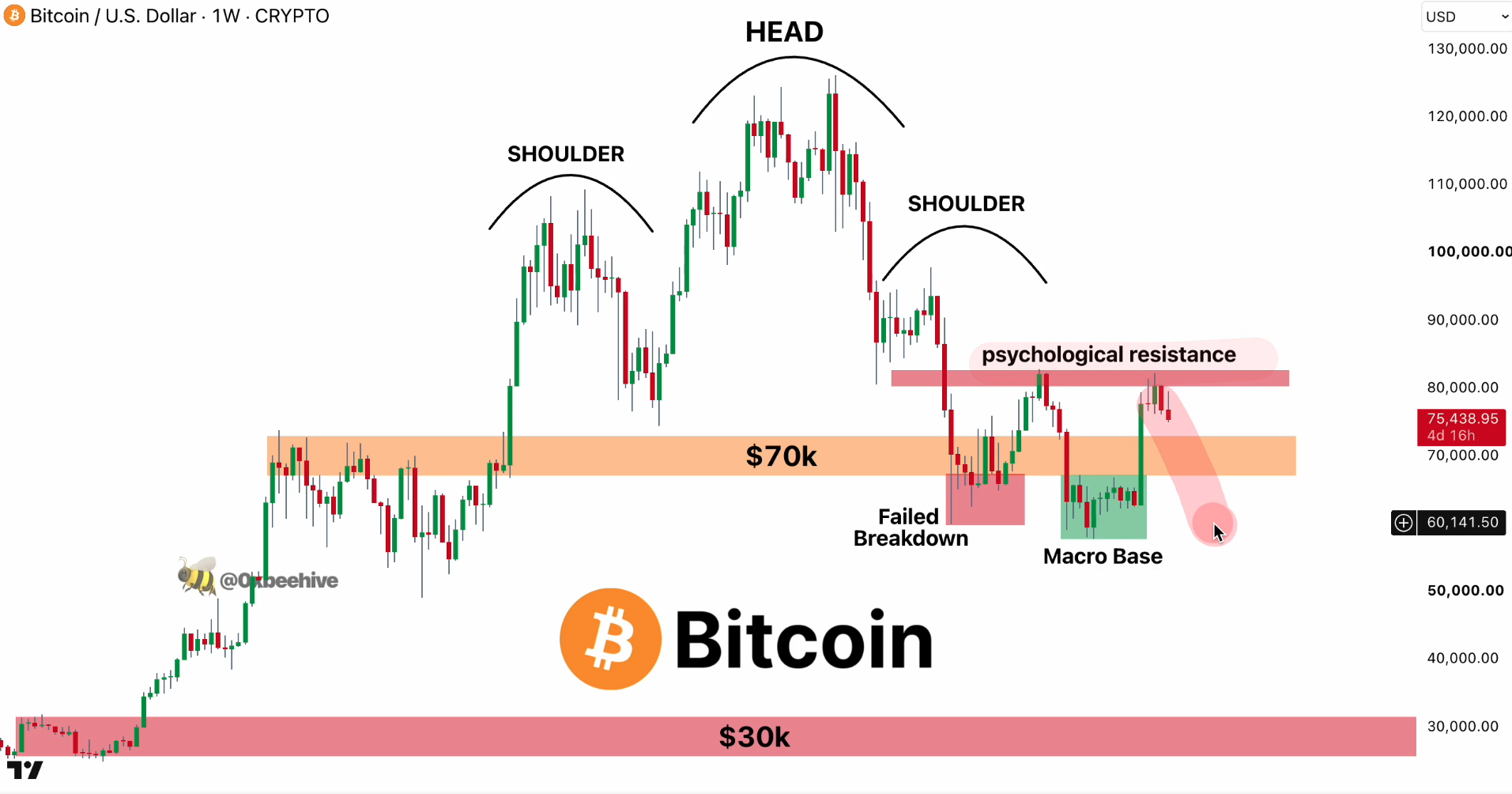
Bitcoin remained under pressure on Sept. 16 after the U.S. Senate failed to advance the CLARITY Act, the proposed market-structure bill that stalled in a procedural vote. BTC traded near $75,700–$76,000, while Ethereum, Solana, and XRP recorded larger declines of roughly 2–8% across the broader crypto market, as highlighted by WuBlockchain.
BitMEX co-founder Arthur Hayes said regulatory setback does not change Bitcoin's long-term case. He argued that macroeconomic conditions matter more to Bitcoin's price than the proposed U.S. market-structure legislation.
Hayes: “Bitcoin Didn't Need the Clarity Act”
Speaking during a recent podcast interview with Altcoin Daily, Hayes described the Clarity Act as “absolutely insignificant” for Bitcoin. He added that the only moat created under the legislation would be limited to U.S. markets and would mainly serve to attract venture capital funds. In his view, the Act would ultimately be harmful to the U.S. crypto industry by constraining creativity and innovation.
“I think the Clarity Act is a terrible thing for US crypto for actual creativity, building useful things that have product-market fit. Bitcoin didn't need the Clarity Act from 2009 until the present; it doesn't need it for the future,” Hayes said.
Hayes instead believes Bitcoin's price is largely correlated with macro factors such as U.S. Treasuries and Japanese bonds. He also criticized the U.S. government, saying it is biased toward U.S.-based AI companies and works with banks to arrange capital to bail them out, while showing no comparable interest in investing even in top crypto companies like Coinbase. In that sense, he argued, Bitcoin and crypto companies remain relatively independent.
Hayes Still Expects New All-Time High in 2026
During an interview with The Rollup on Sept. 8 — remarks also circulated by WuBlockchain — Hayes said he expects Bitcoin to reach a new all-time high before the end of the year. He pointed to structural factors supporting monetary easing that could eventually lead to large-scale money, though he believes the U.S. political cycle could influence the pace of policy implementation.
According to Hayes, a Bitcoin rally could unfold as a sharp surge, followed by consolidation and a correction before another upward move. In his Altcoin Daily interview, he added that he barely uses technical analysis for Bitcoin and instead follows the work of equity market analyst Milton Berg. He noted that Bitcoin's price action has increasingly tracked the U.S. stock market, warning that if U.S. equities weaken, investors holding similar assets on margin could face margin calls, pushing them to sell liquid assets — with Bitcoin potentially among the first sold.
Following the CLARITY Act's failure, Bitcoin lost the $76,000 support, breaking the local level that had underpinned its recent market structure. Attention has now shifted toward the $60,000–$70,000 range — with the next key support seen at $70,000 — a major BTC demand zone. Analyst Beehive noted that if buyers defend this zone again, the current decline could develop into a larger liquidity sweep. However, a break below the broader macro base would strengthen the bearish scenario.
CLARITY Act Falls Short of 60 Votes
The CLARITY Act failed to advance in the U.S. Senate after a procedural vote ended 49-50, short of the 60 votes required for the crypto legislation to move forward. Four Republicans joined Democrats in voting against the measure, Reuters reported.
As a market-structure bill, the CLARITY Act aims to settle how digital assets are classified and which U.S. regulator — the SEC or the CFTC — oversees them, a question central to how crypto companies can build and operate in the country.
Coinbase CEO Brian Armstrong called the Senate setback a “disappointment.” However, he said regulatory clarity would still emerge through the U.S. SEC and the CFTC, which are working to bring clearer rules for the industry. With the bill stalled, that agency-driven path — rather than new legislation — now stands as the industry's main route to clearer U.S. rules in the near term.
This article is for informational purposes only and does not constitute financial or investment advice. Cryptocurrency investments involve risk, and political and macroeconomic developments can cause sharp market volatility.
Source: The Market Periodical

