Arthur Hayes Warns AI Stock Insider Sales Could Pressure Bitcoin
Key Takeaways
- •Arthur Hayes argues that heavy insider selling at SpaceX, Anthropic, and OpenAI could push AI stocks below their IPO prices and tighten credit conditions across the AI industry.
- •He calculates that SpaceX faces approximately 50% dilution by June 2027 from 8.6 billion new shares, while Anthropic IPO buyers could see 83% dilution over the same period.
- •Hayes identifies commercial bank balance sheets, which have powered the crypto rally since August and already showed a weekly decline, as the transmission channel from AI weakness to Bitcoin.
- •Bitcoin is testing $78,000 support after being rejected near $81,000, with a break below potentially opening declines toward $77,000-$77,500 and the $75,700-$76,000 swing-low zone.
- •Despite near-term risks, Hayes expects central banks and fiscal authorities to respond to any AI downturn with money printing, which he believes will ultimately be highly beneficial for Bitcoin holders.
BitMEX co-founder Arthur Hayes believes the next major risk to cryptocurrency may come not from anything happening on-chain, but from a wave of insider share sales in the artificial intelligence sector. In a new essay titled "D is for Dilution", Hayes — who also serves as chief investment officer at Maelstrom — argues that insider selling at SpaceX, Anthropic and OpenAI could push those stocks below their IPO levels, tightening credit across the AI industry and draining the dollar liquidity that has underpinned Bitcoin's recent rally.
The Zcash Parallel
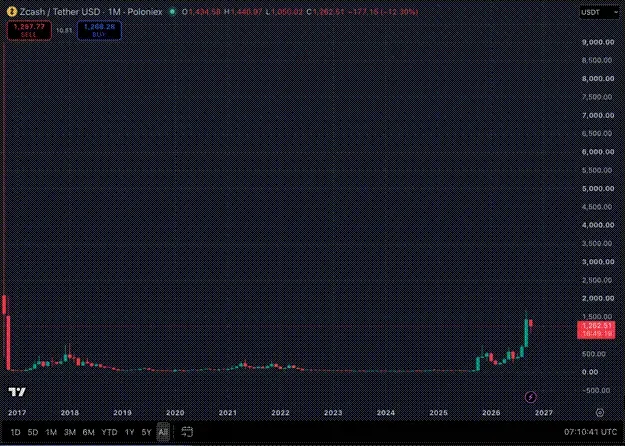
Hayes grounds his argument in a historical analogy. When Zcash launched in October 2016, its supply began at zero and expanded block by block as miners sold newly minted coins on Poloniex, a crypto exchange. Early buyers paid elevated prices, and most remain underwater to this day even with ZEC's market cap at record highs. His conclusion: traders anchor to the price per token rather than the market cap, and when supply grows quickly, the per-unit price suffers.
Heavy Dilution Ahead for SpaceX and Anthropic
Hayes sees the same setup in today's AI equities. SpaceX, trading under the ticker SPCX, has gone nowhere since its IPO while its float — the shares actually available for public trading — has grown by roughly 50%. He estimates that another 8.6 billion shares will hit the market by the end of June 2027 — approximately another 50% dilution, most of it driven by Elon Musk's vesting schedule. Dilution matters because every new share gives existing holders a smaller slice of the company, which is why Hayes weighs the share count as heavily as the price. A rumored merger between SpaceX and Tesla could add nearly 50% more dilution for Class A holders.
Anthropic looks worse on his numbers. After reviewing the company's S-1 — the registration statement a company files with the U.S. Securities and Exchange Commission before listing its shares — Hayes calculates that IPO buyers face 83% dilution by June 2027. The filing states that no dividends are planned and that cash will be directed toward roughly $900 billion in compute spending. At a $1.5 trillion IPO valuation, he estimates the market would need to absorb about $1.245 trillion in fresh capital just to keep the share price flat. "Not impossible, but improbable," he wrote.
From Falling AI Stocks to a Liquidity Shock
The share price matters so much because these AI labs are listing in order to access corporate debt markets. They need hundreds of billions of dollars for data centers — more than equity issuance alone can raise — and bond investors will use the stock price as a gauge of each company's underlying strength.
If AI shares slide below their IPO prices, Hayes expects lenders to demand much higher yields and impose stricter covenants — the contractual restrictions lenders attach to loans. That would make it harder for companies upstream, from chipmakers to data center builders, to sell their own debt at reasonable rates.
This is where crypto enters the picture. Hayes says the Federal Reserve is "on strike" for now, with Kevin Warsh and Scott Bessent preferring that commercial banks create credit instead. Balance sheet growth at banks since August — a proxy for new credit flowing into the financial system — helped power the recent crypto rally: banks lend to AI firms, finance margin loans for stock traders, and trade AI stocks on their own books. If the AI story sours, those balance sheets could flatline or shrink. Last week's data already showed a week-over-week decline, a dynamic Hayes calls "the transmission channel from AI to crypto."
Bitcoin Price Analysis: The $78,000 Test
The BTC/USDT 1-hour chart already looks shaky. Bitcoin rallied from roughly $75,736 to above $81,000 before being rejected in the $80,500 to $81,000 zone. It now trades near $78,238 and is testing support at $78,000.
The relative strength index (RSI), a momentum gauge generally considered oversold below 30, has dropped quickly toward oversold territory, leaving room for a short relief bounce — though on its own, that does not confirm a reversal. The MACD (moving average convergence divergence), a trend-following indicator, has turned bearish and its histogram is expanding to the downside, while volume rose during the sell-off, making the rejection more convincing.
If $78,000 holds, a bounce toward $79,500 to $80,000 is possible. A clean 1-hour close below that level could open the way to $77,000 to $77,500, followed by the larger $75,700 to $76,000 swing-low zone.
Hayes' Long-Term View: "The Bailout Will Come"
Hayes is not bearish on crypto over the long haul. He argues that the AI boom is global, running through data centers, raw material exporters and chipmakers. If the build-out stalls, he expects central banks and fiscal authorities everywhere to print money to head off a crisis.
"The bailout will come," Hayes wrote. "It will be glorious for Bitcoin and crypto hodlers. But be patient."
For now, the near-term path depends on the chart. Bulls need to reclaim $80,000 and then break above $81,000 to rebuild the short-term structure. Until then, traders watching AI stocks and bank balance sheets may get an early read on Bitcoin's next major move — the inputs Hayes' thesis depends on are all observable, from weekly commercial bank balance sheet data to share-count updates from SpaceX and Anthropic as their dilution schedules play out. If Hayes is right, the dip comes first and the money printing comes later.
This article is for informational purposes only and does not constitute financial advice. Cryptocurrency markets are volatile, and analyst forecasts do not guarantee future returns.
Source: The Market Periodical

