Argentina's Vaca Muerta Shale Boom Reshapes Energy Security Across the Americas
Key Takeaways
- •Shale oil and gas from the Vaca Muerta formation now account for over 70% of Argentina's total hydrocarbon production as of June 2026.
- •Over the past decade, Argentina's crude oil output has risen 74% and natural gas output has increased 23%, driven almost entirely by Vaca Muerta development led by YPF alongside Chevron, ExxonMobil, Shell, and TotalEnergies.
- •The Vaca Muerta ranks among the world's top five shale plays, holding estimated technically recoverable resources of 16 billion barrels of oil and 308 trillion cubic feet of natural gas.
- •The formation's estimated breakeven price of $36 per barrel is competitive with major U.S. shale plays, where breakevens range from $34 to $51 per barrel, and costs are expected to fall further as infrastructure expands.
- •Argentina's emergence as a net energy exporter carries significant implications for regional energy security, particularly for neighboring Chile and Brazil, amid global supply disruptions caused by Middle East conflict.
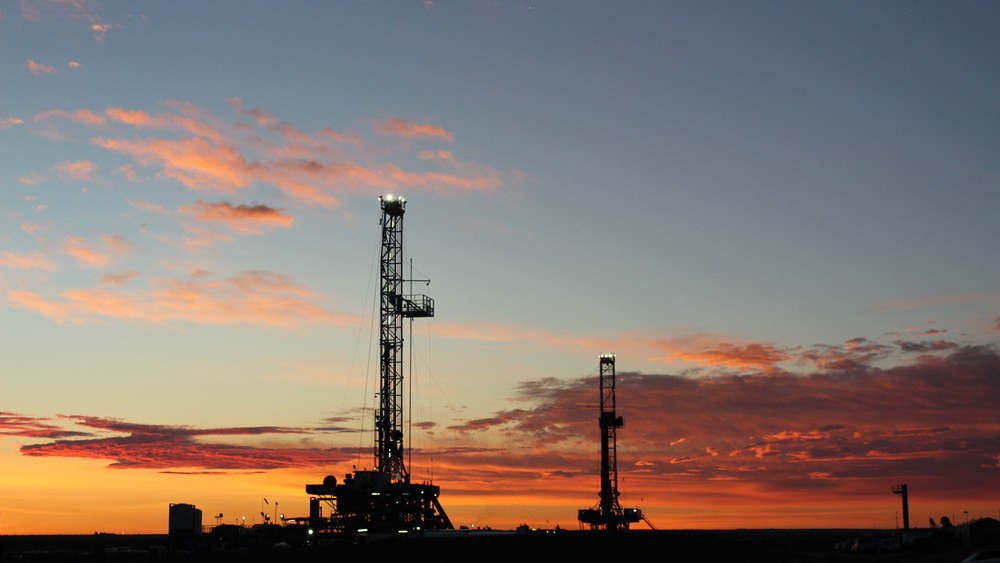
Argentina's record unconventional oil and natural gas production from the Vaca Muerta shale formation is strengthening energy security across the Americas. Over the past decade, shale oil and gas output has surged to account for more than 70% of the country's total hydrocarbon production. With the Vaca Muerta still in the early stages of development, this growth trajectory is expected to continue, positioning the formation as one of the world's premier shale plays. For a country that spent years as a net energy importer—draining foreign reserves and constraining economic growth—the reversal is a watershed moment with implications extending well beyond Argentina's borders.
According to government data for June 2026, Argentina produced 868,763 barrels of oil per day—a 2% decline from the previous month but still 12.6% higher year over year. Natural gas output for the same period stood at 5.4 billion cubic feet per day, down 1.2% from May 2026 and 3% lower than the 5.6 billion cubic feet reported in June 2025. Despite the monthly declines, overall hydrocarbon output remains substantially higher than a decade earlier.
For context, in June 2016—two years after Vaca Muerta development began in earnest—Argentina produced 500,580 barrels of crude oil and 4.4 billion cubic feet of natural gas per day. Over the intervening decade, crude oil output has risen 74% and natural gas output 23%, driven almost entirely by the development of the Vaca Muerta shale formation. State-controlled YPF, which discovered the formation's potential and pioneered its development alongside partners including Chevron, ExxonMobil, Shell, and TotalEnergies, continues to operate many of the play's most productive blocks.
By June 2026, shale oil accounted for 71% of Argentina's total petroleum output, or 616,490 barrels per day. Shale gas represented 70% of natural gas production, at 3.8 billion cubic feet per day. These figures underscore the increasingly central role of unconventional hydrocarbons in Argentina's energy mix, particularly as conventional production continues to decline. Conventional oil output in June 2026 was just 252,273 barrels per day—a 13% drop from the 290,924 barrels per day recorded a year earlier.
The successful exploitation of the 8.6-million-acre Vaca Muerta formation underpins Argentina's rising hydrocarbon output. Shale oil production reached a record high of 626,077 barrels per day in May 2026, when unconventional oil accounted for 70.6% of total petroleum output. Over the prior year, Vaca Muerta petroleum production grew 28%, rising from 480,964 barrels per day in June 2025 to 616,490 barrels per day in June 2026.
Although June 2026 shale oil output was 2% lower month over month, its share of total petroleum output reached an all-time high of 71%, up significantly from 62% a year earlier. This ratio continues to climb steadily, driven not only by rising Vaca Muerta production but also by the ongoing decline of Argentina's conventional oil fields, most of which have peaked and are now in decline.
A similar pattern is evident in natural gas. Between June 2025 and June 2026, conventional gas output fell 15%, from 1.9 billion to 1.6 billion cubic feet per day. Over the same period, Argentina's overall gas production declined only 3%, from 5.6 billion to 5.4 billion cubic feet per day, with strong shale gas growth offsetting much of the conventional decline. Shale gas rose from 66% of total production in June 2025 to 70% in June 2026. The completion of the Néstor Kirchner gas pipeline in 2023, which expanded takeaway capacity from Vaca Muerta to major consumption centers, has been instrumental in enabling this scale of shale gas delivery to domestic markets and freeing up volumes for export.
The volume of hydrocarbons produced from the Vaca Muerta, along with its share of national energy output, is expected to keep growing. The formation ranks among the top five shale plays globally, with estimated technically recoverable resources of 16 billion barrels of oil and 308 trillion cubic feet of gas.
The Vaca Muerta also possesses geological characteristics that make it equal to or even superior to more developed U.S. shale plays. Its shale thickness, which enhances well productivity, exceeds that of most U.S. formations; only the Delaware shale has greater thickness, at up to 1,200 meters. The formation's high organic content—surpassed only by the Delaware and Bakken shales—signals greater hydrocarbon potential and higher internal reservoir pressures, facilitating extraction.
Reservoir pressures in the Vaca Muerta are higher than those of all major U.S. shale plays except Haynesville. This contributes to lower extraction costs and longer productive well lifespans. Typically, shale oil well production peaks rapidly—often within the first six months—and then declines by up to 70% from initial output, forcing operators to deploy costly enhanced recovery techniques such as gas injection and surfactant flooding to maintain commercial production levels.
These geological advantages suggest that Argentina's flagship shale play is more productive than most U.S. shales, with a potentially longer commercially viable lifespan. Despite higher drilling and operational costs in Argentina, the Vaca Muerta's estimated breakeven price is $36 per barrel—competitive with and in some cases better than major U.S. shale plays, where breakeven prices range from $34 to $51 per barrel. Breakeven prices in the Vaca Muerta are expected to decline further as additional infrastructure comes online, including the planned expansion of the Vaca Muerta Oil System (VMOS) pipeline, which would substantially increase crude transport capacity to Atlantic and Pacific export terminals.
Foreign energy companies continue to pursue investment opportunities in the Vaca Muerta, attracted not only by its geology but also by the quality of its crude. The light sweet crude extracted from the formation has an API gravity of 39 to 42 degrees and sulfur content below 0.5%, making it easier and cheaper to refine into high-quality, low-emission fuels—an increasingly valued attribute in a world focused on reducing carbon emissions.
The Vaca Muerta has become the engine of Argentina's economic recovery, transforming the country into a net energy exporter and reshaping energy security across the Americas. This comes at a critical moment, with conflict in the Middle East closing the Strait of Hormuz and disrupting global oil and gas supplies. For neighboring Chile and Brazil, which have historically depended on energy imports, Argentina's emerging role as a reliable regional supplier carries significant implications for supply diversification. Alongside President Javier Milei's market-oriented reforms, the development of the Vaca Muerta is providing Buenos Aires with a powerful source of economic growth.
By Matthew Smith for Oilprice.com

