ARB Rallies Nearly 70% as Bitcoin Hyper Raises $33.1 Million for a Bitcoin Layer 2
Key Takeaways
- •Arbitrum's ARB token climbed about 69.7% over seven days to $0.22627, while Bitcoin rose 10.77% weekly to $86,604.
- •Standard Chartered initiated a $10 price target for Arbitrum by 2030, arguing Layer 2 infrastructure could become a valuable business as traditional financial firms move on-chain.
- •Robinhood Chain, which runs on Arbitrum technology, generated an estimated $2.8 million in daily fee revenue during its first two weeks of September, with Arbitrum's monthly revenue estimated to have risen more than fivefold since the launch.
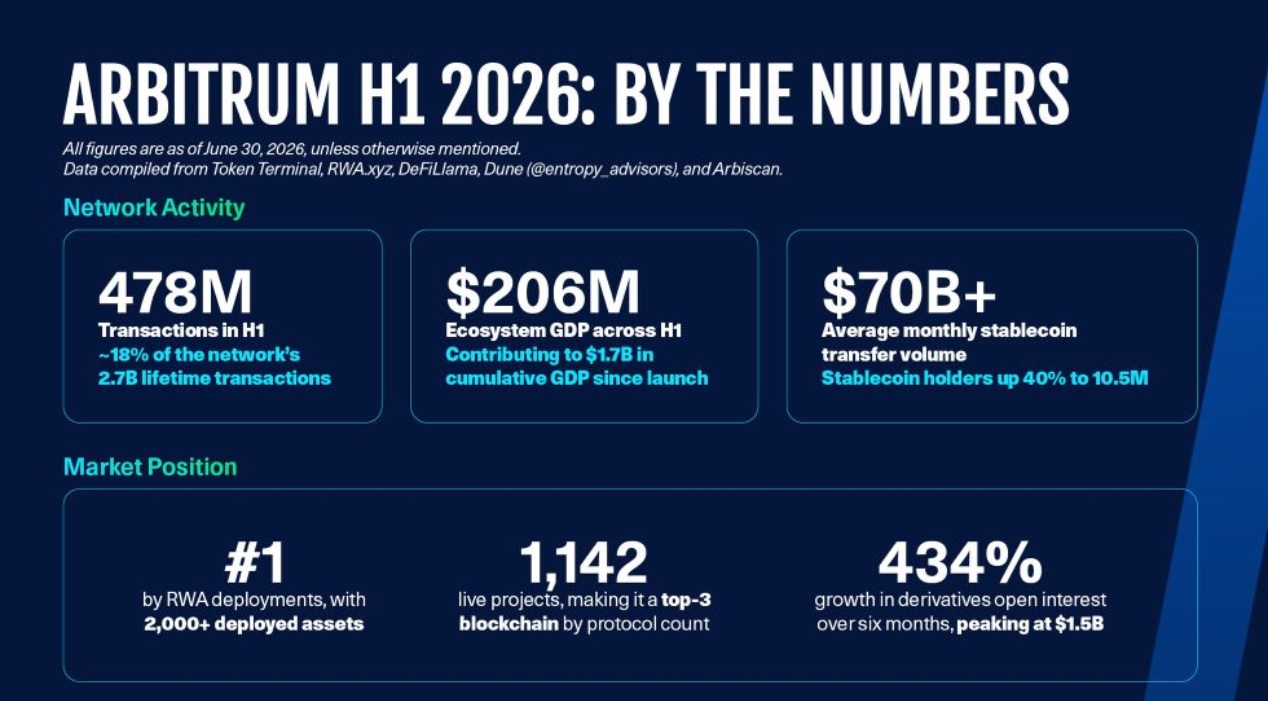
- •The Arbitrum ecosystem processed 478 million transactions in the first half of 2026, with monthly stablecoin transfers averaging over $70 billion and ArbitrumDAO generating $6.19 million in income.
- •Bitcoin Hyper has raised $33.1 million in presale at $0.01368 for an SVM-based Bitcoin Layer 2 offering faster, programmable BTC transactions, with its contracts audited by Coinsult and SpyWolf.
Layer 2 networks have re-emerged as one of crypto's hottest sectors. A Layer 2 is a network built on top of an existing blockchain to handle transactions faster and more cheaply, then settle the results back to the base chain — a model that, so far, has mainly proven itself on Ethereum. Arbitrum (ARB) climbed almost 69.7% in seven days to $0.22627, while Bitcoin's latest breakout carried BTC to $86,604 — up 6.73% in 24 hours and 10.77% over the week.
ARB's move is backed by more than market momentum. Standard Chartered initiated a $10 target for Arbitrum for 2030, arguing that Layer 2 infrastructure could become an increasingly valuable business as traditional financial companies move on-chain. Robinhood Chain is an early example: the retail brokerage's blockchain runs on Arbitrum technology, with Arbitrum receiving a share of the net protocol revenue generated by chains built through its Expansion Program.
The arrangement is a reminder of what Layer 2s can become — successful ones can build entire economies around the assets and networks beneath them. That is the potential Bitcoin Hyper (HYPER) is pursuing, a project taking the same idea to Bitcoin. It has raised $33.1 million in presale at a current price of $0.01368, a pitch aimed at investors looking for the next Layer 2 boom beyond Ethereum.
Arbitrum Shows How Big the Layer 2 Opportunity Can Get
Arbitrum began with an easy problem to explain: Ethereum was busy and expensive, so some of the work needed to move somewhere faster. Since then, it has grown from a scaling solution into infrastructure that other companies can use to build their own networks.
According to the Arbitrum Foundation, its ecosystem processed 478 million transactions in the first half of 2026, while monthly stablecoin transfers averaged more than $70 billion. ArbitrumDAO generated $6.19 million of income during the period.
Robinhood then arrived, beginning to use Arbitrum technology in July. Standard Chartered estimates Robinhood Chain averaged $2.8 million in daily fee revenue during the first two weeks of September, and the bank estimates Arbitrum's monthly revenue has now risen to more than five times its level before Robinhood Chain launched.
That helps explain why ARB has captured traders' attention as the wider market has roared back — and raises the question of whether a new layer can make an underlying blockchain useful to new groups of users. For Bitcoin, that question remains wide open. It has accumulated an extraordinary amount of value, yet its basic capabilities are intentionally small: hold BTC, send BTC, receive BTC. The slow speeds of the base chain have trapped BTC as a store of value rather than a currency.
Bitcoin Hyper Wants to Build an Economy Around BTC
Bitcoin Hyper is building a Layer 2 that gives BTC a faster, programmable environment without trying to make Bitcoin something it was never designed to be.
At the center of the BTC Layer 2 is the Solana Virtual Machine (SVM), the execution environment used by Solana applications and smart contracts. It brings thousands of transactions per second in a framework developers already know how to build for.
$HYPER pulling Bitcoin into the fast lane. pic.twitter.com/xcVDku8iXO
— Bitcoin Hyper (@BTC_Hyper2) September 19, 2026
That speed unlocks the potential for decentralized exchanges, lending markets, and payment apps, all running with BTC as the base currency, where users expect responses in seconds rather than several Bitcoin blocks. In practice, a BTC holder could move value into Bitcoin Hyper and use it for trading or decentralized finance, while a merchant could accept BTC in milliseconds — far better suited to real-world payments.
Once live, a bridge will connect BTC to the Layer 2, so activity occurs within the faster SVM environment rather than forcing every trade or payment to wait for Bitcoin's 10-minute confirmation times.
Presale Scale and the Road Ahead
HYPER already has one thing every new network needs: an audience. The presale has raised $33.1 million before launch, with HYPER priced at $0.01368 — a presale price set before the token trades on open markets, not a market quote. Buyers can stake HYPER at 35% APY, a rate set by the project's own staking program, and the token contracts have been audited by Coinsult and SpyWolf.
That $33.1 million becomes particularly interesting when viewed through the Arbitrum lens. Arbitrum shows what can happen when a Layer 2 progresses from an engineering solution into infrastructure that people can build businesses on. HYPER is far earlier in that journey and still has to convert presale demand into developers, applications, liquidity, and BTC activity after launch. From here, the markers are concrete: whether the promised BTC bridge goes live as described, and whether, once it does, real trading and payment activity follows.
But it is starting with the largest cryptocurrency by market cap as its base, and a substantial community is already waiting for the network.
Every crypto cycle tends to produce infrastructure that looks obvious in hindsight. Ethereum's growth created demand for networks such as Arbitrum because activity eventually outgrew what one blockchain could comfortably handle. The next cycle may create a different opportunity, especially with Bitcoin back above $86,000, ARB surging, and Layer 2 infrastructure drawing attention from crypto traders to Robinhood and Standard Chartered.
If the next Layer 2 boom is about giving existing crypto capital more places to go, HYPER has picked the biggest pool of capital in the industry.
Source: ICO Bench

