APR's Medicube cream tests negative for banned dye as company questions unauthorized seller's samples
Key Takeaways
- •APR said certified laboratory tests detected no Sudan Red in the two Medicube cream batches cited by Singapore's Health Sciences Authority.
- •HSA ordered the recall of the batches on Aug. 26 after finding trace amounts of Sudan IV in products sold by distributor Venus Beauty, while clearing batches from other distributors, including APR's official Singapore distributor.
- •APR disputes the authenticity of the tested samples, stating it never exported those batch numbers to Singapore and has never supplied Venus Beauty.
- •Sudan Red is a synthetic azo dye banned in foods and cosmetics due to suspected genotoxic and carcinogenic properties.
- •The dispute illustrates the challenge of verifying origin and quality when K-beauty products reach consumers through unauthorized sales channels.
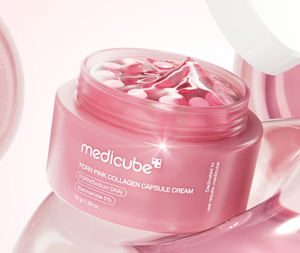
South Korean beauty company APR said Friday that laboratory tests found no trace of Sudan Red, a banned industrial dye, in two batches of its Medicube skin cream that Singapore's health regulator had flagged in a recall.
Testing carried out at certified institutions, including in Korea, detected no such dye in samples of Medicube's PDRN Pink Collagen Capsule Cream that APR submitted corresponding to the batch numbers cited by Singapore's Health Sciences Authority — 2E122I.2E117I and 2E191G.2E193G.
Sudan Red is a synthetic azo dye prohibited in foods and cosmetics due to suspected genotoxic and carcinogenic properties.
"These results confirm through objective testing that no Sudan Red was detected in products bearing the same batch numbers cited by HSA," the company said in a statement. "This is consistent with HSA's own findings of no detection in products officially supplied by our Singapore entity."
APR added that it also conducted testing at an HSA-certified institution at the regulator's request.
The finding follows HSA's discovery of trace amounts of Sudan IV in two batches sold by Venus Beauty Pte. Ltd., one of three distributors under the regulator's scrutiny. HSA ordered those batches recalled on Aug. 26, while clearing the other distributors' batches for resale after finding no contamination, including those of APR's official Singapore distributor.
APR has disputed the authenticity of the samples HSA tested, saying it has no record of exporting those batch numbers to Singapore. According to the company, HSA identified Venus Beauty as the seller of the tested samples — a seller to which APR has never supplied or exported products.
"We're reviewing the facts around how these products were distributed," an APR official said. "Whether the samples HSA obtained are genuine, and how they made their way to that seller, are questions that still need answers."
The dispute highlights a recurring challenge for fast-growing K-beauty brands as they expand across Asia: when products reach consumers through unofficial channels, verifying their origin and quality becomes difficult for both the brand and regulators. Medicube, one of APR's flagship labels, has built a large overseas following through online sales and social media, and Singapore has previously recalled other cosmetics found to contain Sudan dyes sold through unauthorized sellers.
The company said it would continue to address false claims with verified facts while maintaining its focus on quality and transparency. It also noted that unauthorized products have appeared in some markets, and that items purchased outside official retailers cannot be verified. How HSA responds to APR's test results and authenticity claims is likely to shape the next phase of the case.
