Apple Faces Nearly $500 Billion Value Loss After Q4 Forecast Misses Estimates, Opening Door for Nvidia
Key Takeaways
- •Apple's Q3 fiscal 2026 results exceeded analyst expectations for both revenue and earnings per share, with iPhone sales as the primary growth driver.
- •The company's fourth-quarter revenue growth forecast of 9% to 11% fell below Wall Street's consensus estimate of approximately 12%, triggering a near 10% after-hours share decline on July 31, 2025.
- •Tim Cook identified memory shortages caused by AI data center demand as a significant near-term constraint, particularly affecting conventional DRAM and NAND component availability.
- •A roughly $500 billion reduction in Apple's market capitalization could allow Nvidia to reclaim its position as the world's most valuable publicly traded company.
- •Major memory suppliers have announced capacity expansion plans, but new fabrication facilities typically take two to three years to reach volume production, meaning supply constraints are unlikely to ease quickly.
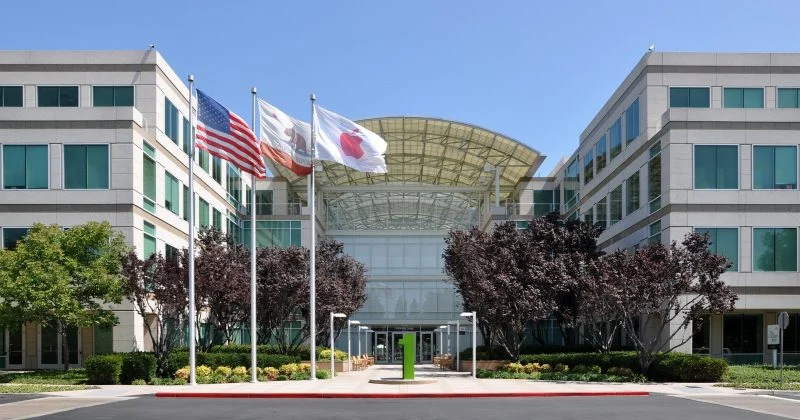
Apple reported a fiscally strong quarter that nonetheless triggered a sharp market reaction, with shares falling nearly 10% in after-hours trading on July 31, 2025. The sell-off threatens to erase approximately $500 billion in market capitalization, potentially allowing Nvidia to reclaim its position as the world's most valuable company.
The catalyst was Apple's fourth-quarter revenue growth forecast of 9% to 11%, which came in below Wall Street's consensus estimate of approximately 12%.
Strong Quarter, Weak Guidance
Apple's Q3 fiscal 2026 results, reported on July 30, showed both revenue and earnings per share exceeding analyst expectations, with iPhone sales serving as the primary growth driver. The company's Services segment — encompassing the App Store, subscriptions, and licensing — has been its fastest-growing revenue category in recent periods, though hardware still accounts for the majority of total revenue.
However, CEO Tim Cook identified an "increasing impact" from memory shortages as a significant constraint on near-term performance. These shortages originate from intensifying demand at AI data centers, which are consuming memory chips at rates that restrict supply for other manufacturers, including Apple. The crunch has been particularly acute in High Bandwidth Memory (HBM), a category dominated by SK Hynix, Samsung, and Micron, where suppliers have prioritized allocation to AI accelerator makers, tightening availability of conventional DRAM and NAND components used in smartphones and laptops.
The difference between Apple's projected 9–11% growth and the Street's roughly 12% expectation appears marginal. Yet with Apple's pre-decline market capitalization at approximately $4.89 trillion, even a narrow miss can translate into hundreds of billions in lost value within hours.
Nvidia Positioned to Reclaim Top Spot
A $500 billion reduction in Apple's valuation would position Nvidia to potentially overtake it as the most valuable publicly traded company. The two firms have alternated in the top position as the AI industry continues to reshape the technology sector.
The dynamic underscores a broader supply chain shift: Apple is losing value partly due to memory chip shortages driven by AI demand, while Nvidia is gaining value as the leading supplier of GPUs powering that same demand. Nvidia's data center revenue has surged as cloud providers and enterprises build out AI infrastructure, making its graphics processors among the most sought-after silicon in the industry.
Crypto and Broader Market Implications
Apple's earnings report made no mention of cryptocurrency assets, protocols, or tokens. The company has consistently maintained its distance from digital assets, and this quarter's results did not alter that stance.
The semiconductor supply chain angle remains relevant beyond Apple. Memory shortages resulting from AI infrastructure expansion reflect a structural imbalance that could affect hardware costs, product release timelines, and capital expenditure strategies across the technology sector for multiple quarters ahead. Major memory suppliers have announced capacity expansion plans, but new fabrication facilities typically require two to three years to reach volume production, meaning the supply-demand balance is unlikely to shift quickly.

