Apple briefly retakes world’s most valuable company title after stock surge
Key Takeaways
- •Apple briefly overtook Nvidia during July 17 intraday trading but Nvidia finished the session with a slightly higher market capitalization.
- •Apple’s market value reached roughly $4.88 trillion during the session, compared with Nvidia’s approximately $4.82 trillion at that point.
- •Apple shares had risen nearly 23% year-to-date through mid-July 2026, while Nvidia had gained about 7.3%.
- •Nvidia’s AI position is tied to chips for models and data centers, while Apple’s strategy relies on adding AI features to devices used by about 1.5 billion customers.
- •Prediction markets imply Nvidia has about a 61% probability of remaining the market capitalization leader through the end of 2026.
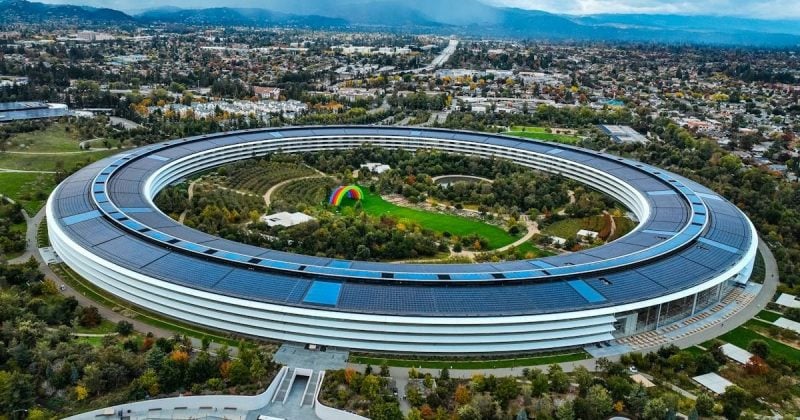
Apple briefly reclaimed the title of the world’s most valuable public company on July 17, overtaking Nvidia during intraday trading before Nvidia finished the session slightly ahead.
During the trading day, Apple reached a market capitalization of roughly $4.88 trillion, edging past Nvidia’s approximately $4.82 trillion valuation. Although Nvidia closed the day marginally in front, Apple’s move above its chipmaking rival underscored the continuing contest between the two companies at the top of global equity markets. Because market capitalization moves with share prices throughout the session, the ranking can shift intraday even when the closing order remains unchanged.
Market values and share performance
Apple’s shares had climbed nearly 23% year-to-date through mid-July 2026. Nvidia, widely associated with the artificial intelligence infrastructure boom, had gained about 7.3% over the same period.
The scale of both companies’ valuations places them above the gross domestic product of several major economies. Apple and Nvidia are each worth more than the entire GDP of Japan, at $4.3 trillion; the United Kingdom, at $4.2 trillion; and India, at $4.1 trillion. Market capitalization and GDP measure different things—one reflects the equity value investors assign to a company, while the other measures annual economic output—but the comparison illustrates the size of the companies at the top of public markets.
Nvidia first moved ahead of Apple by market valuation in June 2024 and formally claimed the top position in June 2025. The company then became the first to reach a $4 trillion market capitalization in July 2025, followed by a $5 trillion valuation in October of that year.
AI strategies shape the comparison
Nvidia’s market position is tied to infrastructure. Its graphics processing units are used to power AI models and data centers, placing the company at the center of demand for AI computing hardware. That model also involves large capital expenditure, exposure to cyclical demand, and the risk that major customers develop their own chips.
Apple’s position is based more heavily on distribution. The company can integrate AI features into devices already used by a customer base of about 1.5 billion people. Compared with large-scale infrastructure suppliers, that approach carries lower capital expenditure, supports higher margins, and relies on a hardware refresh cycle among existing users.
Apple’s 23% year-to-date share gain, compared with Nvidia’s 7.3% increase, reflects a shift in market attention toward companies that can monetize AI through existing platforms rather than through heavy infrastructure spending.
Prediction markets still favor Nvidia
Despite Apple’s brief intraday move into first place, prediction markets have not assigned it a lasting lead. Estimates indicate that Nvidia still has roughly a 61% probability of maintaining its market capitalization leadership through the end of 2026.
The implied probability of a leadership change stands at 39%, suggesting that a substantial share of market participants see Apple as a possible leader by the start of 2027. Such probabilities are market-implied snapshots rather than guarantees, and they can change as earnings, product updates, AI spending trends, and broader equity market conditions evolve.

