Can Apple's Incoming CEO John Ternus Restore the Product Design Magic of the Steve Jobs Era?
Key Takeaways
- •John Ternus, currently Apple's head of hardware engineering, will succeed Tim Cook as CEO in September 2026 in the company's first leadership change since Cook took over from Steve Jobs in 2011.
- •Apple's annual revenue has grown by more than $300 billion under Cook and profits have more than quadrupled, yet the company has not launched a transformative new product category since the Apple Watch debuted in 2015.
- •Apple sued former vice president Tang Tan and another ex-employee in July 2026, accusing them of bringing trade secrets to OpenAI, which acquired Jony Ive's AI hardware startup io Products in 2025.
- •Experts widely identify recruiting and retaining top design and product talent as the single most important lever Ternus can pull to reinvigorate Apple's culture of innovation.
- •Analysts warn that advances in artificial intelligence could gradually erode Apple's grip on consumer hardware, as new AI-first devices test whether software intelligence can replace the smartphone model underpinning Apple's business.
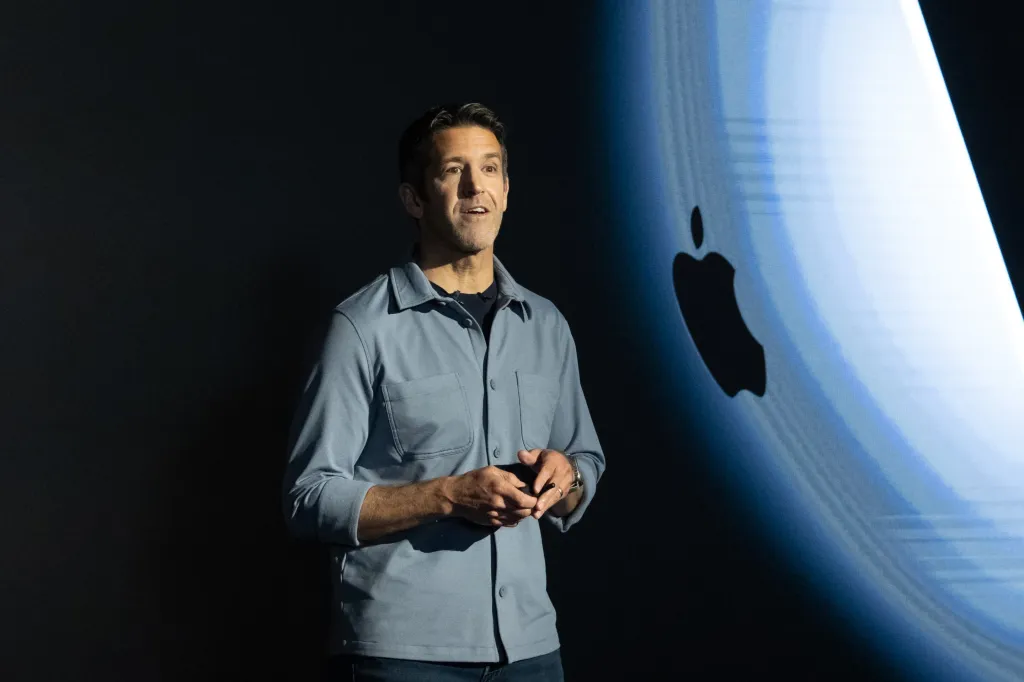
Matthew Rogers remembers Apple's scrappy early days vividly. As a freshly minted college engineer, he could debate ideas face-to-face with Steve Jobs. Rogers belonged to a team of just a few dozen working on the original iPhone—a device that initially took shape as a derivative of the iPod Nano, complete with a click wheel. But that mechanism failed to meet Jobs's exacting standards. He demanded something approaching perfection.
"I was 23, 24 years old, and I interacted with Steve Jobs. That's crazy, right? But that's the organization he ran," Rogers told Fortune from his Silicon Valley office. He now runs Mill, a food-recycling startup.
In those days, Apple's hierarchy was strikingly flat. What set the company apart, Rogers recalled, was Jobs's practice of surrounding himself with consumer-minded product leaders who were expected to push back and argue. The mandate was straightforward: build "the best thing out there" and embrace genuine risk. Some of Apple's most legendary products emerged from a small skunkworks team operating across the street from the main office.
That much-mythologized era continues to loom over Apple as the company navigates its most significant leadership transition in 15 years—the first since Cook took over from Jobs in 2011. Rogers and several former design and hardware employees, investors, and analysts say that somewhere along the way, Apple lost a measure of its design and product magic. With the September handoff from Tim Cook to incoming chief executive John Ternus—who currently leads hardware engineering—Rogers and other longtime Apple observers are asking a pointed question: Can the company reclaim its product-first soul?
A Record of Operational Success
Any fair assessment of Apple must begin with the undeniable numbers. Cook's tenure has been extraordinarily successful by virtually any financial metric. Annual revenue has surged by more than $300 billion since he took the helm in 2011, and profits have more than quadrupled. Few companies anywhere rival Apple's ability to manufacture elite hardware at speed backed by a robust supply chain. The company remains a gold standard in consumer products. Cook inherited a company that had relied on placing one or two major bets at a time and transformed it into one of the world's most operationally disciplined enterprises.
But the experts Fortune spoke with argue that this success has carried a cost. They note that it has been years since Apple created or fundamentally transformed a product category that became woven into daily life—not since the Apple Watch debuted in 2015, and some argue not since the original iPhone. Apple has also absorbed commercial disappointments, including the Vision Pro, its $3,499 mixed-reality headset launched in early 2024 to a tepid reception, and has struggled with its Siri assistant as rivals like Google and OpenAI rapidly advanced their conversational AI capabilities. Critics contend that iPhone launches have settled into a predictable cadence of incremental updates.
A new threat looms as well. Gene Munster, a veteran Apple analyst turned investor, warns that artificial intelligence is rapidly reshaping how people interact with devices and services in ways that could erode Apple's grip on consumer hardware. The rise of AI-first hardware attempts, such as Humane's Ai Pin and Rabbit's R1, underscores how new entrants are testing whether software intelligence can replace the smartphone-centric model that Apple's empire is built on. "They have to reinvent themselves," Munster said. "If they don't, somebody's going to come out with something 10 times better. It won't be overnight, but slowly. AI has that power."
Apple's global installed base of active devices now stands at 2.5 billion, according to the company's FQ2 2026 results. iPhone sales account for 51% of total revenue over the same period.
Apple declined to comment for this story. Rogers, who also co-created the smart home company Nest alongside former Apple executive Tony Fadell, said Ternus faces a defining test. "I'll put it this way," he said. "He has a tall task but a big opportunity."
The Magic Years
Under Jobs, Apple's industrial design team functioned as an all-powerful force and the beating heart of the company's product innovation. Jobs famously fused software and hardware into a seamless walled garden across Apple's devices, with star designer Jony Ive playing a defining role in shaping the look and feel of every product.
The two collaborated on a near-daily basis. Apple's culture, according to former staff, prioritized individuals committed to solving problems over those who deferred to technical limitations. Jobs famously dismissed focus groups, convinced that customers could not articulate what they truly wanted. The objective was to build products so intuitive they required no instruction manual—and to reject anything merely adequate in order to concentrate on what was genuinely radical.
Much of this philosophy was born of necessity. Jobs's Apple was a fraction of today's cash-generating behemoth; it survived by constantly reinventing itself, frequently wagering the entire enterprise on one or two products at a time.
Accounts abound of Jobs and Ive obsessing over the most intricate details, regardless of expense. This extended to fusing separate components into a single fluid form for the iPhone and engineering the precise friction of a box lid opening. One anecdote from journalist Tripp Mickle's book After Steve recounts how Jobs nearly killed the entire 1998 iMac launch because the computer featured a CD tray rather than the CD slot he insisted upon.
How the Magic Was Lost
The irony is stark: Apple's greatest designer is now a competitor. Ive's AI hardware startup, io Products, was acquired by ChatGPT-maker OpenAI in 2025, marking the AI software company's most significant move into consumer hardware and pitting it directly against Apple's device franchise. Ternus, seemingly sensing the urgency, has reportedly assured staff that the design team will remain central to Apple's future.
On July 10, Apple sued former vice president Tang Tan and another former employee, accusing them of bringing trade secrets to OpenAI. Before becoming OpenAI's chief hardware officer, Tan had worked closely with Ive at io, which is named in the lawsuit. Ive himself is not named. OpenAI stated it has "no interest in other companies' trade secrets" and remains focused on building innovative technology.
Former Apple staff say the design obsession that defined the Jobs era faded after his death. Cook, widely regarded as an operational savant, did not frequent the design studio with the regularity that Jobs did. The design team's influence diminished as Apple channeled its energy into manufacturing the iPhone and other bestsellers with military precision at massive scale.
Under Cook, Apple has prioritized protecting profit margins and expanding services such as iCloud. The company has seen a steady exodus of its old guard of designers, including Danny Coster, Rico Zorkendorfer, and Christopher Stringer. Stringer departed in 2017 after nearly 22 years, frustrated that the HomePod he helped create had been treated as an accessory rather than a core, innovative product. Other designers had grown weary of the relentless annual cadence of iPhone releases. Ive himself had become a more elusive figure since Jobs's death in 2011.
Even as one of the world's most valuable companies, Apple has struggled to capture the public imagination under Cook the way it did during the Jobs years—a dynamic that some analysts say carries genuine business risk.
"They were the underdog fighting, and now they're the incumbent—that's why it's not as exciting anymore," said former Apple investor Arif Karim.
Getting the Magic Back
Nearly every expert Fortune consulted identified talent as the single biggest lever Ternus can pull. Apple currently lacks a clear design or product star, they noted, and continues to lose respected staff. Two vice presidents, Paul Meade and Alan Dye, recently departed for OpenAI and Meta, respectively. Ternus now has the authority to assemble his own executive team and elevate emerging talent who understand Apple's founding culture of innovation.
Several experts argued that some of Apple's old feistiness must return as well, pointing to the underdog energy that Elon Musk brings to Tesla and SpaceX as an illustration of what can propel genuine innovation.
Analysts suggest Apple could return to a model in which its existing businesses turn to the design team for direction, rather than designers being asked to reshape concepts to satisfy operational and financial constraints. Designers should be leading the charge on identifying what consumers genuinely need, said Munster.
That could entail a more "problem-first" design philosophy—pinpointing fundamental human problems and applying technology to solve them, rather than starting from what is operationally convenient. It would also likely require deeply integrating AI, especially Siri, across Apple's operating systems and devices, along with the discipline to reject product launches that do not clear a high bar for user experience.
Several observers believe Ternus is the right executive for this moment. While he is not regarded as a visionary in the Jobs mold, he is an authentic product person with deep engineering credibility. He earned respect for his work on the company's 2007 iMac, the first to feature Apple's iconic aluminum casing; Ternus played a pivotal role in its development.
One former colleague described him as the executive who "quietly got shit done." He is known for a collaborative leadership style, has been a frequent presence at the design studio, and has delivered polished presentations at Apple's secretive annual off-site gathering of its top 100 leaders.
Analysts credit Cook with positioning Ternus for success. Ternus will take the reins just in time to unveil Apple's next iPhone series, which reportedly could include Apple's first foldable phone—a category Samsung has dominated since introducing the Galaxy Fold in 2019, leaving Apple as the last major smartphone maker without a folding device. And even as Apple has lagged in AI development, the company has generated close to a billion dollars from App Store fees paid by AI companies.
"They are still the consumer brand with the broadest reach from a hardware perspective," said longtime Apple analyst Carolina Milanesi. Her fondest Apple memory is watching the company unveil FaceTime in 2010, a moment that transformed how people connected through their phones. Ternus, she said, possesses "an engineering mindset of understanding what is possible and what isn't."
Ternus cannot simply transport the colossus that Apple has become back to its hungry startup roots, Milanesi acknowledged. He must work within a system that ships more than 200 million phones annually. Rekindling a product-first focus may mean channeling that fire into select device categories—such as foldables or glasses—while establishing small, passionate teams capable of bypassing the institutional inertia of the larger organization.
Some of Apple's old grit could prove invaluable. Former staff who worked on the first iBook, the company's colorful laptop, in the 1990s recall driving around Taipei in the early morning hours, navigating mom-and-pop shops with dirt floors and the occasional roaming chicken as they scrambled to assemble supply chains and troubleshoot problems with local vendors.
Those hardships forged a resourcefulness that no amount of supply-chain optimization can manufacture on its own. It is that instinct—more than any individual product—that some hope Ternus can revive.
"Apple has become the best in the world at iterating," said Rogers, the former engineer. "This is about going from iteration to innovation. Those are different skill sets."
This article appears in the August/September 2026 issue of Fortune with the headline "Can a new CEO bring back Apple's design mojo?" This story was originally featured on Fortune.com.

