Apple Adds Quest Diagnostics Blood Panel to New Health Age Score
Key Takeaways
- •Apple's new Health Age feature merges VO2 max, sleep data, and blood biomarkers into one figure that users can compare with their actual age.
- •U.S. users can order a $119 Quest Diagnostics panel covering more than 50 biomarkers, while others may manually enter lab results or sync existing medical records.
- •The updated Health app will launch later this year in U.S. English and requires Apple Intelligence on iOS 27 and iPadOS 27.
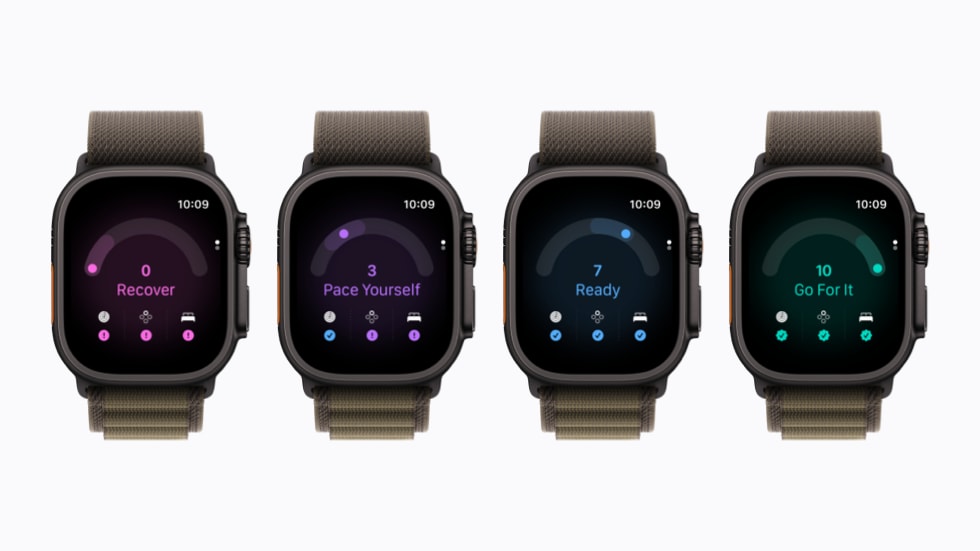
- •The Apple Watch Series 12 and Ultra 4 gain a daily readiness score from 0 to 10 that delivers one of four recommendations and can shift as new data arrives during the day.
- •Redesigned sensors on the new watches record heart rate every five seconds and measure heart-rate variability up to 24 times more frequently, with Apple citing a study of more than 1,000 people showing leading heart-rate accuracy.
Apple has unveiled a revamped Health app that calculates how old a person’s body appears based on health measurements. The company calls the figure Health Age and plans to incorporate blood-test data through a $119 partnership with Quest Diagnostics.
Apple previewed the update alongside the Apple Watch Series 12 and Apple Watch Ultra 4. The move highlights the company’s expanding focus on diagnostics, an area that has traditionally involved tests ordered through a doctor.
More than 50 biomarkers support Health Age
Health Age is designed to combine separate health measurements into a single figure that users can compare with their calendar age. The score uses VO2 max, sleep data, and blood biomarkers to assess whether the measurements are consistent with a person’s age.
Wearable sensors can collect the first two categories of information, but blood biomarkers require laboratory testing. In the United States, Apple said users can order a Quest Diagnostics panel covering more than 50 biomarkers for $119. Quest Diagnostics operates one of the largest clinical laboratory networks in the United States, giving Apple an established testing partner for the portion of the score its devices cannot measure on their own. Apple described the panel as a way to obtain data “that can only come from lab tests.”
Test results are sent to the iPhone, where users can compare them with Apple Watch readings and view explanatory videos from clinical experts. People who do not order the kit can manually enter laboratory results or synchronize information from existing medical records.
The updated Health app will become available later this year in U.S. English, with additional languages planned afterward. It requires Apple Intelligence on iOS 27 and iPadOS 27. Apple’s announcement is available here.
Apple is also adding a Longevity tab beside Health Age. The tab evaluates sleep, movement, and heart health against clinical guidance and includes movement and mobility assessments. In one demonstration, an iPhone camera tracked a person completing a VO2 max test while a trainer guided the movements on screen.
The health expansion comes as Apple seeks to increase revenue from services beyond hardware. The company’s April quarter generated a Services record of $30.98 billion, according to Cryptopolitan’s earlier earnings coverage.
Apple adds a daily readiness score
Apple also introduced a daily readiness feature for the Apple Watch Series 12 and Ultra 4. The feature produces a score from 0 to 10 using recent activity, vital signs, and a sleep score. It then assigns one of four recommendations: Recover, Pace Yourself, Ready, or Go For It.
The score can change throughout the day as new information arrives. An afternoon workout or a decline in daytime vital signs may alter the result.
Apple said its exercise scientists and physicians helped develop the scoring model, which draws on the company’s Apple Heart and Movement Study. Rival fitness trackers have offered readiness scores for several years.
The readiness feature uses a new Health Sensing System added to the Series 12 and Ultra 4. Redesigned optical and electrical sensors record heart rate every five seconds during the day. Apple said heart-rate variability is measured as often as every five minutes, or 24 times as frequently as before.
The Vitals app now displays heart-rate variability, which Apple describes as a stress-and-recovery signal, in both an overnight view and a new daytime view.
Apple said it evaluated the system in a study involving more than 1,000 people from demographic groups. The company said the results showed its watch outperforming leading wearables in heart-rate accuracy.
“By combining breakthrough sensing on Apple Watch with Apple Intelligence in the Health app, we’re able to translate complex biometric data into clear guidance for users,” said Sumbul Desai, M.D., Apple’s vice president of Health and Fitness.
