Apple unveils first foldable iPhone, iPhone 18 Pro models and new wearables
Key Takeaways
- •The iPhone Duo is Apple’s first foldable smartphone, with a 7.6-inch inner display, a 5.4-inch outer display and storage of up to 2TB.
- •The Duo starts at $1,999, costs about $100 more than comparable Samsung and Google foldables, and will be available from October 23.
- •The iPhone 18 Pro and Pro Max introduce Apple’s first 2-nanometer chip and a 48MP main camera with a variable aperture, while starting at $1,199 and $1,299.
- •Apple’s fall lineup excludes the standard iPhone 18, which Bloomberg’s Mark Gurman reported could arrive with the iPhone 18e and iPhone Air 2 in spring 2027.
- •Apple also announced the Apple Watch Series 12, Ultra 4, AirPods 5 and Siri AI updates, including language and regional availability restrictions.
Apple held its Surprise and Shine event on Wednesday, September 9, 2026, at the Steve Jobs Theatre in Cupertino, where it introduced its first foldable iPhone alongside new Pro smartphones, Apple Watches, AirPods and software features.
The keynote was John Ternus’s first product presentation as Apple’s CEO, eight days after he succeeded Tim Cook on September 1. Cook now serves as executive chairman. Ternus opened the event by describing the iPhone as “an intelligent personal hub for your day.” Later, he used the phrase “one more thing,” echoing a line associated with Steve Jobs, before revealing the iPhone Duo.
iPhone Duo enters the foldable-phone market
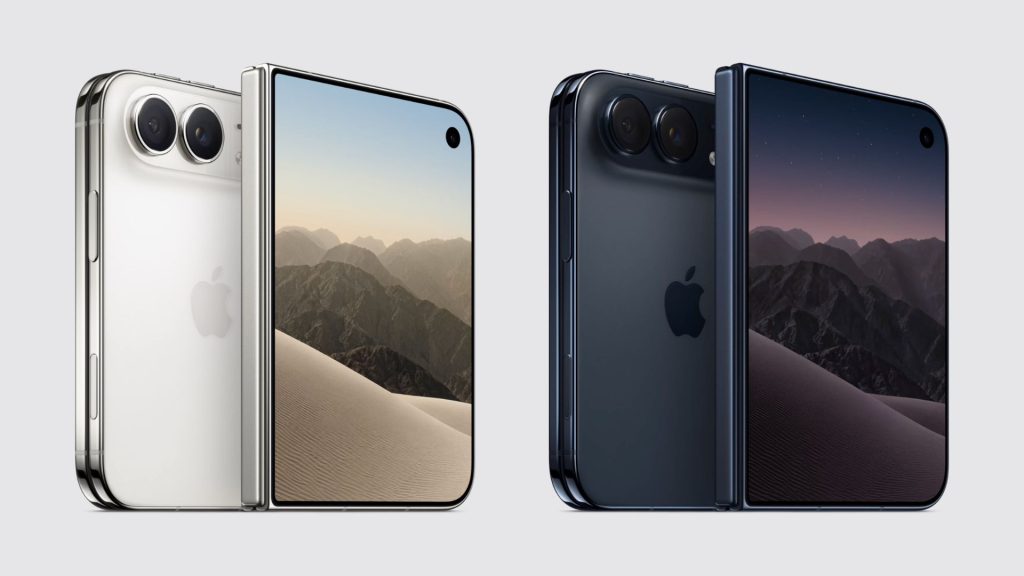
The iPhone Duo is Apple’s first foldable phone. Apple described it as the most transformational change to the iPhone since the original model launched.
The Duo opens like a book and has a 7.6-inch inner display and a 5.4-inch outer display. Both are Super Retina XDR panels with peak brightness of up to 3,000 nits. Apple said the inner screen is 50% larger than the display on the iPhone 18 Pro Max. A nano-texture finish on the inner panel reduces glare and makes the fold line less visible.
The phone has a mirror-polished titanium frame and a 3D-printed titanium hinge cover. It is rated IP68 for dust and water resistance. Rather than Face ID, the Duo uses Touch ID integrated into the side button. It can also be unlocked with an Apple Watch.
The iPhone Duo runs on the A20 Pro chip, the same processor used in the iPhone 18 Pro. The chip includes a 6-core CPU, a 7-core GPU and a Neural Engine designed for on-device artificial-intelligence tasks. A custom display engine enables it to operate both screens simultaneously.
The camera system consists of a 48MP main camera and a 48MP ultra-wide camera. There is no telephoto lens, giving the phone up to 4x optical zoom. Its camera system does not include the variable aperture available on the iPhone 18 Pro.
Apple introduced four features designed for the Duo’s outer display:
- Smart Take fires the shutter when everyone in the frame is posed.
- Duo Preview shows the subject a live view of the shot on the outer screen.
- Kid Cue plays short animations to keep a child’s attention.
- Duo FaceTime allows a nearby friend to join a call through the outer display.
Apple rates the Duo for up to 24 hours of typical use, 31 hours of video playback on the inner display and 44 hours of video playback on the outer display. The phone supports Apple Pencil, although that capability will arrive later in 2026 rather than at launch. Its inner display can run two apps side by side for iPad-style multitasking.
The iPhone Duo comes in Star White and Night Sky. Storage options range from 256GB to 2TB. Pricing starts at $1,999 and reaches about $3,199 for the highest-capacity model. Pre-orders open October 16, and sales begin October 23.
Apple is entering a foldable market that already includes Samsung and Google. Samsung’s Galaxy Z Fold 8 launched in August with similar screen sizes, a lighter build and a starting price of $1,899. Google’s Pixel 11 Pro Fold launched around the same time with an 8-inch inner display, three rear cameras and a $1,899 starting price. The Duo costs about $100 more than either competitor, while offering Apple Pencil support and access to the full library of iPad apps, which neither rival offers.
iPhone 18 Pro and iPhone 18 Pro Max
Apple also introduced the iPhone 18 Pro and iPhone 18 Pro Max. Both models use the A20 Pro chip, Apple’s first processor built on a 2-nanometer process. Apple said the new process delivers faster performance and improved efficiency.
The main camera is the most significant upgrade. Its 48MP lens now has a true variable aperture, which Apple described as a first for an iPhone. The aperture adjusts automatically according to lighting and depth, and users can select from four aperture settings.
The Dynamic Island is smaller and can display up to three Live Activities at the same time. Apple also redesigned the cooling system, giving both phones a vapour chamber about three times larger than the one in the iPhone 17 Pro. The change is intended to help the devices sustain performance during demanding use.
The iPhone 18 Pro Max is rated for up to 45 hours of video playback, while the iPhone 18 Pro is rated for around 30 hours. Wired charging can reach 50% in about 15 minutes.
Both phones add burgundy to the existing black, silver and glacier finishes. Storage capacity reaches 2TB on both models. The iPhone 18 Pro starts at $1,199, while the iPhone 18 Pro Max starts at $1,299. Both starting prices are $100 higher than those of the previous year’s models. Pre-orders open September 12, and sales begin September 18.
Apple omits the standard iPhone 18 from its fall lineup
Apple is not releasing a standard iPhone 18 this year. Its fall smartphone lineup consists of the iPhone 18 Pro, iPhone 18 Pro Max and foldable iPhone Duo.
Bloomberg’s Mark Gurman reported that Apple plans to release the standard iPhone 18, a new iPhone 18e and an iPhone Air 2 in spring 2027. The reported schedule would split Apple’s smartphone launches across the year, with premium models arriving in the autumn and mainstream models following in the spring. Reports cited component-cost management and the distribution of demand as possible reasons for the change.
Until the standard model arrives, the iPhone 17 remains Apple’s mainstream smartphone option.
Apple Watch Series 12
The Apple Watch Series 12 is powered by the new S11 chip and introduces a Health Sensing System intended to improve tracking accuracy. Heart-rate measurements are taken every five seconds, which Apple says is about 60 times more often than before. Heart-rate variability readings are taken up to 24 times more frequently.
A new Readiness feature provides a score from 0 to 10 based on activity, training load, vital signs and sleep. It also recommends how hard the user should train that day.
The watch provides up to 24 hours of everyday battery life and up to 10 hours during an outdoor workout, a 25% increase over the previous model. A 15-minute charge provides up to 12 hours of use.
The Series 12 is available in Space Grey, Black, Light Gold and Dark Bronze aluminium. A ceramic option also returns for the first time in six years. Pricing starts at $399. Pre-orders are open, and the watch will be released September 18.
Apple Watch Ultra 4
The Apple Watch Ultra 4 uses the same S11 chip and Health Sensing System as the Series 12, while adding features for outdoor and endurance activities.
Battery life reaches up to 50 hours in everyday use, compared with 42 hours for the Ultra 3. In Max Extended Workout mode, the watch can operate for up to 45 hours while recording GPS readings every second, enough to track a 100-mile race. Standard outdoor workout tracking with full GPS and heart-rate monitoring lasts up to 18 hours. A 15-minute charge provides up to 18 hours of use.
Apple called the Ultra 4’s on-device GPS the most accurate it has offered on a sports watch. The device supports GPS, Galileo, QZSS and BeiDou satellite systems. Satellite Emergency SOS and satellite messaging carry over from the Ultra 3.
The Ultra 4 retains the Black and Natural titanium finishes and a 49mm case. It starts at $799, the same price as the Ultra 3. Pre-orders are open, and the watch launches September 18.
AirPods 5
Apple introduced AirPods 5 in two versions. The $129 model adds active noise cancellation to Apple’s most affordable earbuds for the first time. The $149 model includes a wireless charging case, stem-based volume control and longer battery life.
Both versions feature a new acoustic design, improved sound quality and greater resistance to dust, sweat and water. Apple said the noise cancellation blocks up to 50% more outside sound than the previous ANC model.
The $149 version provides up to five hours of listening with ANC enabled and up to 22 hours with the charging case. AirPods 5 also support Live Translation and hands-free Siri AI, which Apple said now work across its entire AirPods lineup. Pre-orders opened September 9, and both models go on sale September 18.
Siri AI and software release dates
The new hardware ships with iOS 27 and watchOS 27, which incorporate Apple’s updated Siri AI. iOS 27 will install on the iPhone 11 and later, but Siri AI features require newer hardware. As a result, not every device compatible with iOS 27 will support the complete Siri AI experience.
Siri AI launches in beta in English. French, Japanese, Korean, Portuguese and Spanish are scheduled to arrive in October. The feature remains unavailable in the European Union and will not launch in China.
Apple has also introduced daily usage limits for cloud-based AI features such as image generation. Most iCloud+ subscribers receive higher limits. On Apple’s most recent earnings call, Tim Cook said the company might offer ways to purchase higher usage tiers through iCloud+, but added that Apple did not yet have a complete plan.
Prices, colours and release dates
- iPhone Duo: Star White and Night Sky; starts at $1,999; pre-orders open October 16; on sale October 23.
- iPhone 18 Pro and iPhone 18 Pro Max: black, silver, glacier and burgundy; starting at $1,199 and $1,299 respectively; pre-orders open September 12; on sale September 18.
- Apple Watch Series 12: Space Grey, Black, Light Gold and Dark Bronze aluminium, plus ceramic; starts at $399; released September 18.
- Apple Watch Ultra 4: Black and Natural titanium; starts at $799; released September 18.
- AirPods 5: $129 and $149 versions; pre-orders opened September 9; both models go on sale September 18.
Source: TechCabal.
