Apple Faces Federal Lawsuit Over Alleged Fake Bitcoin App
Key Takeaways
- •The lawsuit alleges that a fake Bitcoin wallet app was distributed through Apple’s App Store and used to defraud users.
- •Affected users say the scam caused approximately $1.8 million in combined losses.
- •The complaint argues that Apple’s App Store review process helped expose users to the alleged fraud.
- •Crypto wallet apps are considered high-risk because they involve irreversible transactions and private keys.
- •The outcome could affect future policies on how app stores review and handle crypto-related apps.
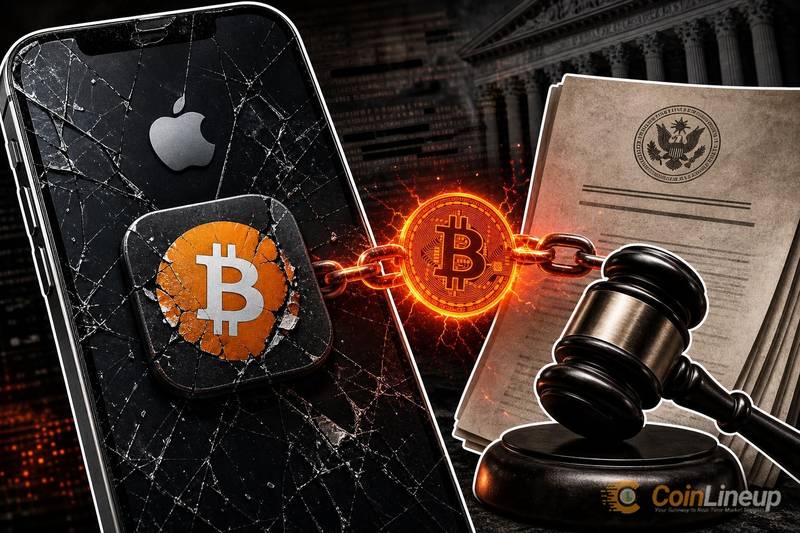
Apple is facing a federal lawsuit over an alleged fake Bitcoin app that reportedly cost App Store users roughly $1.8 million, placing the company’s app-review process at the center of a new platform accountability dispute.
What the federal lawsuit alleges against Apple
The complaint focuses on a fraudulent Bitcoin wallet app that was distributed through Apple’s App Store, as first reported by MacRumors. The central claim is that Apple approved and hosted an app that impersonated a legitimate crypto wallet. For related coverage, see SEC approves T. Rowe Price crypto ETF with Bitcoin, Ether and XRP exposure.
Affected users say the scam caused roughly $1.8 million in combined losses. These are allegations at this stage, not findings of fact, and the case has not been decided. For related coverage, see Top Crypto News for July 18: Bitcoin Holds $62,500 as Altcoins Drop.
The app is described as a “fake” Bitcoin wallet because it presented itself as a genuine crypto storage tool while allegedly functioning to defraud the people who downloaded it. For related coverage, see Fanatics to Acquire BGC Prediction Market Exchange.
Why the alleged app-approval issue matters for crypto users
The dispute centers on Apple’s role as a gatekeeper. Because iPhone users can generally only install apps vetted through the App Store, the plaintiffs argue that Apple’s review process was part of the chain that exposed them to harm.
Crypto wallet apps carry elevated trust risk because they handle irreversible transactions and private keys, making impersonation especially costly for victims. A fraudulent wallet that passes store review can reach users who reasonably assume it has been screened.
That screening question is why app marketplaces matter for crypto safety, and it echoes broader efforts to protect exposed holders, such as the Bitcoin proposal BIP-361 aimed at safeguarding vulnerable wallets.
What the case could mean for Apple and the crypto app market
If the claims move forward, Apple could face pressure over how it reviews, labels, and removes crypto apps, as well as over whether it bears any liability for fraud committed through listed software. The reporting does not identify a decided outcome or confirm damages beyond the alleged user losses.
The case also arrives amid a broader wave of crypto-related litigation and regulatory scrutiny, following high-profile disputes such as Coinbase’s years-long fight with the SEC. That context makes the lawsuit relevant beyond a single app: it highlights how app stores sit between developers and users in a market where trust is part of the product itself. How courts treat platform responsibility here could shape future crypto app-listing policies.
For now, the central facts remain contested and Apple’s formal response is not detailed in the available reporting. The next concrete signal will be how the court handles Apple’s expected motions and whether the platform-liability theory survives early challenges.
Disclaimer: This article is for informational purposes only and does not constitute financial or investment advice. Cryptocurrency and digital asset markets carry significant risk. Always do your own research before making decisions.

