Apple Warns FaceTime Scammers Are Targeting Bank Passwords and One-Time Codes
Key Takeaways
- •Apple is warning customers that scammers are impersonating bank representatives on FaceTime to trick victims into sharing their screens during online banking sessions.
- •Once screen sharing is enabled, fraudsters can observe passwords, account numbers, and one-time security codes in real time, allowing them to authorize unauthorized transfers from unfamiliar devices.
- •Americans reported losing $3.5 billion to imposter scams in 2025, with bank impersonators accounting for the largest share of business-impersonation losses according to FTC data.
- •Apple advises users never to share their screen with anyone who contacts them unexpectedly and has created a dedicated email address for reporting suspicious FaceTime calls.
- •Consumers who encounter a suspected scam should hang up, call their bank directly using the number on their card, and report incidents to ReportFraud.ftc.gov.
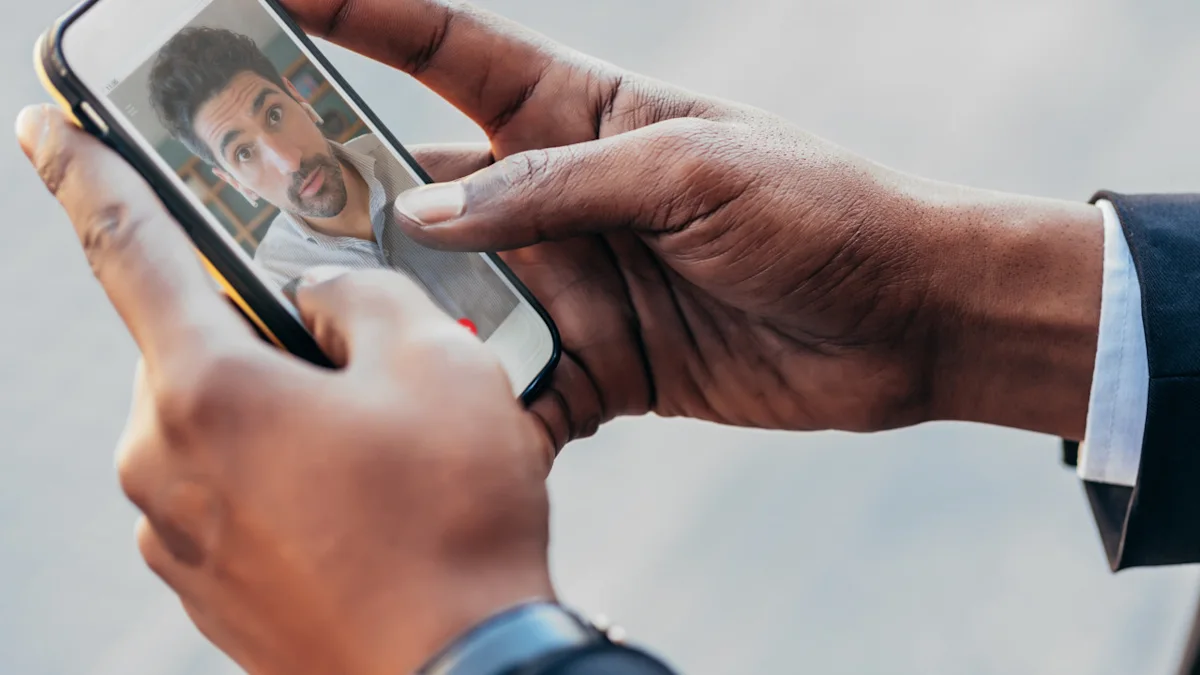
Apple is warning customers about a scam in which fraudsters impersonate bank representatives over FaceTime and persuade victims to share their screens while logging into financial accounts, CBS News reported.
The scheme relies on a simple premise: people tend to trust FaceTime. A call that appears to come through Apple's video-calling service can feel more credible than an unfamiliar phone number, allowing scammers posing as a bank's "fraud team" to guide victims through what they claim is a security check.
If the victim agrees to share their screen, the caller can watch in real time as the person enters account credentials, passwords, account numbers and one-time security codes. Those codes can allow a fraudster to authorize transfers or other account activity from a device the victim does not control.
The warning comes after the Federal Trade Commission said Americans reported losing $3.5 billion to imposter scams in 2025, with bank impersonators responsible for the largest share of business-impersonation losses.
How the FaceTime bank scam works
The scam often begins with a text message claiming there has been suspicious activity on a bank or credit card account and providing a phone number to call. In other cases, victims receive a call directly from someone who claims to represent their bank and says the institution needs to verify their identity.
At some point during the conversation, the caller moves the interaction from a standard audio call to FaceTime. The live video connection is intended to make the person on the other end appear more legitimate.
Once the victim is on FaceTime, the scammer asks them to share their screen and sign in to online banking, supposedly so the "representative" can confirm that the account is secure. "The scammer watches in real-time while victims expose passwords" along with account numbers and one-time security codes, CBS News national consumer correspondent Ash-Har Quraishi said.
Those one-time codes are especially valuable to fraudsters because they can be used to approve transfers or access attempts from unfamiliar devices. If a victim displays the code during a shared-screen session, the scammer may be able to complete the most difficult part of the theft.
Why fraudsters are using FaceTime
Apple told CBS that scammers chose FaceTime because users trust it. The app is widely associated with calls among friends and family, so a video call through FaceTime can carry a level of credibility that a random 800 number may not. Fraudsters have long used caller ID spoofing for similar reasons.
The FTC has separately warned consumers that screen-sharing scams are not confined to FaceTime; similar tactics have surfaced on other video-call and remote-support platforms. What distinguishes the FaceTime variant is that it merges a service people already associate with trusted personal contacts with the ability to observe sensitive login details live.
The FTC recorded more than 1 million imposter-scam reports in 2025, making it the top scam category for the ninth consecutive year, according to the agency. Total reported fraud losses reached about $16 billion, a record amount and roughly 25% higher than in 2024, according to an FTC consumer alert. Business impersonators accounted for nearly $1 billion in losses, with fake bank employees responsible for the largest portion. Government impersonators accounted for about $920 million more.
The FTC has also said these scams have become more sophisticated. "Really it's becoming much more sophisticated than it has been in the past," Patty Hsue, chief of staff for the FTC's Division of Marketing Practices, told CNBC in June.
The crude, misspelled robocall or text message that once made scams easier to identify has increasingly been replaced by more polished scripts and, in some cases, video. The FTC says the most costly versions often begin with a fake security alert that appears to come from a bank and warns that the victim's money is at risk.
Once a victim believes the warning, the potential loss may be limited only by the amount available in the account. If there is $8,000 in a checking account, the possible loss from the scam could be $8,000.
Warning signs to watch for
Apple's guidance is straightforward: do not share your screen with anyone who contacts you unexpectedly, no matter how official the caller sounds. Apple says it will never ask for a user's password, passcode or two-factor authentication code, and banks do not need those details either.
FaceTime screen sharing begins only when the user taps to allow it, which means the scam can be interrupted by declining the request.
Urgency is another warning sign. A caller who pressures someone to move money immediately before an account is "frozen" or "compromised" is using a tactic designed to prevent the victim from pausing and checking the claim independently. The safer response is to hang up and call the bank directly.
The FTC gives similar guidance. In the costliest versions of imposter scams, victims are persuaded to move money to "protect" it. The agency says no legitimate bank or government agency will ask someone to transfer money for that reason.
Consumers should also avoid calling the number included in a suspicious text message, because it may connect directly to the scammer. Instead, they should use the phone number printed on the back of a debit or credit card.
What victims should do
Apple has created a reporting channel for this specific scam. If a suspicious FaceTime call comes from someone claiming to be a bank representative, Apple says users should take a screenshot of it by tapping the "info" button next to the call, selecting "take live photo," and emailing the image to reportfacetimefraud@apple.com.
If money has already left an account, the victim should immediately call the bank's fraud line, because speed can affect how much money may be recoverable. The incident should also be reported at ReportFraud.ftc.gov, which provides data regulators use to track and pursue fraud operations.
Banks do not need to watch customers log in to their accounts. A caller who asks to do so is seeking access to information that can be used to steal from the account.
— With files from Godwin Oluponmile
This article provides information only and should not be construed as advice. It is provided without warranty of any kind.

