D.C. Circuit Court Halts Trump's White House Ballroom Project, Calling Administration's Legal Defense 'Pure Fiction'
Key Takeaways
- •The D.C. Circuit Court of Appeals ruled 2-1 to uphold an injunction blocking above-ground construction of Trump's proposed $400 million White House ballroom, marking the third court to halt the project.
- •The administration's Justice Department attorney argued at oral argument that no court possessed the authority to halt the project even if it were unlawful, a position the majority said undermined the constitutional order.
- •Trump demolished the entire East Wing over three days in October 2025 without congressional approval to prepare the site for the 90,000-square-foot ballroom.
- •The court rejected the government's claims that the ballroom would be hidden by trees and that a routine maintenance statute granted the president unlimited construction authority.
- •The ruling is stayed for 14 days to permit the Trump administration to petition the U.S. Supreme Court for emergency intervention.
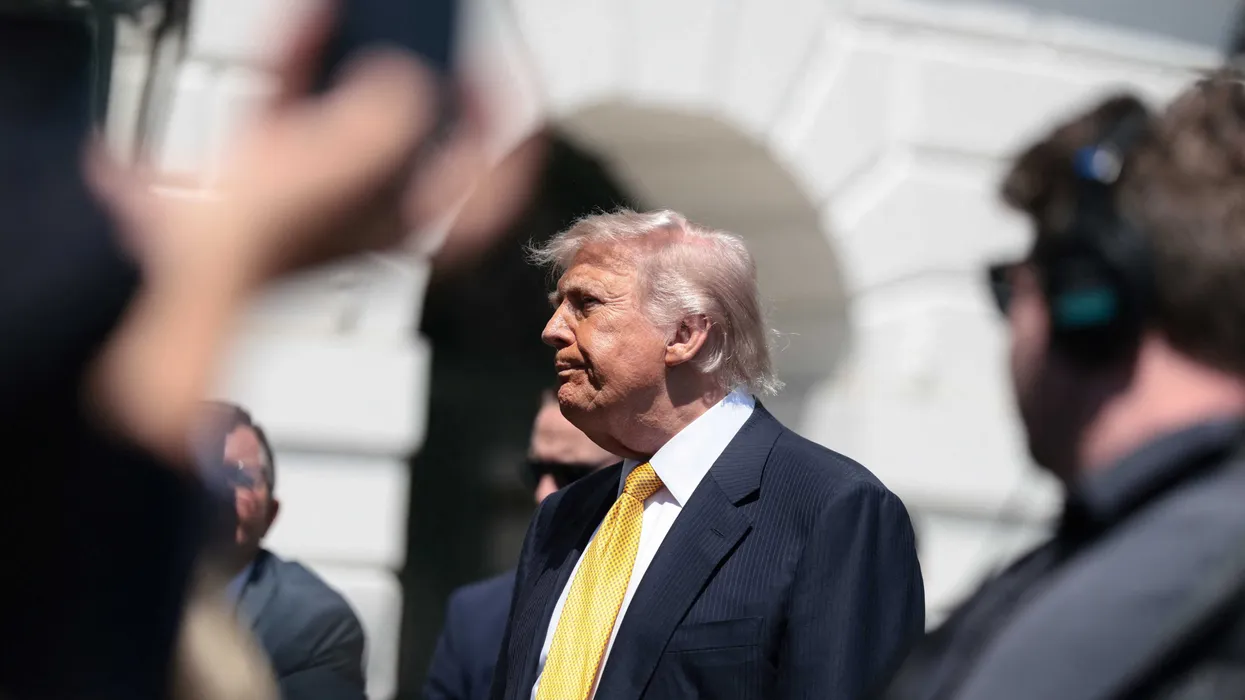
A federal appeals court has rejected the Trump administration's legal defense of its White House ballroom project, ruling that its claim no court can stop the demolition "flouts our constitutional order."
In a 2-1 decision issued Friday, the D.C. Circuit Court of Appeals upheld a preliminary injunction blocking above-ground construction of President Donald Trump's $400 million ballroom — making it the third court to halt the project. The ruling deepens a constitutional clash over executive authority that has drawn sustained attention from federal judges at every level. The court stayed its ruling for 14 days to allow the administration to seek emergency review from the U.S. Supreme Court. The ruling is available here.
"We are aware of no instance in American history in which a President unilaterally and using privately collected funds demolished substantial portions of the White House that Congress authorized to be built and American taxpayers paid for," the majority wrote. "Until now."
The White House is both the official residence of the president and a federally protected National Historic Landmark, situated within President's Park, a unit of the National Park Service system. Alterations to the structure and grounds have historically required congressional authorization, particularly when they involve substantial demolition or new construction — a tradition that underscores the stakes of the court's reasoning.
At oral argument in June, Justice Department attorney Yaakov Roth told the judges that even if the administration were breaking the law, no court had the power to stop it — not the district court, not the Circuit, and not the Supreme Court.
"On these theories, I think that's right," Roth said, as previously reported.
"The bold assertion that the Executive can act with utter lawlessness, destroying treasured national landmarks and harming the interests of individuals, and that no court can stop it flouts our constitutional order," the ruling stated.
Trump had the entire East Wing demolished in just three days in October 2025 — without congressional approval — to clear the way for the 90,000-square-foot ballroom. The East Wing, originally constructed in 1942 and expanded over decades, housed the Office of the First Lady and public visitor entrances. The government's own environmental assessment found the project would have "permanent adverse impacts" on the White House grounds.
The court also rejected the administration's claim to ownership of the building itself.
"Each President is a temporary tenant, not the owner, of the White House and its Executive Residence," the majority wrote.
The government had argued the ballroom would be concealed from public view by trees. Both the district court and the appeals court dismissed that assertion as "[p]ure fiction," citing the government's own renderings showing the structure clearly visible from Lafayette Square and the steps of the U.S. Capitol.
When the government claimed a routine maintenance statute quietly granted the president unlimited construction authority, the court was equally dismissive.
"Congress does not 'hide elephants in mouseholes,'" the majority said, invoking language from the Supreme Court's 2001 decision in Whitman v. American Trucking Associations.
Whether to build the ballroom, the court concluded, is "[n]ot a matter for Executive self-help" — meaning Congress, not the president, must authorize the project.
Circuit Judge Neomi Rao, a Trump appointee, dissented, calling the injunction a "blatant abuse of discretion" and arguing the project fell within the president's authority to improve the Executive Residence.
The court's ruling remains on hold for 14 days, giving the Trump administration a window to petition the Supreme Court to intervene. The case now moves toward a high court that has repeatedly weighed separation-of-powers disputes during Trump's second term, and the outcome could shape the boundaries of presidential authority over federal property for years to come.

