Appeals Court Blocks Trump Plan to Carve His Name Into US Institute of Peace Headquarters
Key Takeaways
- •The D.C. Circuit panel voted to prevent permanent carving of Trump’s name into the institute’s building while litigation proceeds.
- •Trump’s name was placed on the headquarters in removable silver letters in December after the administration announced a renaming.
- •The former board argued that carved lettering could not be undone if they ultimately prevail in the control dispute.
- •Judge Karen Henderson dissented, while the other two judges supported the temporary restriction.
- •The broader legal challenge follows the administration’s removal of institute leaders and a district court ruling that the takeover was unlawful, which an appeals court later paused.
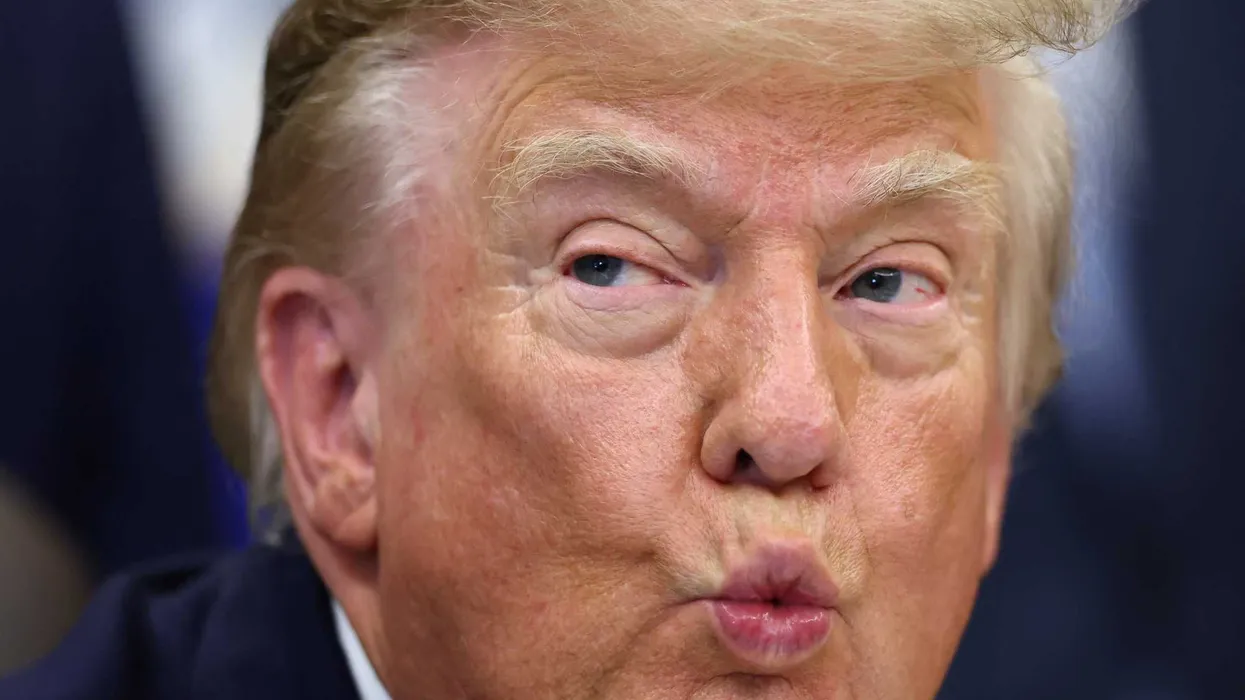
President Donald Trump's bid to place his name permanently on the U.S. Institute of Peace headquarters has hit a new obstacle in federal court, where an appeals panel has barred the administration from carving the name into the building while a contentious fight over control of the organization plays out.
On Wednesday, a divided three-judge panel of the U.S. Court of Appeals for the D.C. Circuit — the federal appeals court that routinely hears challenges to actions of the federal government — granted an emergency request from the institute's ousted leadership to block the proposed work, according to The New Republic. For now, the order stops the administration from turning the current lettering into a permanent fixture.
Trump's name is already displayed on the striking glass-and-limestone headquarters near the National Mall. Large silver letters spelling out his name were mounted on the exterior in December, after the administration said the organization had been renamed the Donald J. Trump United States Institute of Peace.
Unlike mounted lettering, however, carved stone cannot simply be taken down. The institute's former leaders returned to court after learning that officials were allegedly preparing to take that more permanent step by cutting Trump's name directly into the facade. Their lawyers said they understood that “a formal request for the work has been made and a contractor has been selected.”
The former board members argued that such a change could not easily be reversed should they ultimately prevail in their case over who legally controls the institute. “The threatened carving would impose serious irreparable harm,” their attorneys wrote in the emergency petition. Irreparable harm — injury that cannot be undone by a later court ruling — is the threshold parties generally must meet to obtain emergency relief in federal court.
The panel's decision was not unanimous. Judge Karen Henderson, an appointee of President George H.W. Bush, would have denied the request, according to the one-page order. The other two judges on the panel allowed the temporary restriction to take effect.
The dispute over Trump's name is just one strand of a legal battle that has stretched on for more than a year. Congress established the U.S. Institute of Peace in 1984 as an independent nonprofit organization dedicated to preventing and resolving violent conflicts overseas. Shortly after returning to office, Trump targeted the institute, signing an executive order in February 2025 directing that its operations be reduced as far as permitted by law.
The administration subsequently removed the institute's leadership. In March 2025, personnel from the Department of Government Efficiency, the Trump administration's cost-cutting initiative, entered the Washington headquarters — accompanied by law enforcement and private security — and most employees were later fired.
In May 2025, U.S. District Judge Beryl Howell, an appointee of President Barack Obama, ruled that the takeover was unlawful, declaring the actions taken by the newly installed leadership “null void.” An appeals court later put her ruling on hold, allowing Trump administration officials to retain control while the case moved forward.
The former board members have continued their fight for control of the organization and its headquarters, much of which they say was financed through private donations. Their attorneys have also described the building itself as part of the institute's identity and mission.
The appeals court's latest order leaves unanswered the larger question of whether Trump lawfully took control of the institute, with arguments in that case expected in November. Such emergency orders do not resolve the underlying dispute; they hold matters in place while the court weighs the merits. For now, however, the court has drawn a clear line between the removable Trump lettering already hanging outside the building and any permanent carving of his name into its facade.

