Anthropic to Create Super-Voting Shares for CEO Dario Amodei and Co-Founders Ahead of Possible Late-2026 IPO
Key Takeaways
- •Anthropic is issuing super-voting shares to CEO Dario Amodei and its other co-founders to secure their control ahead of an IPO that could take place as early as September or October 2026, with Goldman Sachs, JPMorgan, and Morgan Stanley reportedly involved in the offering.
- •The company closed a $65 billion Series H funding round on May 28, 2026, at a $965 billion post-money valuation, and investor conversations have floated a potential IPO valuation exceeding $2 trillion.
- •The super-voting shares are intended to work alongside rather than replace Anthropic's existing governance, under which its Long-Term Benefit Trust handles mission oversight and can elect and remove a subset of the board of directors.
- •Institutional investors including CalPERS have criticized dual-class structures for eroding accountability, and S&P Dow Jones Indices has excluded companies with multiple share classes from new inclusion in the S&P 500 since 2017.
- •Anthropic was founded in 2021 by former OpenAI researchers led by Dario and Daniela Amodei and counts Google and Amazon among its largest backers.
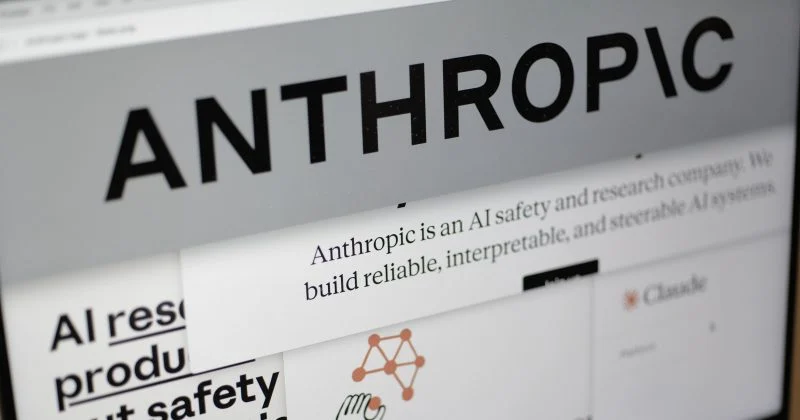
Anthropic, the artificial intelligence company behind the Claude chatbot, is creating a new class of super-voting shares for CEO Dario Amodei and its other co-founders, a restructuring designed to secure their control of the company ahead of its planned public listing. Anthropic was founded in 2021 by former OpenAI researchers led by Dario and Daniela Amodei, and counts Google and Amazon among its largest backers.
The restructuring was first reported by The Information and later confirmed by Bloomberg. It comes as Anthropic prepares for an initial public offering that could take place as early as September or October 2026, with Goldman Sachs, JPMorgan, and Morgan Stanley reportedly involved in the offering.
A familiar structure with an unfamiliar twist
Dual-class share structures have long been a common step for technology founders heading to public markets. Mark Zuckerberg used one to retain control of Facebook through years of advertiser boycotts and congressional hearings, while Snap's Evan Spiegel went further, issuing shares to the public that carried no voting rights at all.
Anthropic's version is more complicated because of the company's unusual corporate architecture. Anthropic is structured as a Public Benefit Corporation, meaning its legal obligations extend beyond shareholders to include a broader social mission. It also operates a Long-Term Benefit Trust, a governance layer designed to keep the company's AI safety commitments intact regardless of short-term market pressures. The trust's members are selected for their financial disinterest in the company, and it holds the power to elect and remove a subset of Anthropic's board of directors. Nor is Anthropic alone in this direction of travel: OpenAI completed its own restructuring in 2025, moving its for-profit operations into a Delaware public benefit corporation controlled by its nonprofit parent.
The super-voting shares for founders are intended to work alongside this structure rather than replace it. Under the arrangement, the trust would continue to handle mission-level oversight while the founders retain day-to-day strategic control, even as outside investors hold a growing slice of the company.
The numbers behind the offering
The governance reshuffle does not happen in a vacuum. Anthropic closed a Series H funding round on May 28, 2026, raising $65 billion and landing a post-money valuation of $965 billion.
According to the research, investor conversations have floated a potential IPO valuation exceeding $2 trillion. If that number holds, the offering would rank among the largest public offerings in market history.
The rationale and the expected scrutiny
The logic behind super-voting shares is straightforward: quarterly earnings pressure and long-horizon AI research do not mix well. Building frontier models is expensive, slow, and uncertain. Anthropic has been explicit about framing its mission around AI safety alongside commercial viability, and keeping founders in control is intended to make it harder for activist shareholders to push the company toward faster monetization at the expense of the research agenda that defines the brand.
The governance structure will nonetheless face scrutiny. Institutional investors, particularly those with ESG mandates, have grown increasingly skeptical of dual-class structures. The California Public Employees' Retirement System and other large pension funds have argued that such arrangements erode accountability by insulating management from consequences. Index eligibility adds another practical dimension: S&P Dow Jones Indices has excluded companies with multiple share classes from new inclusion in the S&P 500 since 2017, and Snap, whose public shares carry no votes, has never been added to the benchmark. Membership in the major indexes shapes a stock's access to passive investment flows, one of several structural trade-offs embedded in the offering documents Anthropic's bankers will now be assembling.
There is also a timing dimension. Announcing super-voting shares before an IPO is standard practice, the kind of provision companies want embedded in the offering documents rather than introduced to shareholders after listing. The fall 2026 window gives Anthropic sufficient runway to finalize the governance terms, complete regulatory filings, and let the market digest the structure before pricing day.

