Anthropic Launches Claude Haiku 5.5, Its Cheapest and Fastest Model Yet
Key Takeaways
- •Haiku 5.5 costs $0.10 per million input tokens and $0.50 per million output tokens for prompts up to 100,000 tokens, a 90% cut from Haiku 4.5's rates, with Anthropic estimating average savings near 75% once longer prompts and tokenization differences are included.
- •The new model's pricing matches what OpenAI charges for GPT-6 Luna, making published benchmarks the main differentiator between the two companies' small models.
- •Haiku .5 scored 72.4% on the offline subset of OSWorld 2.1 and 39.2% on Terminal-Bench 4.0, beating GPT-6 Luna on both tests but falling short of Claude Sonnet 5.5's 70.6% Terminal-Bench result.
- •On GDPval-AA v2, which rates real professional work across 44 occupations on an Elo scale, Haiku 5.5 scored 1620, ahead of Luna's 1437 and Haiku 4.5's 735, and it is the first Haiku model with an adjustable effort setting.
- •The release completes the Claude 5.5 lineup following Opus 5.5 and Sonnet 5.5, with all three models now generally available on the Claude website, AWS, Google Cloud, and Azure, alongside a halved Sonnet 5.5 cache-read price and new monthly API credits for subscription plans.
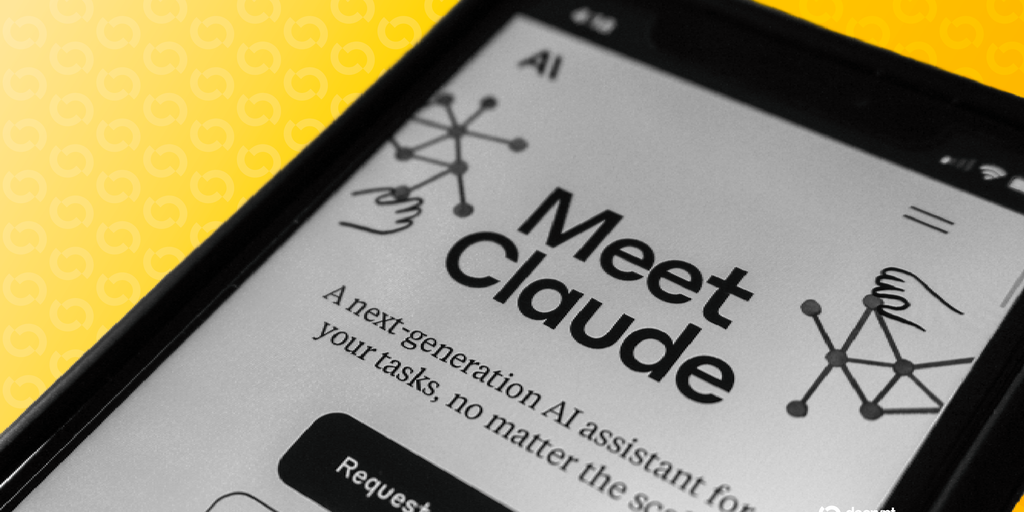
Anthropic released Claude Haiku 5.5 on Wednesday, calling it the cheapest, fastest and most capable small model the company has made. The release targets high-volume chores such as summarizing documents and querying databases, as well as speed-sensitive jobs like live customer support and operating a web browser for the user. Customer-support chats and long-email summaries are the tasks Anthropic built the Haiku line for—essentially repetitive, easy, non-creative work.
According to figures published with the announcement, Haiku 5.5 scored 72.4% on the offline subset of OSWorld 2.1 and 39.2% on Terminal-Bench 4.0—results that put it ahead of OpenAI's GPT-6 Luna on both tests, though well behind Claude Sonnet 5.5's 70.6% score.
Developers who plug Claude into their own products pay $0.10 per million input tokens and $0.50 per million output tokens for prompts of up to 100,000 tokens. Tokens are the small chunks of text—roughly three-quarters of a word—that AI models read and write, and they are the unit by which major AI companies bill for API usage. The new rates match those OpenAI set for GPT-6 Luna, its rival small model, when that product launched on September 22. With pricing now identical on that tier, cost alone no longer the two companies' small models, leaving the published benchmarks as the deciding numbers for developers choosing between them.
Haiku 4.5 charged $1 and $5 for the same tiers, making the new rate 90% lower, while prompts above 100,000 tokens receive a 50% price cut. Since roughly 90% of requests to the old model fell under that line, and Haiku 5.5 splits text into slightly more tokens than its predecessor, Anthropic puts the average saving near 75%. For the repetitive, high-volume work the Haiku line targets, that per-token rate is the cost factor that matters most, since API bills rise in direct proportion to the number of tokens a workload sends and receives.
The benchmark numbers show this is not a weak model by any means. On OSWorld 2.1, a test of whether an AI can operate a real computer through long, multi-step tasks—scored as a partial-credit percentage—Haiku 5.5 beat OpenAI's GPT-6 Luna with a 72.4% success rate against 48.9%.
Terminal-Bench 4.0 hands AI agents professional tasks to finish by typing commands on their own, and scores the share completed correctly on the first attempt. Haiku 5.5 landed at 39.2%, against 16.4% for OpenAI's Luna and 0% for Haiku 4.5. For comparison, Claude Sonnet 5.5 scored 70.6% on the same test.
On GDPval-AA v2., which rates models on real professional work across 44 occupations using an Elo scale—the head-to-head rating system borrowed from chess—Haiku 5.5 scored 1620. Luna received 1437, and Haiku 4.5 scored 735.
Haiku 5.5 is also the first Haiku model with an adjustable effort setting, a dial that lets users trade higher cost for smarter answers.
Decrypt's hands-on testing underscored the need for caution. When given a simple logic question, the model was extremely fast to respond, answering almost instantly—but it returned the wrong answer, a reminder not to blindly trust a small model's output.
Alongside the launch, Anthropic halved the cache-read price for Sonnet 5.5 to $0.10 per million tokens—the discounted rate applied to text a model has already processed, a cost that recurs each time an application reuses material the model has already read.
Haiku 5.5 comes 15 days after Opus 5.5, which launched on September 22, and nine days after Sonnet 5.5, which launched on September 28—making it the last of the three Claude 5.5 models Anthropic had promised. Opus 5.5 was the company's first release since CEO Dario Amodei published an essay urging the industry to slow gains in AI capabilities.
Haiku 5.5 is available now on the Claude website, Amazon Web Services, Google Cloud and Microsoft Azure under the name claude-haiku-5-5. All three members of the Claude 5.5 family are now generally available. For developers, the complete family makes the cost-versus-capability trade-off concrete: Haiku 5.5's rates at one end, the higher benchmark scores Anthropic published for Sonnet 5.5 at the other.
Anthropic is also rolling out monthly API credits this week: $100 for subscribers on the Max 5x plan, $200 for Max 20x, and up to $500, pooled across users, for Team plans.

