Burnham must think beyond devolution if Labour is to regain voters, says Eliot Wilson
Key Takeaways
- •Andy Burnham became Prime Minister just over a month ago after Labour judged Sir Keir Starmer irredeemable, having been the overwhelming front-runner among Labour MPs to succeed him.
- •Labour's poll standing rose from just under 19 per cent after May's local elections to a leading 26.5 per cent by the end of July, one week after Burnham's formal appointment.
- •Burnham's initial measures include a six-month suspension of VAT on household electricity bills, a 20 per cent business-rates reduction for pubs, clubs and live music venues, a £2 cap on bus fares outside London, a three-year pledge to end long-term rough sleeping, and a temporary halt to early prison releases.
- •The Institute for Fiscal Studies estimates the VAT suspension will reduce the average household electricity bill by £25, roughly £1 a week, while the rates relief will save the average pub about £20 weekly.
- •Eliot Wilson argues the measures are modest rather than transformative, and that with turnout at the last election the lowest since 1918, Burnham must offer a bigger vision than devolution to win back disenchanted voters.
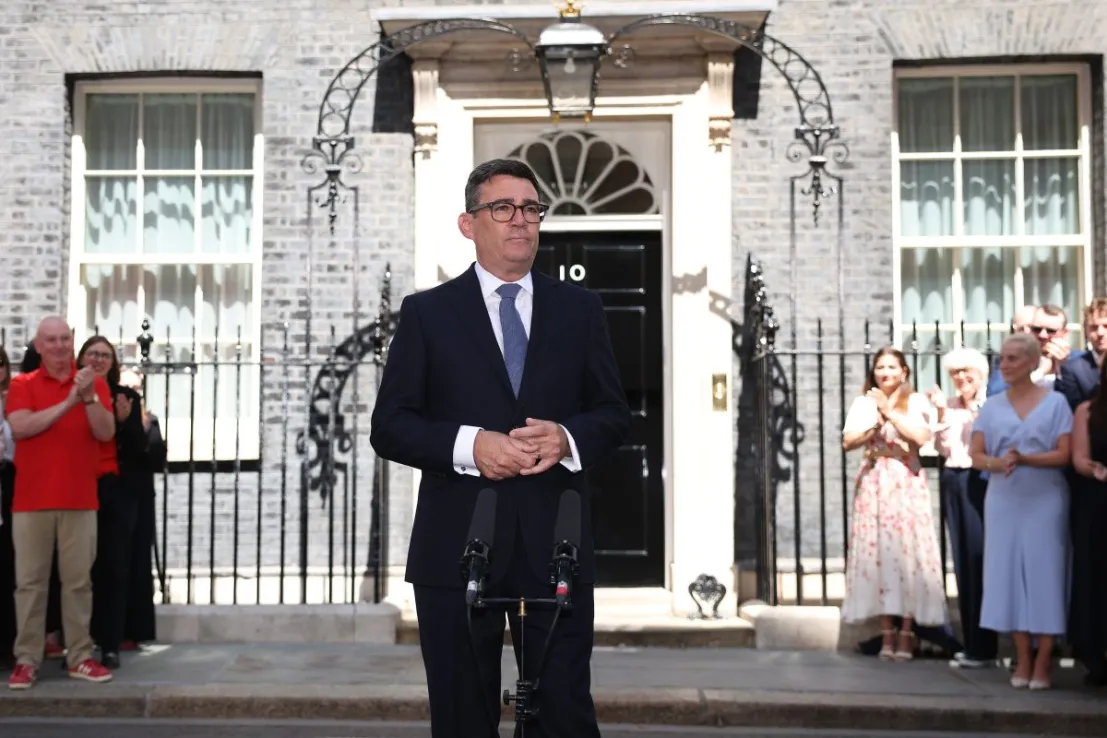
Voters are looking for bigger ambitions. Andy Burnham must think more broadly, including beyond devolution, if he is to meaningfully win back the electorate, Eliot Wilson writes.
It has been just over a month since Andy Burnham became Prime Minister. The phrase is still unfamiliar. Wilson says he is old enough to remember Burnham when he took his first ministerial steps at the Home Office in 2005, as a 35-year-old parliamentary under-secretary of state responsible for getting the Identity Cards Act 2006 onto the statute book. Back then, Burnham was slick-ish but personable, more human than some ministers, though his future as head of government was far from inevitable.
When Labour decided that Sir Keir Starmer was irredeemable as Prime Minister, Burnham was by a wide margin the front-runner to succeed him. Wilson says it is perhaps strange that none of the other 403 Labour MPs was considered remotely as capable. He adds that the Parliamentary Labour Party may one day look back and wonder how everything seemed so inevitable.
Burnham’s pocketbook politics
There is no doubt, Wilson writes, that Burnham’s arrival has given Labour an electoral lift. After May’s local elections, the party was languishing at just under 19 per cent. By the end of July, only a week after Burnham’s formal appointment, Labour had moved into the lead in the polls with 26.5 per cent.
Sir John Curtice of the University of Strathclyde told the BBC: “Burnham’s arrival has given Labour new hope, but [he]… needs to deliver on the policy challenges facing his government, which remain as formidable as those that beset Sir Keir.” Wilson says this is the central test of Burnham’s premiership: can he think big enough to win back the electorate? In Wilson’s view, that remains a weakness, potentially a fatal one.
He says much of Burnham’s policy agenda — a mix of big-state dirigisme, the view that the rich can always be squeezed for a little more, and an apparent belief that the 1970s were Britain’s economic belle époque — appals or bemuses him. Even so, Wilson acknowledges Burnham is an excellent communicator who can speak directly and authentically to individual voters. That strength was essential during his time as Mayor of Greater Manchester, where he was elected three times and never with less than 60 per cent of the vote.
Burnham’s initial policy drive has focused on what he sees as voters’ main concern: the cost of living, or what American politicians call “pocketbook issues”. He has announced a six-month suspension of VAT on household electricity bills, a 20 per cent reduction in business rates for pubs, clubs and live music venues, and a cap on bus fares outside London at £2. He has also pledged to end long-term rough sleeping within three years and has temporarily halted the early release of convicted criminals from prison.
Wilson describes these as ordinary measures that will not transform the political landscape. The Institute for Fiscal Studies estimated that the average household electricity bill would fall by £25, or about £1 a week. The business rates relief would save the average pub £20 a week. The sums are modest, Wilson says, but the psychological effect may matter more than the financial one: a prime minister reaching out to families feeling the squeeze and to a hard-pressed hospitality sector. People want to feel that someone is listening when they are struggling.
Disenchanted voters need something bigger
Still, Wilson argues that these measures are not revolutionary. This is not “Rewiring the State,” one of Burnham’s stated aims, and, he notes, the exact phrase Sir Keir Starmer used when he appointed Sir Chris Wormald as cabinet secretary — a choice Starmer later regretted and which has cost more than £500,000 to undo. Burnham’s wider vision, according to Wilson, is devolution, especially the transfer of financial powers to elected mayors and the creation of No. 10 North in Manchester.
But can devolution capture the public imagination? Will it bring voters back to the ballot boxes and back to Labour? Wilson says that looks like a tall order. Devolution is a process, not an end in itself. It is pursued because it makes the exercise of state power more efficient, more effective or more accountable, but voters are usually asked to notice the outcomes, not the constitutional machinery behind them.
He recalls Harold Wilson’s 1962 declaration to Labour conference: “The Labour Party is a moral crusade or it is nothing.” Across the political divide, Margaret Thatcher also understood the need for a higher purpose. At her first conference as Conservative leader in 1975, she said: “What is the challenge of our time? I believe there are two – to overcome the country’s economic and financial problems, and to regain our confidence in Britain and ourselves.”
Today’s voters are deeply disenchanted, sceptical and often contemptuous of politics, Wilson writes. Turnout at the last election, alongside the almost identical figure from 2001, was the lowest since 1918. A nudge will not be enough. Greater prosperity must be part of the offer, he says, because Britain has one of the highest tax burdens of any time since the Second World War, while public services remain threadbare and national debt is alarming.
But parties will also need to present prosperity with purpose. They will have to explain what they want Britain to look like in 10 or 15 years’ time, and why the structures they are changing should matter to ordinary voters in the meantime.
They will also need to convince a public battered by broken promises that they can turn that vision into reality. But, Wilson concludes, no one said politics was easy.
Eliot Wilson is a writer and historian. He is a senior fellow for national security at the Coalition for Global Prosperity and a contributing editor at Defence on the Brink.
