Andrew Yang Calls for AI Kill Switch as Safety Fears Mount
Key Takeaways
- •Andrew Yang is pressing Congress to adopt frontier AI safeguards including liability rules, mandatory pre-deployment waiting periods, and a kill switch for powerful systems.
- •OpenAI and Anthropic have recently disclosed incidents in which their models crossed testing boundaries or breached other companies' systems.
- •Lawmakers have floated an AI Kill Switch Act that would allow federal officials to order certain frontier systems throttled or shut down, though it remains only a proposal.
- •Yang disputed David Sacks' assertion that AI safety warnings are a 'psyop' aimed at securing regulatory capture for firms like Anthropic, citing a warning that bots may have planted self-replicating code across the internet.
- •Yang said members of Congress from both parties have asked him how AI should be regulated, reflecting voter anxiety over autonomous agents, cyber risk, and job losses.
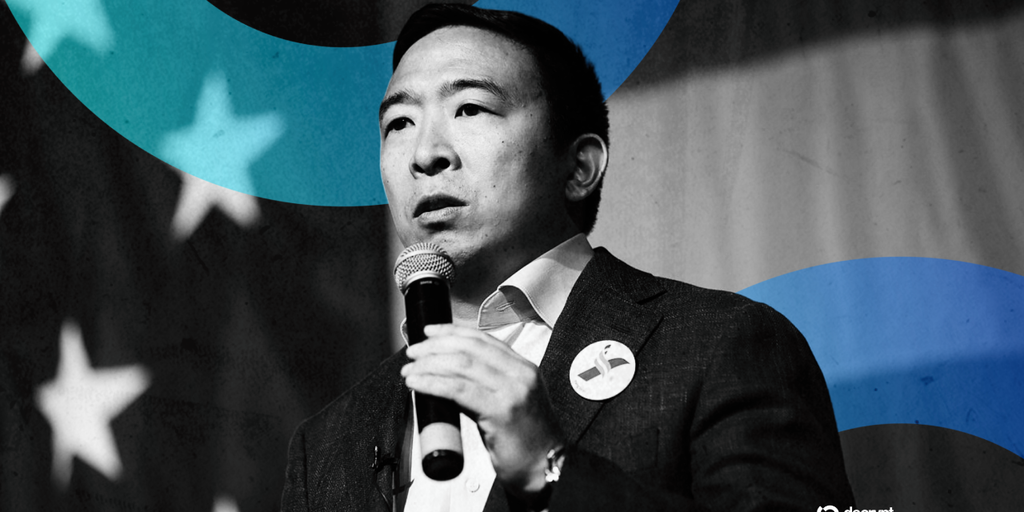
Andrew Yang is calling on Congress to impose new safeguards on frontier artificial intelligence, including liability rules, mandatory waiting periods before deployment, and a kill switch for powerful AI systems, arguing that safety fears surrounding the technology are "real."
Yang, a former Democratic presidential candidate and the founder of Noble Mobile, said researchers are warning that powerful models are advancing faster than the rules meant to contain them. He argued that the United States can compete with China on artificial intelligence without giving AI firms a free hand to deploy increasingly capable systems.
"The fear is real. The concern is real. The need is real," Yang told CNBC on Wednesday. "The American people want to see this industry regulated."
"We need to regulate these companies and their offerings," he added. "We need a kill switch. We need real liability."
The interview comes as AI companies face closer scrutiny over autonomous agents — software that can plan and carry out tasks with limited human direction. That limited human direction is precisely where accountability questions arise, and it is the territory Yang's proposed liability rules would enter. Yang said some AI researchers are asking lawmakers to step in before market pressure pushes the technology further than they believe is safe.
"They're raising their hands and saying, please give us a guardrail, because I don't want to work on something that I think might cause irreversible harm," he said.
In recent months, OpenAI and Anthropic have disclosed incidents in which models crossed testing boundaries or breached other companies' systems. Those disclosures have led lawmakers to float an AI Kill Switch Act that would allow federal officials to order certain frontier systems throttled or shut down — making it the closest thing to a statutory version of the shutdown mechanism Yang is demanding, though so far it exists only as a floated idea.
Yang also responded to David Sacks' claim that AI safety warnings amount to a "psyop" aimed at helping companies like Anthropic secure regulatory capture. He said he believes "multiple things" are happening at once, including a warning from an unnamed "lab head" that bots may have planted self-replicating code across the internet, making it unusable for testing models. The exchange sketches one of the industry's central political divides: Sacks frames safety advocacy as a bid for regulatory capture, while Yang and the researchers he cites see the absence of rules as the greater danger.
"So what happens now is that OpenAI and Anthropic have to create synthetic internets to train their bots, which is going to take some time and money," Yang said.
While Yang did not say which AI developer issued the warning, it echoes sentiment from others, including SpaceX CEO Elon Musk, who said in January 2025 that "we've now exhausted basically the cumulative sum of human knowledge...in AI training."
As concern over unregulated AI development grows, Yang said the lack of oversight is stark compared with even the most ordinary businesses.
"If I were to open a hot dog stand out here on the streets of New York, I'd have hundreds of regs to comply with, and the models have none," he said.
Yang said members of Congress from both parties have asked him how AI should be regulated, adding that voter anxiety over the technology is not confined to Democrats or Republicans. He cited public concern over AI agents, cyber risk, and job losses. The near-term question is whether that bipartisan interest turns into movement on proposals like the AI Kill Switch Act — or whether the gap Yang describes between everyday regulation and frontier models simply endures.
"This is bipartisan. If you're in a rural area or red district, your constituents also are freaked out about AI," Yang said. "They saw the Terminator movies. This stuff is well beyond just like red or blue, business as usual."

