Korean Independence Activist An Jung-geun's Prison Handwriting Repatriated from Japan
Key Takeaways
- •The calligraphy was written by An Jung-geun in March 1910 at Lushun Prison shortly before his execution on March 26.
- •The inscription is translated as “International law is no match for a cannon,” reflecting his view of international law’s weakness against military force.
- •Experts say the piece is highly likely to be authentic because of its brushwork, character structure and handprint seal.
- •Records indicate the item was once held by Lushun Prison warden Sadakichi Kurihara before later passing to a collector known as “Pyong.”
- •The Overseas Korean Cultural Heritage Foundation said it learned of the work in May 2025 and secured its repatriation in November.
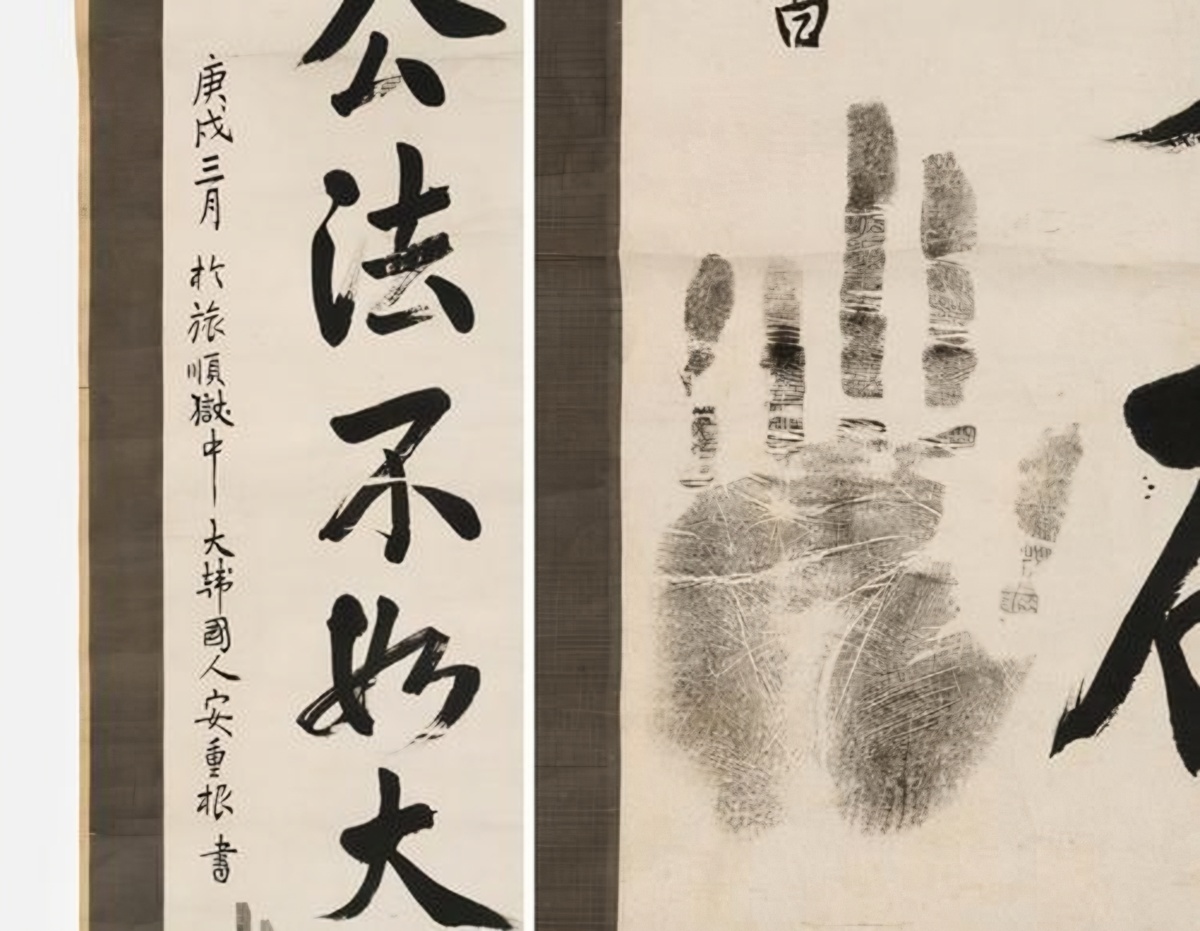
A piece of ink-and-brush calligraphy left by iconic Korean independence activist An Jung-geun shortly before his execution has been repatriated from Japan, cultural heritage authorities announced Thursday.
The Korea Heritage Service (KHS) and the Overseas Korean Cultural Heritage Foundation unveiled the work to the media at Deoksu Palace in central Seoul ahead of the Aug. 15 Liberation Day, which marks the anniversary of Korea's liberation from Japan's 1910–45 colonial rule. The timing underscores the symbolic weight of the return: An is among the most revered figures in modern Korean history, and his writings and personal artifacts are treated as national treasures.
The inscription, consisting of eight Chinese characters translated as "International law is no match for a cannon," was written by An in March 1910 at Lushun Prison in what is now northeastern China, just days before his death on March 26, according to the KHS.
An was executed by Japanese authorities after he assassinated Ito Hirobumi, the first Japanese governor-general of Korea, in Harbin in 1909. An argued that the killing was a legitimate act of war and demanded a trial under international law, but Japan prosecuted him for murder and sentenced him to death.
The KHS said the inscription reflects An's "deep disillusionment with the impotence of international law" in the face of military force.
The work bears An's signature and his distinctive handprint seal at the lower left. An accompanying inscription states that it was written in March 1910 at Lushun Prison, confirming that An left the piece a few days before his execution.
Experts say the piece is highly likely to be authentic, citing similarities in brushwork, character structure, and the handprint seal when compared with other known works by An.
Records on the reverse side trace the item's early custody to Sadakichi Kurihara, the warden of Lushun Prison at the time. It later passed to a collector identified only as "Pyong," who had the calligraphy mounted and preserved.
The Overseas Korean Cultural Heritage Foundation said it became aware of the work through local contacts in Japan in May 2025 and secured its repatriation in November. The previous owner is believed to have acquired the piece at an auction.
According to the national cultural heritage portal operated by the KHS, 31 pieces of An's calligraphy have been designated as treasures.
The repatriation is the latest in a series of South Korean government-led efforts to recover cultural artifacts that left the country during the colonial era and periods of conflict, a campaign that has gained momentum as diaspora networks and auction-house tracing improve access to long-hidden holdings.
Park Jeong-hye, chair of the Overseas Korean Cultural Heritage Foundation, said the organization will "continue to identify and repatriate Korean cultural assets located abroad and share their value with the public."
