The 90-Year-Old Congressional Power Democrats Could Use Against “Mr. Veto”
Key Takeaways
- •An Alternet commentary argues that overlapping crises, including grounded flights, cyberattacks disrupting Microsoft email, Workday payroll and Chase payments, and understaffed federal agencies, are undermining Americans' confidence in government.
- •Democrats won what the author calls the biggest election sweep since Watergate, but Trump will remain president for two more years and Democrats remain short of the two-thirds majorities needed to override his vetoes.
- •Trump has ordered every federal agency to obtain his personal permission before an employee testifies, and the Justice Department has reportedly instructed U.S. attorneys to adopt a 'wartime' approach toward Democrats seeking government files, including the Epstein files.
- •The commentary cites polling finding that 69% of Americans do not believe democracy is working and only 28% believe corrupt politicians or judges will ever be held accountable under the law.
- •Beginning January 3, Democrats will hold 56 Senate seats, and the author argues Congress could also revive its inherent contempt power, unused for 90 years, to arrest witnesses who defy subpoenas.
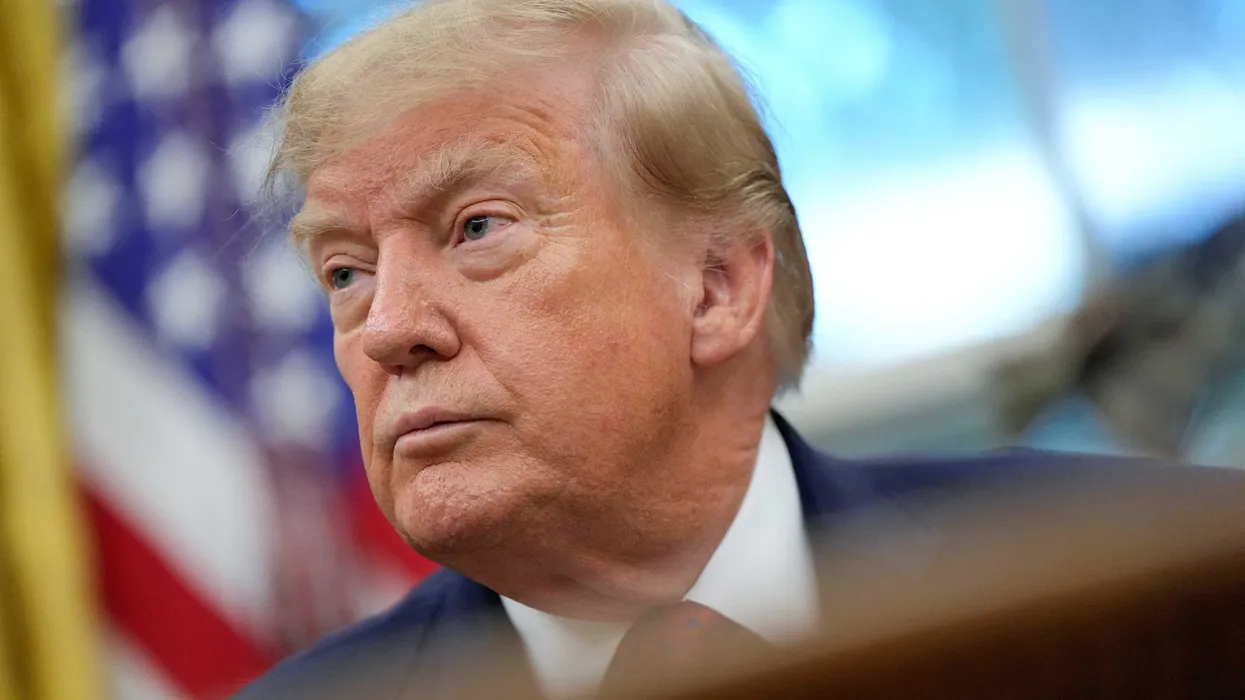
America is facing a convergence of crises that is undermining public confidence in the government’s ability to function, protect citizens and preserve democracy, argues the author of this Alternet commentary.
Airplanes are grounded, cyberattacks disrupt essential services, federal agencies are understaffed and infrastructure is aging. Healthcare and college remain unaffordable, artificial intelligence threatens jobs and trust in information, and billionaires exert major influence over politics. The commentary also alleges that a corrupted Supreme Court, influenced by wealthy interests, has weakened voting and civil rights protections, legalized bribery involving judges and politicians, and enabled President Donald Trump to act without accountability.
Americans, it says, are watching institutions they once relied on struggle to provide infrastructure, disaster relief and even a basic response to the public’s wishes.
Fewer than three weeks have passed since Democrats won what the author describes as the biggest election sweep since Richard Nixon’s Watergate crimes were exposed. Yet the sense of dread has not lifted. Trump, who has called himself “Mr. Veto,” will remain president for two more years, while Democrats remain well short of the two-thirds majority required to override a presidential veto. The author’s characterization of Trump’s administration and its policies is sharply critical.
The commentary further alleges that masked federal officers have terrorized and killed American citizens and immigrants without accountability, and that Immigration and Customs Enforcement (ICE) continues to build and purchase detention facilities where people are allegedly tortured, die and are killed nearly every week. Related reporting and documentation cited by the source include Physicians for Human Rights, The Associated Press, and a Wikipedia list of shootings involving U.S. immigration agents.
Democrats are preparing to demand that Trump, his allies and his family preserve documents. However, the author argues that Republicans destroyed evidence and institutions during the previous administration without consequences. Democrats also plan to use congressional subpoenas to compel Republicans and business executives to testify, but enforcement could depend on the Justice Department under Todd Blanche. During the previous administration, the department declined to hold Attorney General Bill Barr and Commerce Secretary Wilbur Ross in criminal contempt after they refused to appear and testify. Reporting on that matter is cited by the source.
When White House counsel William Scharf was asked this month whether the administration would comply with subpoenas issued by the incoming Congress, he answered, “it depends.” Trump has since ordered every federal agency to obtain his personal permission before an employee testifies. The Justice Department reportedly also instructed U.S. attorneys nationwide to adopt a “wartime” approach toward Democrats seeking answers or government files, including the Epstein files. The source cites The Denver Gazette, as well as coverage from Alternet and The Hill.
The author says much of the public’s “doomsday” feeling comes from experiencing several crises at once rather than one isolated failure. Grounded flights, disruptions affecting Microsoft email, Workday payroll and Chase payments, and what the author calls inadequate explanations from Trump administration cabinet officials have contributed to the unease. The commentary also criticizes Trump’s foreign policy, saying he has sought closer relations with Vladimir Putin and Xi Jinping while Russia continues its war against Ukraine and U.S. troops remain in the Gulf. A Mediaite report and a Government Accountability Office report are among the sources cited regarding recent disruptions.
The federal government that, in the author’s view, protected Americans at home and defended democracy abroad has been gutted by the world’s richest man. More than 256,000 federal workers are now out of work, the commentary says, while only 49% of Americans can reliably afford needed healthcare. It cites research indicating that roughly 80% of Americans fear artificial intelligence will take their jobs or their children’s jobs. It also says 33 countries are advising their citizens to stockpile food and water, while Trump, his sons and his son-in-law have taken more than $2.3 billion in cryptocurrency from MAGA supporters. The source links to CBS News, Semafor and Yahoo Finance.
These conditions have left Americans asking who is in charge and whose interests the government serves. The author cites Pew Research, which found that 69% of Americans do not believe democracy is working, and Gallup, which reported that only 28% believe corrupt politicians or judges will ever be held accountable under the law. The cited Pew report and Gallup survey provide the underlying polling references.
The author argues that an oligarchic system has been draining the middle class for nearly 50 years while producing a new generation of right-wing oligarchs. Former President Jimmy Carter, the author says, told him on his program more than a decade ago that the United States had become more of an oligarchy than a democratic republic.
In the author’s book The Hidden History of American Oligarchy, oligarchy is described as a transitional form of government that rarely lasts more than two generations. The argument is that people eventually resist being deprived of wealth and political power and demand the restoration of democracy. The book is referenced by Basic Books.
At that point, the author says, oligarchs face two choices: retreat, as they did when Franklin D. Roosevelt confronted them in the 1930s, or impose authoritarian force, as Vladimir Putin and Recep Tayyip Erdoğan did. The commentary argues that Trump is pursuing the latter approach through NSPM-7 and ICE. It quotes Stephen Miller as saying:
“We live in a world in which you can talk all you want about international niceties and everything else. But we live in a world, in the real world ... that is governed by strength, that is governed by force, that is governed by power. These are the iron laws of the world.”
The source says Miller’s remarks echoed the language of Joseph Stalin and Joseph Goebbels and cites Radio New Zealand.
The commentary then turns to psychologist Martin Seligman’s research. In 1967, Seligman found that dogs subjected to painful electric shocks while being prevented from escaping eventually stopped trying to flee, lay down and whimpered. He called the behavior “learned helplessness.” The author applies the concept to elected Republicans, arguing that they have displayed passivity for at least the past decade.
The author also says that, nearly 50 years later, Seligman argued that passivity in response to pain is a “default” brain response, comparable to a possum playing dead. For humans, however, Seligman emphasized learned optimism and self-empowerment through positive action. In his book Agency, he argues that these qualities are more powerful than learned helplessness. The source cites research in Frontiers in Psychiatry and Seligman’s book Agency.
Americans, the author writes, have been violently “shocked” for most of the past two years and subjected for at least 45 years to corruption, theft, lies that led to wars and Republican policies that weakened the middle class. But the author also points to the period from 1933 to 1981, when Americans organized through unions, broke up monopolies, taxed the wealthy and held corporate and political figures accountable.
The commentary argues that the latest election may have put the country on a two-year path toward repeating that effort. Beginning January 3, Trump will not be able to veto a congressional hearing, confirm a judge without the consent of a Senate in which Democrats will hold 56 seats, or lawfully spend money that Congress has not appropriated.
The author adds that Congress could revive its inherent contempt power. If House Minority Leader Hakeem Jeffries and either Senate Minority Leader Chuck Schumer or Senator Chris Van Hollen are willing to use it, Congress could direct its sergeant-at-arms to arrest a witness who defies a subpoena. The power has gone unused for 90 years.
Seligman’s research, the author concludes, offers both hope and a warning: hope that determined leaders can defeat oligarchy, as FDR, Abraham Lincoln, George Washington and Thomas Jefferson did during earlier 80-year cycles of American history; and a warning that congressional inaction or delayed prosecutions, as the author says occurred under Merrick Garland, could intensify public despair. The author argues that would benefit would-be Republican strongmen including Trump, Vice President-elect J.D. Vance and Representative Jim Jordan.
The commentary ends by urging readers to contact their state attorneys general and elected officials in Washington and demand action. It cites Christopher Armitage’s argument that state attorneys general possess considerable powers that remain largely unused; his analysis is available on Substack.
Source: Alternet.

