Hedge-Fund-Backed Conference Courts Newly Elected Democrats; Columnist Urges Sustained Public Pressure
Key Takeaways
- •An Alternet commentary criticizes the invitation-only 'What's Next' conference in Denver for newly elected Democrats, which was hosted by Majority Democrats and financed mainly by hedge-fund billionaire Steve Mandel, founder of Lone Pine Capital.
- •Political consultants attended the Denver gathering, but no labor, civil rights, environmental, Black, or Hispanic leaders were invited.
- •The column warns that moneyed interests — including corporate and Wall Street lobbyists, crypto and AI industries, AIPAC, CEOs, and billionaire tech donors — are mobilizing to court incoming lawmakers during the transition before the new Congress is sworn in on January 3.
- •The author argues that newly elected officials will only deliver on their promises if the public organizes and applies sustained pressure, citing Franklin D. Roosevelt's 1936 remark that voters 'must make' him act.
- •On leadership, the column endorses Maryland Senator Chris Van Hollen over Chuck Schumer, contending Schumer has served too long and is too close to Wall Street, ahead of the Senate Democratic leadership decisions expected in January.
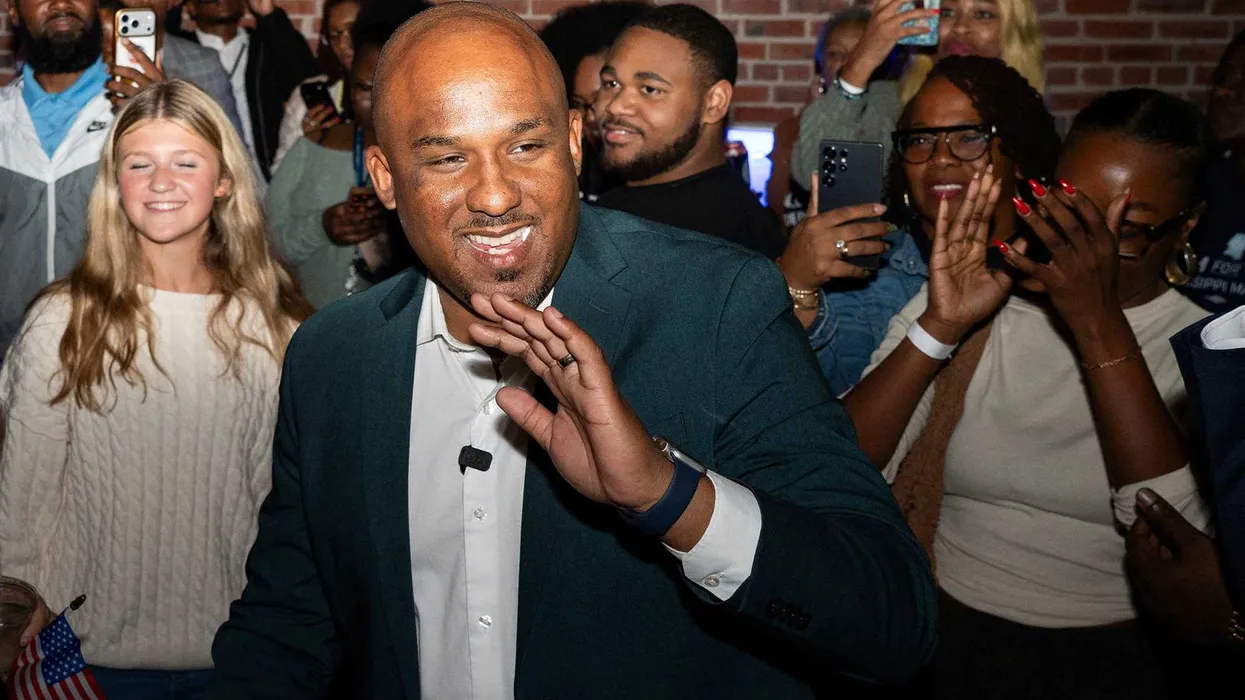
A private, invitation-only conference for newly elected Democrats — financed largely by a hedge-fund billionaire and attended by political consultants but by no labor, civil rights, environmental, Black or Hispanic leaders — is drawing pointed criticism in a new commentary from Alternet, the long-running progressive news site, which warns that moneyed interests are already courting the incoming class of lawmakers before they take office.
The column, written by an author who describes more than five decades in and around politics, celebrates Democratic wins in this month's midterm elections, including Senator-elect Scott Colom's victory in Mississippi and Governor-elect Jonathan Kreiss-Tomkins's win in Alaska. After what the author calls "almost two years of Trump darkness," there is, in the column's words, "light on the horizon" and reason to hope for progressive change.
Yet the author acknowledges hearing persistent anxiety from readers, quoting warnings such as "Don't blow it like you usually do, Democrats," "Don't f*ck up," "Don't once again grab defeat out of the jaws of victory," and "Don't form your normal circular firing squad." Those fears, the column concedes, rest on a real pattern: once in office, Democrats have "too often wimped out or picked fights with each other," been outmaneuvered, or been bought out — with the author invoking Joe Manchin of West Virginia and Kyrsten Sinema of Arizona as reminders.
The response to the doubters is blunt: "It's up to us." Rather than worry, the author writes, readers should prepare for January 3 — seven weeks from the column's publication — when the new Congress is sworn in, with many new governors and state lawmakers following shortly after. The date, fixed by the Constitution's 20th Amendment, marks the formal start of each new Congress, and the weeks between Election Day and swearing-in are a transition window in which incoming members typically hire staff, set early priorities, and field their first approaches from lobbyists and donors — precisely the period the column flags as dangerous. "Our work is just beginning. The fight has just begun."
Drawing on that half-century of political experience, the author argues that even the best members of Congress, governors, and state legislators cannot accomplish anything important without the public actively behind them. "Nothing good happens in Washington, D.C., or in state capitals unless good people are organized and mobilized to put pressure on the people they elect to make good things happen," the column states. It recalls Franklin D. Roosevelt's reply during his 1936 reelection campaign, when a voter insisted that he commit to a long list of objectives he had campaigned on: "Ma'am, I want to do those things, but you must make me."
The people just elected, the author writes, need the same pressure. Sincerity is not enough, and promises cannot be assumed to keep themselves.
The column's central warning concerns money. Readers are urged to "never underestimate the power of the moneyed interests, corporate and Wall Street lobbyists, Crypto, AI, AIPAC, corporate PR and law firms, CEOs, and billionaire tech bros" — forces the author says are restarting their political machines, mobilizing, and already courting new members of Congress. The roster stretches beyond the traditional lobbying establishment to fold in crypto and AI, newer industries the author counts within the same moneyed apparatus now bearing down on the incoming class.
Groups presenting themselves as "moderate Democrats," such as Third Way — a Washington-based group long identified with the party's centrist wing — are described as backed by corporations and Wall Street, opposed to progressive change, and intent on preserving "the current structure of wealth and power in America."
The sharpest example offered is last week's "What's Next" conference in Denver, an invitation-only gathering for newly elected Democrats hosted by a group called Majority Democrats, which the column says is financed mainly by hedge-fund billionaire Steve Mandel, the founder of Lone Pine Capital. Political consultants — characterized by the author as lobbyists — showed up, but no labor leaders were invited, nor any civil rights, environmental, Black, or Hispanic leaders.
The author insists this is not a call for a purity test, allowing that new lawmakers may feel they can socialize with big money without losing their integrity. But the column likens the environment awaiting them to an ocean of influence-peddlers skilled at creating false realities unrelated to the one working Americans face — waters with "powerful undertows, fierce riptides, ferocious sharks" — and argues the newcomers need the public as lifeguards: organizing, mobilizing, raising money, "raising a ruckus," and keeping pressure on them to keep their promises.
On leadership, the column urges support for Democrats who reject "the old politics of big money," singling out Maryland Senator Chris Van Hollen. While crediting Senate Democratic leader Chuck Schumer with having "done a good job," the author contends he has been in office too long, belongs to an older generation, and is too close to Wall Street and corporate Democrats; Van Hollen, by contrast, "has the right values" and will steer Senate Democrats in a progressive direction. The argument lands ahead of the leadership decisions Senate Democrats face as they organize the new Congress in January.
The commentary closes by encouraging readers to savor the victories of the past week and a half — "What has been accomplished is nothing short of remarkable," it says — while stressing that "our work has just begun."

