Alphaliner Revives 'Gigamax' Concept, Makes the Case for 27,500 TEU Containerships in the 2030s
Key Takeaways
- •Alphaliner believes vessels of around 27,500 TEU could become commercially viable in the 2030s, as larger hulls spread fuel and carbon-related costs across more containers.
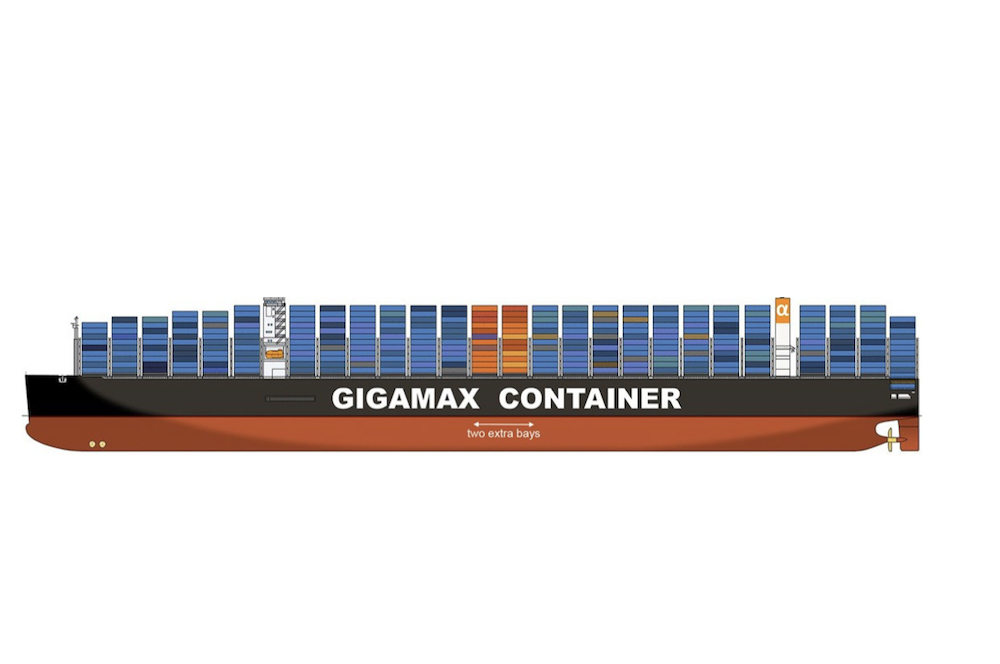
- •The proposed gigamax-25 design measures approximately 414 meters long and 63.3 meters wide, stows containers 25 rows across, and features LNG dual-fuel propulsion for service speeds of 18 knots or less.
- •Alphaliner estimates the added 14 meters of length and 2.5 meters of beam could be absorbed at many existing terminals through margins in cranes, berths, turning circles, and fairways.
- •Maersk is identified as the most logical first mover because it is the only top-eight carrier never to have ordered 24,000 TEU ships, and a gigamax would lift its flagship capacity by roughly 40%.
- •The global containership orderbook has hit a record 14.7 million TEU across 1,795 ships, with vessels above 10,000 TEU accounting for 68% of ordered capacity.
For roughly a decade, the 24,000 TEU megamax has stood as the apparent ceiling for containership size. Analysts at Alphaliner now believe the industry could be ready to break through it.
The consultancy has revived a concept it first floated in 2021 for a new "gigamax" class, arguing that advances in ship design, rising fuel costs, and carbon pricing could make vessels of around 27,500 TEU commercially viable in the 2030s. The logic follows the pattern the container industry has relied on through every round of upsizing: a bigger hull spreads voyage costs, including fuel and carbon-related expenses, across more boxes, lowering the cost of moving each one.
Alphaliner's theoretical gigamax-25 would measure approximately 414 meters long and 63.3 meters wide, compared with roughly 400 meters by 61 meters for today's largest megamax-24 ships. The design would stow containers 25 rows across and add an extra bay on the forecastle to push capacity above 27,000 TEU. Intended for service speeds of 18 knots or less and fitted with LNG dual-fuel propulsion, the vessel, in Alphaliner's assessment, could consume only marginally more fuel than an older 20,500 TEU megamax while carrying around 7,000 additional containers — in effect trimming fuel burn and carbon exposure per container carried.
Crucially, the enlarged dimensions may not require wholesale reconstruction of the major ports already serving 24,000 TEU ships. Alphaliner estimates that the additional 14 meters of length and 2.5 meters of beam could be absorbed at many terminals through existing margins in cranes, berths, turning circles, and fairways. That finding matters for deployment planning, since extra capacity only converts into savings where ports can berth and turn the ships without added delay.
In its most recent weekly report, the consultancy identified Maersk as the most logical first mover. The Danish carrier is the only member of the global top eight never to have ordered 24,000 TEU ships. Its 31 largest vessels average about 19,600 TEU, meaning a gigamax would deliver a roughly 40% increase in flagship capacity. Maersk's Gemini Cooperation hub-and-spoke network, with fewer mainline port calls, also lends itself to bigger ships by concentrating cargo flows through fewer, larger hubs. MSC and COSCO are viewed as the other obvious candidates. Whether Maersk moves first is therefore the clearest signpost for how quickly the gigamax concept turns into contracts.
Alphaliner's renewed interest follows the bullish mood at last week's SMM exhibition, while Chinese shipyards are understood to have received fresh enquiries from major carriers for large vessels. Whether those enquiries harden into firm orders will indicate how seriously carriers are weighing the step up in size.
Two years ago, at the previous edition of SMM, China State Shipbuilding Corporation's (CSSC) Shanghai Ship Research and Design Institute revealed it had received approval in principle for a 27,500 TEU LNG dual-fuel containership — an indication that shipyards had already begun preparing designs for a class beyond the megamax.
The global containership orderbook has reached a record 14.7 million TEU across 1,795 ships, with vessels above 10,000 TEU accounting for 68% of capacity on order. Scale, in other words, remains the industry's prevailing bet, and any gigamax decision would arrive on top of a pipeline already dominated by large vessels.
Source: Splash247
