Alphabet (GOOGL) Shares Drop 7% After First-Ever Negative Free Cash Flow Amid Massive AI Spending Ramp
Key Takeaways
- •Alphabet reported negative $5.9 billion in free cash flow for Q2, marking the first time in the company's history that this metric turned negative.
- •Management raised full-year capital expenditure guidance by $15 billion to a range of $195–205 billion, with 2027 spending expected to exceed even that elevated level.
- •Q2 revenue reached $119.8 billion, up 24% year over year, with Google Cloud revenue surging 82% to $24.8 billion and segment operating margins nearly doubling to 35.6%.
- •Alphabet raised $85 billion through debt and equity issuance in June specifically to fund its AI infrastructure buildout for 2026 and 2027.
- •Demand-side indicators remain strong, with a Cloud backlog of $514 billion and nearly 500 Gemini AI enterprise customers each processing over a trillion tokens in the past year.
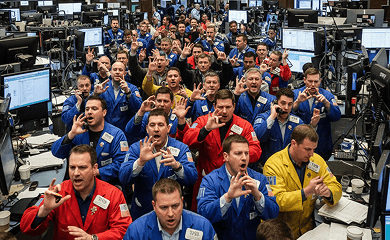
Alphabet Inc. (GOOGL) shares fell as much as 7% on Thursday, dropping to an intraday low of $314.91 before recovering slightly to $316.99 by mid-morning. The decline put the stock on pace for its largest single-day market capitalization loss on record, according to Dow Jones Market Data, making it the worst performer in the Dow Jones Industrial Average for the session. The sell-off came despite a second-quarter earnings report that beat Wall Street estimates across the board.
Q2 revenue reached $119.8 billion, up 24% year over year. Google Cloud revenue surged 82% to $24.8 billion, with operating margins in the segment nearly doubling to 35.6%. Search revenue grew 17%.
The reaction centered on one metric: free cash flow turned negative for the first time in Alphabet's history — a striking shift for a company that has consistently ranked among the most prolific free cash flow generators in corporate America.
Free Cash Flow Turns Negative
Alphabet reported negative $5.9 billion in free cash flow for Q2, the first time the company has posted a negative figure, according to LSEG data. Simultaneously, management raised full-year capital expenditure guidance by $15 billion to a range of $195–205 billion. Spending in 2027 is expected to exceed even that elevated level.
The ramp places Alphabet at the center of a broader hyperscaler infrastructure arms race, with Microsoft, Amazon, and Meta each committing record capital expenditures toward AI data center buildouts in 2025 and beyond.
In June, Alphabet raised $85 billion through debt and equity issuance specifically to fund its AI infrastructure buildout for 2026 and 2027.
"GOOGL is exhibit A for why you need to be cautious on hyperscalers," wrote Melius Research analyst Ben Reitzes. He indicated that free cash flow could remain negative into 2027 and that the company will likely continue issuing both debt and equity to finance its buildout.
The core investor concern is whether Alphabet is deploying capital faster than it can convert that infrastructure into profitable returns — a question increasingly being asked across the entire hyperscaler cohort.
Analysts Divided on Outlook
Wall Street responses were mixed. J.P. Morgan's Doug Anmuth lowered his price target on Alphabet to $420 from $460 but maintained an Overweight rating, stating that his firm "would be buyers of Google on the pullback." He cited accelerating Cloud capacity delivery and strong demand signals as supporting factors.
Roth Capital's Rohit Kulkarni similarly recommended buying on weakness, while acknowledging growing concern about the long-term capital requirements needed to keep Google competitive in AI.
Morgan Stanley's Brian Nowak pointed to Alphabet's "disciplined budgeting" and noted that management is more optimistic than a year ago regarding AI opportunities across enterprise and consumer segments.
Demand-side metrics appear to support the spending trajectory. Nearly 500 Gemini AI enterprise customers each processed over a trillion tokens during the past year. The Cloud backlog stands at $514 billion. Alphabet has also begun renting third-party computing capacity from SpaceX to address near-term capacity shortages.
Alphabet's forward price-to-earnings ratio sits at 21.3x. The stock's 52-week range runs from $187.82 to $408.61. Thursday's decline brought shares back to mid-April levels.
