Justice Samuel Alito Criticizes Lower Court Rulings Blocking Trump Policies as 'Unjustified'
Key Takeaways
- •Justice Samuel Alito criticized lower court judges as 'unjustified' in blocking Trump administration policies and accused some of abusing their powers during a Thursday speech at the Federalist Society's annual Antonin Scalia Memorial Dinner.
- •Alito did not specify what conduct he considered an abuse of power and made no mention of Trump's attacks on judges or his calls to impeach those who ruled against him.
- •Lower courts have blocked multiple Trump initiatives, including efforts to limit mail-in voting, the attempt to end birthright citizenship, and construction of a ballroom at the White House.
- •In June, the Supreme Court struck down Trump's birthright citizenship order 6-3, with Alito dissenting and calling the ruling 'a serious mistake,' and in September the court declined to let his mail ballot restrictions take effect for the midterms.
- •Chief Justice John Roberts publicly stated in March 2025 that impeachment is not an appropriate response to disagreement with a judicial decision, after Trump demanded the impeachment of U.S. District Judge James Boasberg.
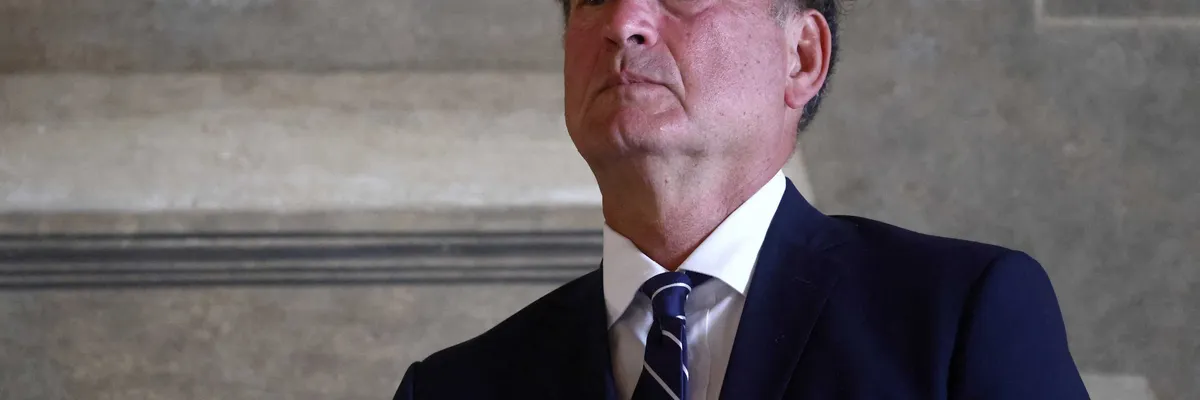
Conservative Supreme Court Justice Samuel Alito said many lower court judges were “unjustified” in blocking President Donald Trump’s policies, arguing that some have “gone far astray” in abusing their powers.
Alito made the remarks in a speech at the Federalist Society’s annual Antonin Scalia Memorial Dinner on Thursday, The Hill reported. The Federalist Society describes itself as a conservative and libertarian legal organization, and its Scalia dinner honors the late justice, who served on the Supreme Court from 1986 until his death in 2016.
“They are dedicated and they are skillful, but they’re not perfect and they make mistakes,” Alito said. “And in some instances, I think they have gone far astray in abuse of their powers.”
The justice did not address Trump’s repeated attacks on judges who have ruled against him, nor did he specify what conduct he considered an abuse of power. As Politico Playbook noted, he said nothing about Trump’s calls to impeach judges who have ruled against him. Those calls prompted a rare public statement from Chief Justice John Roberts in March 2025, after Trump demanded the impeachment of U.S. District Judge James Boasberg. “Impeachment is not an appropriate response to disagreement concerning a judicial decision,” Roberts wrote at the time. Roberts, like Alito, was appointed to the court by President George W. Bush.
Lower courts have blocked several Trump initiatives, including efforts to limit mail-in voting, the attempt to end birthright citizenship, and the construction of a ballroom at the White House. In some of those disputes, Alito’s own colleagues sided with the lower courts. The friction between the White House and the federal judiciary has repeatedly found its way to the Supreme Court, where several of the blocked initiatives have already been tested.
In June, the Supreme Court struck down Trump’s birthright citizenship order 6-3, upholding more than a century of precedent. The order never took effect after lower courts blocked it. Alito dissented, calling the ruling “a serious mistake.”
In September, the high court declined to let Trump’s mail ballot restrictions take effect for the midterm elections, with voting already underway, leaving in place an order from U.S. District Judge Indira Talwani of Massachusetts. The majority said the administration was unlikely to succeed. Alito and Justice Clarence Thomas were the only justices to publicly dissent.
The ballroom project was halted in March by U.S. District Judge Richard Leon, who, like Alito, was appointed by President George W. Bush. “The President of the United States is the steward of the White House for future generations of First Families. He is not, however, the owner!” Leon wrote.
Trump, for his part, has publicly clashed with the judiciary. Ahead of the birthright citizenship ruling, he used his Truth Social platform to lash out at what he called “dumb judges and justices.”
Alito, 76, is the court’s second-oldest justice and has served on the bench since 2006. He delivered his remarks to a crowd of more than 1,000 conservative lawyers.

