Celsius Founder Alex Mashinsky Agrees to Permanent New York Ban on Securities, Commodities, and Crypto Businesses
Key Takeaways
- •Alex Mashinsky has agreed to a permanent prohibition on operating or controlling securities, commodities, and cryptocurrency businesses in New York, with no scheduled expiration or review period.
- •The ban spans all three major financial-product categories, preventing Mashinsky from pivoting to traditional finance as well as digital assets within the state.
- •Celsius froze withdrawals in June 2022 and entered bankruptcy the next month, leaving billions of dollars in customer funds inaccessible to hundreds of thousands of users.
- •The agreement does not repay or unlock funds for former Celsius users, as creditor claims are resolved through bankruptcy proceedings on a separate track from regulatory enforcement.
- •The settlement reflects a broader enforcement pattern in which New York regulators impose lasting restrictions on crypto founders and hold digital-asset firms to the same standards as traditional financial businesses.
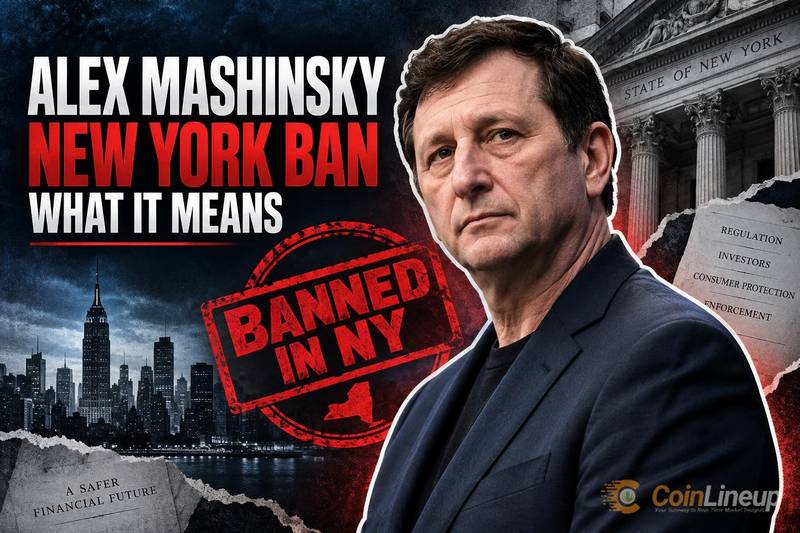
Alex Mashinsky, the founder of the failed cryptocurrency lending platform Celsius, has agreed to a permanent ban that bars him from operating securities, commodities, and cryptocurrency businesses in New York. The agreement marks a significant regulatory outcome following Celsius's collapse, which left hundreds of thousands of users unable to access their funds.
The ban covers all three major financial-product categories rather than digital assets alone, and the agreement does not automatically return funds to former Celsius users.
What the Ban Covers
Under the agreement, Mashinsky is permanently barred from operating or controlling any business in New York that deals in securities, commodities, or cryptocurrency. Those three categories together span a broad range of financial products, from stocks and bonds to futures contracts and digital assets such as Bitcoin and Ethereum.
The scope of the restriction is notable. A ban limited to cryptocurrency would still have left room to operate in traditional finance. By covering securities and commodities as well, the agreement closes that door entirely for New York-based activity. In this context, "permanent" means the agreement contains no scheduled expiration date or built-in review period, unlike temporary suspensions or time-limited bans, so the restriction remains in effect indefinitely.
An agreed restriction of this kind is a negotiated regulatory resolution rather than a verdict reached in court, a common structure for enforcement outcomes that nonetheless carries binding consequences for the individual involved.
Background: Celsius's Collapse
Mashinsky co-founded Celsius Network, a crypto lending platform that promised customers high yields on the digital assets they deposited. The company froze withdrawals in June 2022, leaving customers unable to access their money, and filed for bankruptcy the following month, with billions of dollars in user funds locked out of reach. The abrupt freeze made Celsius one of the most high-profile platform failures of the 2022 crypto downturn.
What the Ban Means for Former Users
For people who held funds on Celsius, the ban represents a form of accountability, but it does not directly unlock frozen assets or guarantee repayments. The bankruptcy process handles creditor claims separately from regulatory enforcement actions, meaning the settlement does not itself set repayment terms or distribute money to former users. Enforcement outcomes and bankruptcy recoveries proceed on separate tracks and timelines.
That separation also frames what to follow going forward: the bankruptcy proceedings remain the process through which former users' creditor claims are actually resolved, while this agreement addresses only Mashinsky's ability to operate within New York.
Signal for the Crypto Industry
For the wider crypto community, the agreement signals that state regulators are willing to pursue permanent, career-ending restrictions against crypto founders rather than imposing fines alone. Securities are ownership stakes in companies, while commodities include raw materials and certain financial instruments. A ban across all three categories means Mashinsky cannot pivot to a new financial venture within New York's jurisdiction. In practical terms, he can no longer launch, run, or control such businesses within the state.
The action is part of a broader pattern of enforcement that has followed high-profile platform failures, reflecting the increasing reach of crypto-focused oversight.
New York's Regulatory Environment
New York has long been one of the most active states for crypto regulation. Under its framework, crypto businesses are required to obtain a BitLicense to operate, and the state's attorney general has pursued multiple enforcement actions against digital asset platforms over the years.
A permanent restriction agreed to by a major crypto founder reinforces that New York treats crypto businesses as financial businesses, subject to the same accountability standards as traditional securities or commodities firms.
A Practical Reminder for Platform Users
For anyone considering placing funds with a crypto platform, the case is a practical reminder to understand how a platform is regulated, where it is based, and whether funds are insured or otherwise protected. No regulatory agreement reverses losses already suffered, but enforcement actions like this one shape what future platforms must do to operate lawfully.
Disclaimer: This article is for informational purposes only and does not constitute financial or investment advice. Cryptocurrency and digital asset markets carry significant risk. Always do your own research before making decisions.

