Politico's Harris: Air Crisis Briefing Offers Warning for Trump's Final Two Years
Key Takeaways
- •A nationwide air traffic control failure prompted a White House briefing led by Homeland Security Secretary Markwayne Mullin and Transportation Secretary Sean Duffy.
- •Politico columnist John Harris argued the administration's response suggests Trump could become increasingly isolated from political reality during his final two years in office.
- •Duffy attributed the breakdown to radar problems, communications inconsistencies and technical systems, while Harris criticized blame-shifting toward Democrats as unpersuasive for ordinary travelers.
- •Former President Biden's transportation bill allocated $5 billion over five years for FAA upgrades within a broader $25 billion aviation investment, with Congress approving another $12.5 billion.
- •Duffy's request for an additional $50 billion requires congressional action and far exceeds funding approved so far, making its outcome a concrete test of whether travelers receive modernized equipment.
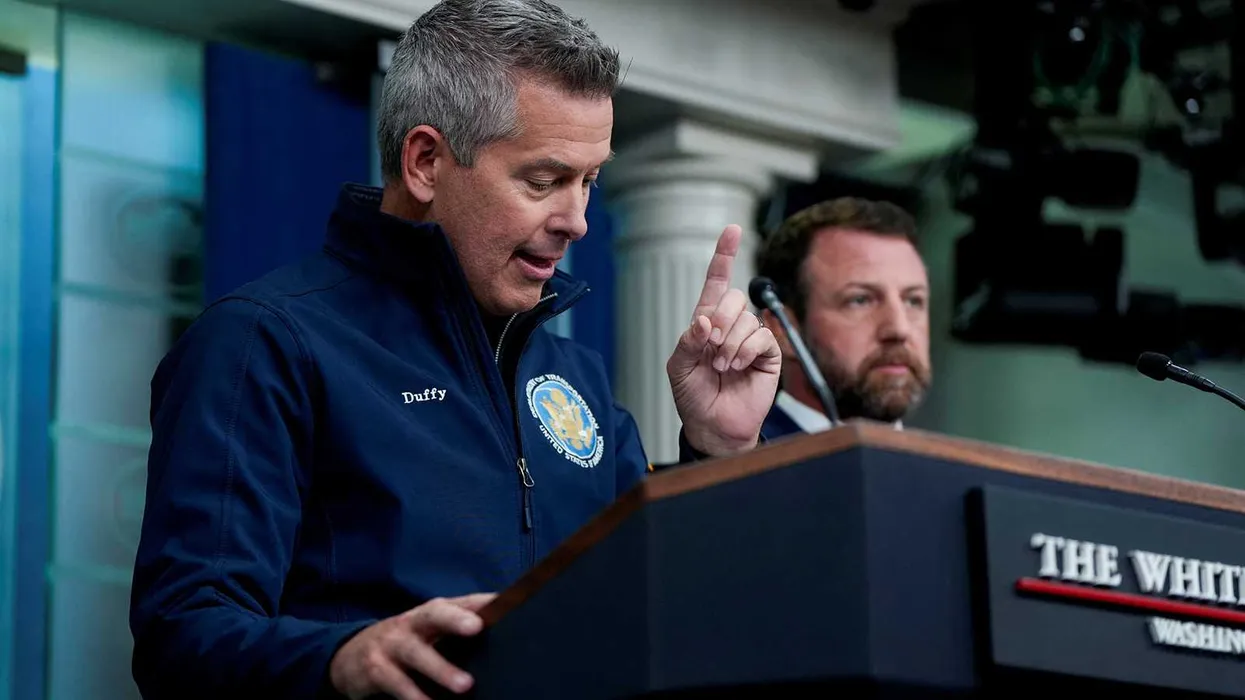
The White House briefing with Homeland Security Secretary Markwayne Mullin and Transportation Secretary Sean Duffy on the nationwide air traffic control meltdown offered a troubling preview of President Donald Trump's final two years, according to Politico's John Harris.
Writing for Politico Magazine on Saturday, Harris warned that the next two years will likely bring problem after problem, with solutions amounting to little more than administration officials praising themselves and the president's leadership. If Friday evening was any indication, they will also keep struggling to give an anxious public clear answers.
“The dynamics on display Friday night, if they continue, suggest that Trump in his final two years could become even more isolated from political reality,” Harris wrote.
Harris described scenes at New York's JFK airport on Friday night, where he witnessed “a lot of sobbing and a lot of swearing,” while counting himself lucky not to be struggling to reach a wedding or funeral, or juggling toddlers or elderly relatives while on the phone with a booking agent. Alternet's related coverage documented the nationwide ground stop.
“These scenes were the context in which I heard Duffy, who dominated the news conference compared to the somewhat less prepossessing Mullin,” Harris noted. “His style was crisp, emphatic, even impressive; the substance of his words was murky, self-justifying, unpersuasive.”
“The news conference with Mullin and Duffy raised something more fundamental: Do they have elementary self-awareness? What planet are they on?” Harris asked.
Duffy pointed to radar problems, communications inconsistencies and technical systems. Harris complained that the excuses and blame-shifting toward Democrats did little to explain the breakdown in terms ordinary travelers could understand. While some Americans do not buy the outage explanation, Harris is not among them, and he agrees the country should have cutting-edge equipment.
Harris called the performance by the two top appointees a vivid window into the late stages of Trumpism, coming after the massive election losses 11 days earlier.
“The familiar signatures — bluster, boasting, blame-casting — were not so much triggering, as in the old days, as the height of irrelevance,” Harris wrote. “It is a style that suggests reality can be created, or decisively shaped, by self-confident proclamation.”
On funding, former President Joe Biden's transportation bill provided $5 billion over five years to upgrade Federal Aviation Administration air traffic control facilities and equipment, part of a broader $25 billion investment in aviation infrastructure. Congress approved another $12.5 billion for the upgrades. Duffy is now asking for an additional $50 billion — a request that would require congressional action and far exceeds the funding approved so far, making its fate in Washington one of the most concrete near-term markers of whether travelers ever get the cutting-edge equipment Harris said the country should have.
Meanwhile, Harris noted, Trump is more focused on his ballroom, golf course and the giant arch.
The deeper warning, Harris argued, is not that a major transportation system failed, but that senior officials responded as if a tough-guy routine and praise for Trump could substitute for accountability. When Mullin closed his remarks by describing Trump as the nation's greatest president, it captured the real disconnect: travelers want responsible leadership, while the administration appears more intent on celebrating itself.
It is a mismatch and a risk, Harris concluded, that extends well beyond this crisis. His full column appeared in Politico Magazine.

